
Capybara
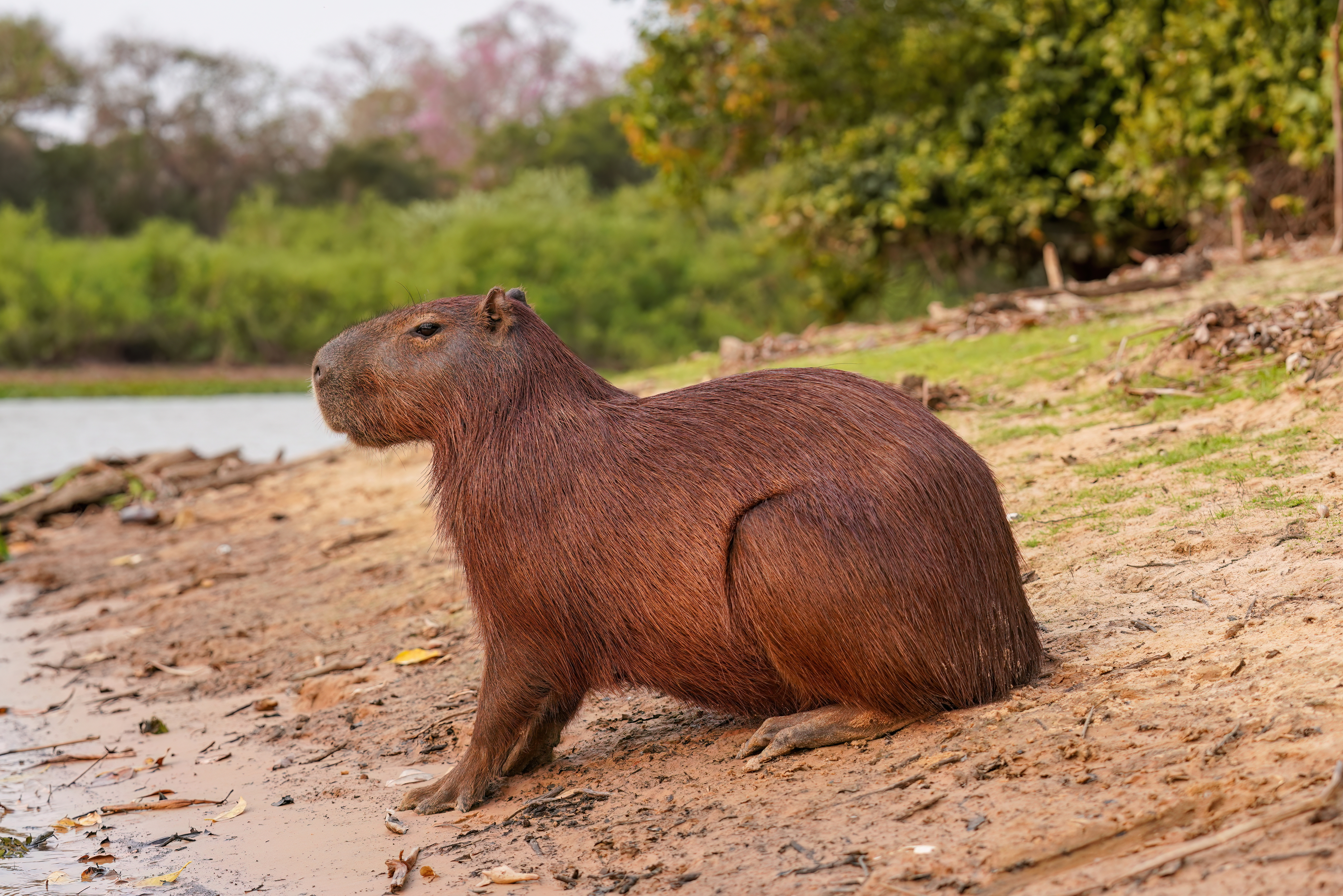
Credit: Giles Laurent · CC BY-SA 4.0
The capybara is the largest rodent in the world. It lives in the wetlands, rivers, and forests of South America. A full-grown capybara can weigh more than 100 pounds and stand about two feet tall at the shoulder. That makes it about the size of a large dog. Its closest small relatives are guinea pigs.
Capybaras have barrel-shaped bodies, short legs, and brown fur that feels like rough grass. Their faces are blocky, with small ears and eyes set high on the head. The high placement is useful. A capybara can rest in the water with almost its whole body hidden, while its eyes and nose stay above the surface to watch for danger.
These animals are built for a life near water. Their toes are slightly webbed, which helps them swim. They can hold their breath for up to five minutes. If a predator comes close, a capybara will often dive into a river or pond and wait there until the threat leaves. Jaguars, caimans, and anacondas all hunt capybaras, so the water is an important hiding place.
Capybaras are plant eaters. They munch on grasses, water plants, fruit, and tree bark. An adult capybara eats six to eight pounds of grass a day. Their front teeth never stop growing, just like the teeth of mice and beavers. Constant chewing wears the teeth down and keeps them the right length.
They live in groups, usually 10 to 20 animals but sometimes as many as 100 during the dry season. A group has one main male, several females, young capybaras, and a few other males. They "talk" to each other with barks, whistles, purrs, and clicks. Babies can swim almost as soon as they are born.
Capybaras are famous for being calm around other animals. Birds perch on their backs and eat bugs off their fur. Monkeys, turtles, rabbits, and even young caimans have been photographed resting next to or on top of a capybara. Scientists think the capybara's gentle behavior makes it a kind of mobile meeting spot for wetland creatures.
In recent years, capybaras have become internet famous. Videos of them soaking in hot springs in Japan or lounging in backyard pools have been watched millions of times. In their home range, though, they are still wild animals. Farmers in parts of South America sometimes hunt them for meat and leather. Even so, capybaras are not endangered. Their numbers stay strong across the rivers and marshes they call home.
Related
Last updated 2026-04-22