
Seal
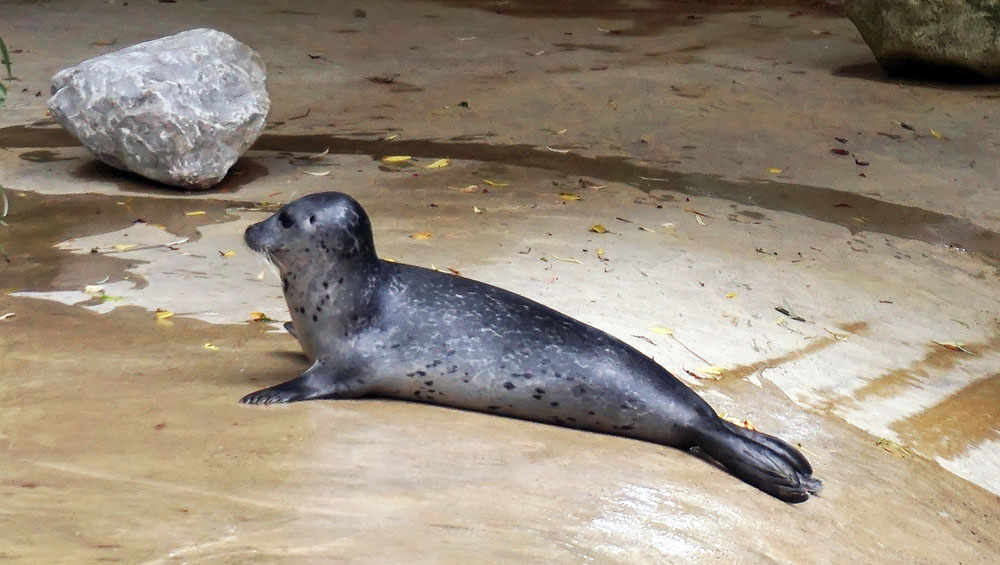
Credit: kulmalukko · CC BY-SA 3.0
A seal is a sea mammal with flippers instead of legs. Seals live in oceans all over the world, from the warm waters near the equator to the icy seas around Antarctica. There are about 33 different kinds of seals. Most of them belong to a group called "true seals," which have small flipper-like feet and no outside ear flaps. A close cousin group, the sea lions and fur seals, have visible ears and can walk on their flippers.
Seals are built for the water. Their bodies are shaped like smooth tubes that slip through the sea. A thick layer of fat, called blubber, keeps them warm in freezing water. Blubber also stores energy when food is hard to find. On land, seals move by wiggling along like giant caterpillars. In the water, they become graceful and fast. A leopard seal can swim about 25 miles per hour when chasing prey.
Most seals eat fish, squid, and shellfish. Leopard seals hunt penguins and even other seals. To find food, seals dive deep and hold their breath for a long time. Their heart slows down during a dive so their body uses less oxygen. Their eyes are large and work well in dim, deep water. Stiff whiskers on their faces can feel the tiny movements a fish makes, even in total darkness.
Seals come onto land or ice to rest, to escape predators, and to have their babies. A baby seal is called a pup. Harp seal pups are born on sea ice and wear fluffy white coats for their first few weeks. The white fur helps them blend in with the snow. Mother seals feed their pups very rich milk. A pup can gain more than 4 pounds a day, which is faster than almost any other baby mammal.
Seals have natural enemies in the sea. Orcas, great white sharks, and polar bears all hunt them. Humans have been the biggest danger of all. For hundreds of years, seals were hunted in huge numbers for their fur, meat, and blubber oil. Some kinds, like the Hawaiian monk seal, are still endangered today. Laws in many countries now protect seals, and several species are slowly recovering.
Seals and humans have shared the coasts for a long time. Inuit communities in the Arctic have depended on seals for food, clothing, and tools for thousands of years. In old Scottish and Irish folktales, magical creatures called selkies were said to be seals that could shed their skins and become human on land.
Related
Last updated 2026-04-22