
Temperature
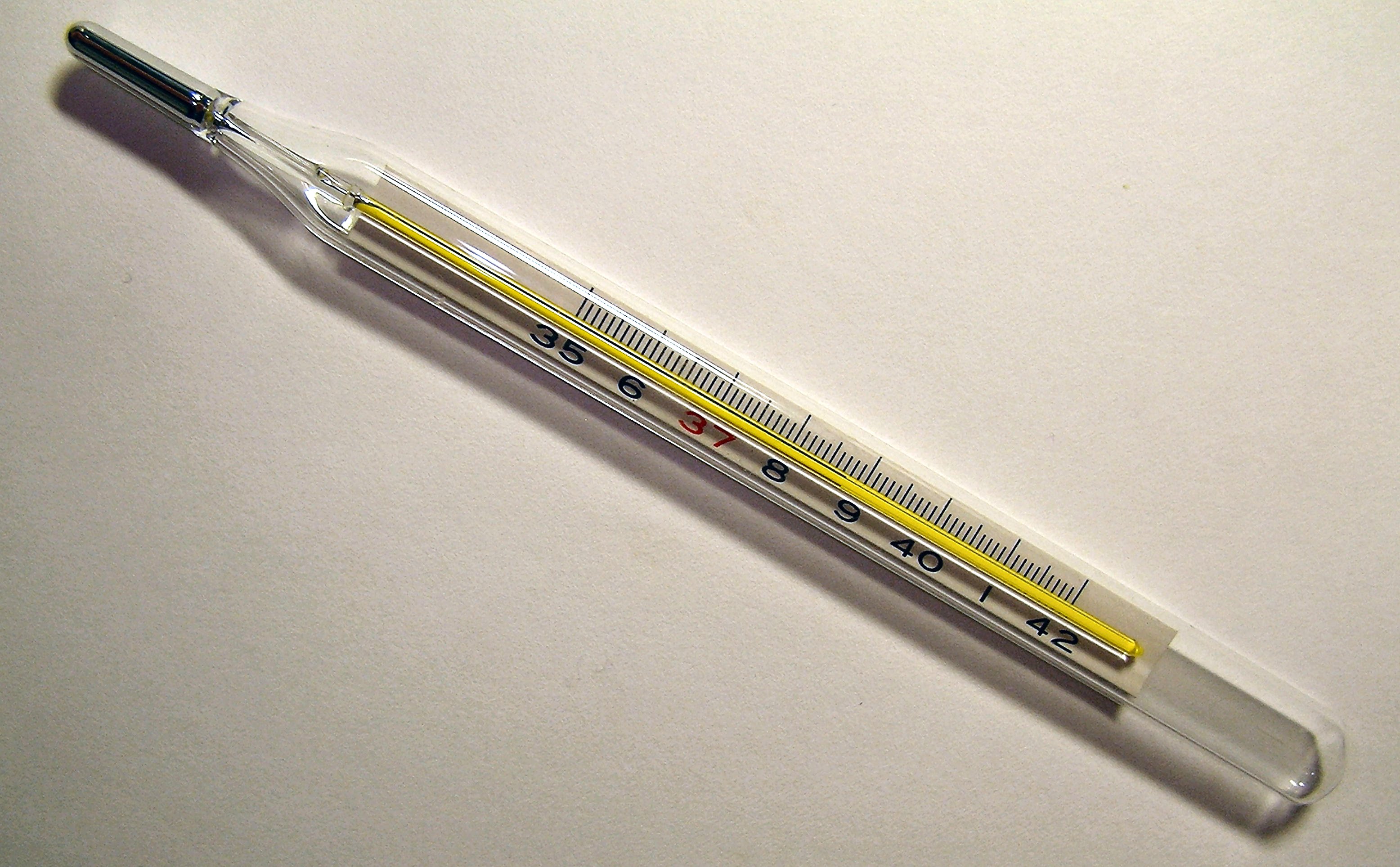
Credit: Menchi · CC BY-SA 3.0
Temperature is a measurement of how hot or cold something is. Everything around you has a temperature, including the air, your body, your food, and even the rocks in the ground. We measure temperature with a tool called a thermometer.
Temperature comes from the tiny particles that make up every object. These particles are always moving, even when an object looks perfectly still. When the particles move fast, the object is hot. When they move slowly, the object is cold. So temperature is really a measurement of how much the particles inside something are jiggling around.
There are three main scales for measuring temperature. In the United States, people mostly use Fahrenheit. On this scale, water freezes at 32 degrees and boils at 212 degrees. Most of the rest of the world uses Celsius. On the Celsius scale, water freezes at 0 degrees and boils at 100 degrees. Scientists often use a third scale called Kelvin, which starts at the coldest temperature possible.
That coldest possible temperature is called absolute zero. It is about -460 degrees Fahrenheit, or -273 degrees Celsius. At absolute zero, the tiny particles in matter would stop moving almost completely. Scientists have come very close to this temperature in special labs, but they have never quite reached it. Many physicists think it is impossible to actually get there.
Temperature shapes the world in big ways. Water is liquid at room temperature, but it turns to ice when the temperature drops below 32°F. It turns to steam when the temperature rises above 212°F. The same is true for many other substances. Even iron and rock will melt if you heat them enough. Inside the Earth, it gets so hot that solid rock turns into liquid magma.
Living things care about temperature too. The human body works best at about 98.6°F. If your temperature climbs even a few degrees higher, you have a fever and feel sick. Polar bears have thick fur that traps heat near their bodies, while desert lizards bask on warm rocks in the morning to heat themselves up.
The hottest natural place we know of is the center of the Sun, around 27 million degrees Fahrenheit. The coldest known place is a cloud of gas in deep space called the Boomerang Nebula. There, the temperature drops to just one degree above absolute zero.
Related
Last updated 2026-04-26