
Gene
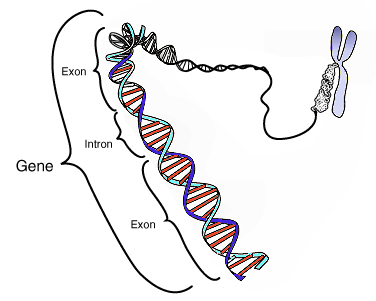
Credit: Courtesy: National Human Genome Research Institute · Public domain
A gene is a small section of DNA that carries instructions for building and running a living thing. Genes are found inside almost every cell of every plant, animal, fungus, and bacterium on Earth. They are the reason a maple seed grows into a maple tree and not a rose bush. They are also the reason you look a little like your parents.
DNA is a long, twisted molecule shaped like a ladder. A gene is a short stretch of that ladder, with a start point and a stop point. Most genes give the cell directions for making one specific protein. Proteins do almost all the work inside your body. They build muscle, fight germs, carry oxygen in your blood, and help you digest food. Without the right proteins, a cell cannot work.
Humans have about 20,000 genes. For a long time, scientists guessed the number was much higher, maybe 100,000. When the Human Genome Project finished mapping human DNA in 2003, the real number surprised everyone. A rice plant actually has more genes than you do.
Genes come in pairs. You have two copies of most of your genes, one from your mother and one from your father. The two copies can be a little different. One might give instructions for brown eyes, while the other gives instructions for blue. Which copy "wins" depends on the gene. This is how traits like eye color, hair color, and height get passed from parents to children.
Genes are organized into long bundles called chromosomes. Humans have 46 chromosomes in each cell, arranged in 23 pairs. If you stretched out all the DNA from a single human cell, it would be about six feet long. Yet it fits inside a space smaller than the period at the end of this sentence.
Sometimes the instructions in a gene get copied wrong. This change is called a mutation. Many mutations do nothing. Some cause diseases. A few, over many generations, give an animal or plant an advantage. Mutations are the raw material of evolution.
Scientists are still learning how genes work together. Not every trait comes from a single gene. Height, for example, is shaped by hundreds of genes plus food and sleep. Researchers are also finding that some parts of DNA, once called "junk," actually help control when genes turn on and off. The story of the gene is not finished yet.
Related
Last updated 2026-04-23