
Communism
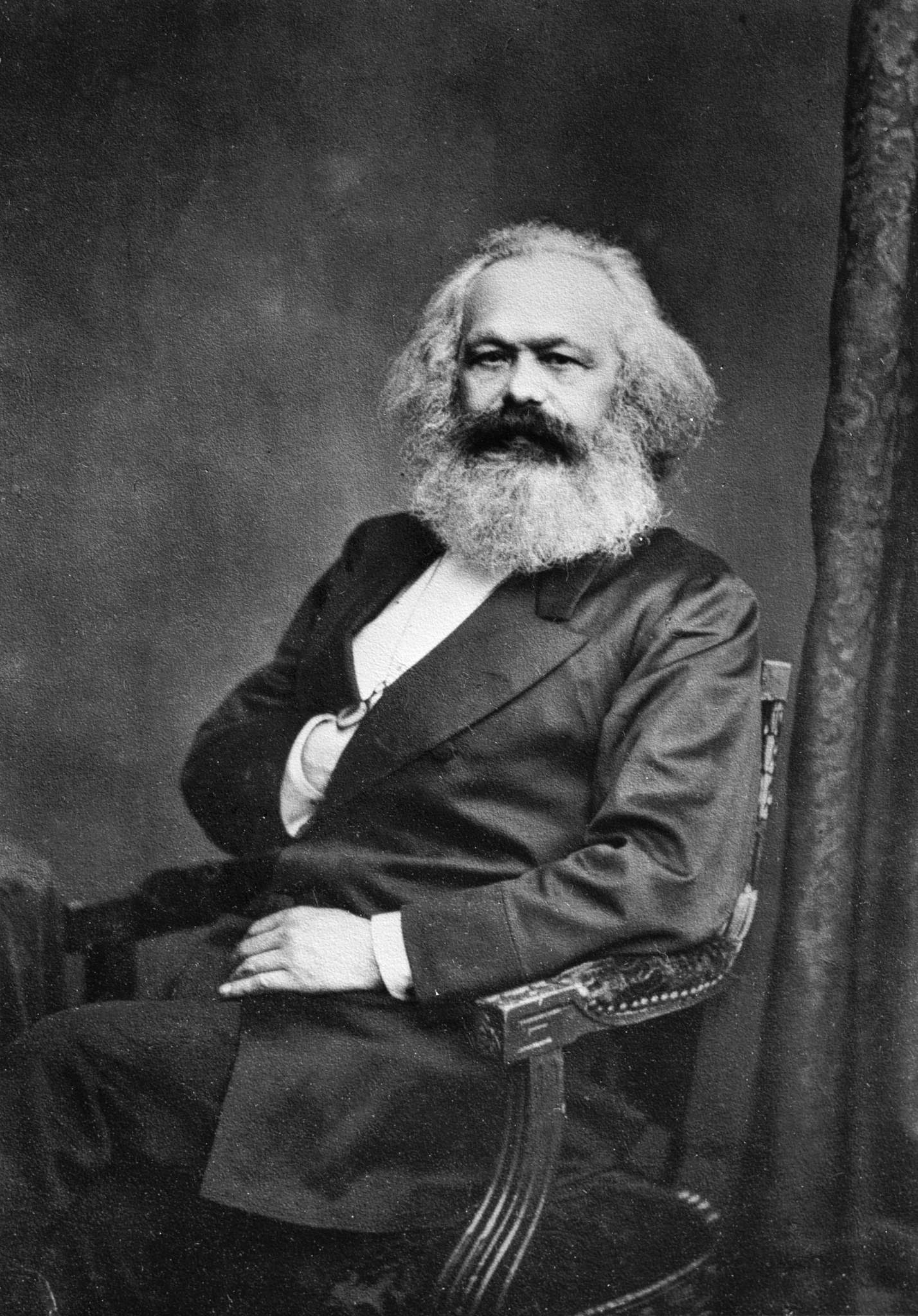
Credit: John Jabez Edwin Mayall · Public domain
Communism is a political and economic idea that says factories, farms, and other places where people work should be owned by everyone together, not by private owners. In a communist system, the government usually runs the economy and tries to share what is made among all the people. The goal is a society with no rich or poor, where everyone has what they need.
The idea was shaped most by a German thinker named Karl Marx in the 1800s. In 1848, Marx and his friend Friedrich Engels wrote a small book called The Communist Manifesto. They argued that workers in factories were being treated unfairly by the owners. They believed workers would one day rise up, take control, and build a fairer world. Marx died in 1883, long before any country tried his ideas.
The first big test came in Russia. In 1917, a revolution overthrew the Russian king. A leader named Vladimir Lenin and his party, the Bolsheviks, took power. They created the Soviet Union in 1922, the world's first communist country. Other communist governments followed. China became communist in 1949 under Mao Zedong. Cuba did in 1959 under Fidel Castro. North Korea, Vietnam, and several countries in Eastern Europe also became communist during the 1900s.
In practice, communist countries looked very different from the fair society Marx had described. Most became one-party states with no free elections. Leaders like Joseph Stalin in the Soviet Union and Mao in China held huge power. Millions of people died from forced labor camps, famines, and political violence. Newspapers, books, and even private conversations were watched closely.
For most of the second half of the 1900s, the communist Soviet Union and the capitalist United States were rivals. This long standoff is called the Cold War. The two sides never fought each other directly, but they built huge stockpiles of nuclear weapons and competed for influence around the world.
Most communist governments fell apart in the late 1900s. The Berlin Wall, which had split communist East Germany from the democratic West, came down in 1989. The Soviet Union itself broke up in 1991. Today, only a few countries still call themselves communist, including China, Vietnam, Cuba, Laos, and North Korea. Some of them, like China and Vietnam, now allow many private businesses, so their economies are not really what Marx had in mind.
People still argue about communism. Some say it failed because the idea itself was flawed. Others say the idea was good, but the leaders who tried it became cruel and corrupt.
Related
Last updated 2026-04-26