
Enlightenment
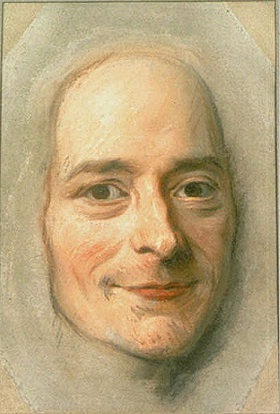
Credit: Maurice Quentin de La Tour · Public domain
The Enlightenment was a time when many thinkers in Europe and the Americas began using reason and science to ask big questions about how the world should work. It lasted from about the late 1600s to the late 1700s. Enlightenment thinkers wrote about government, religion, education, and human rights. Their ideas changed how people lived and how countries were run.
Before the Enlightenment, most Europeans believed kings ruled because God chose them. Most knowledge came from the church or from very old books. Then, in the 1600s, scientists like Isaac Newton showed that nature followed clear rules anyone could test and measure. Thinkers asked a simple but powerful question. If reason can explain the stars and the tides, why not use it to explain people and governments too?
The thinkers who tried to answer that question are called philosophers. John Locke, an English writer, said that all people are born with rights to life, liberty, and property. He argued that governments work for the people, not the other way around. In France, Voltaire fought for free speech and made fun of unfair laws. Montesquieu said power should be split into different branches so no ruler could grow too strong. Jean-Jacques Rousseau wrote that society should be based on a "social contract," an agreement between the people and their leaders.
Women took part too, though they often had to fight to be heard. Mary Wollstonecraft wrote that girls deserved the same education as boys. In Paris, women like Madame Geoffrin ran "salons," gatherings in their living rooms where writers and scientists shared ideas over tea.
Not everyone agreed with the Enlightenment. Many kings and church leaders saw the new ideas as dangerous. Some books were banned, and writers were sometimes jailed or forced to flee. Historians today also point out a hard truth. Many Enlightenment thinkers spoke about freedom while ignoring slavery, or wrote about equality while leaving out women and people of other cultures. The ideas were powerful, but the people who shared them did not always live by them.
Even so, those ideas spread fast. Benjamin Franklin and Thomas Jefferson read Locke and Montesquieu, and their thinking shaped the Declaration of Independence in 1776. A few years later, the French Revolution used Enlightenment slogans like "liberty, equality, fraternity." Modern ideas about voting, courts, free speech, and human rights all trace back to this period.
The Enlightenment did not answer every question it raised. Many of its arguments, about who counts as equal and how much freedom is enough, are still being debated today.
Related
Last updated 2026-04-26