
Anaconda
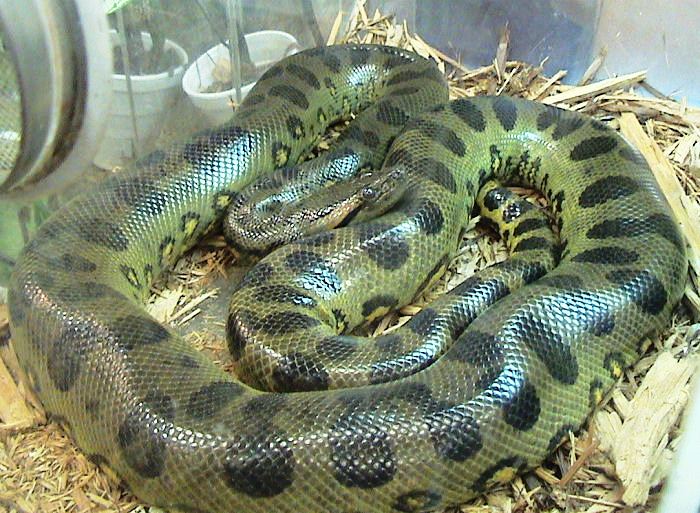
Credit: LA Dawson · CC BY-SA 2.5
The anaconda is a giant snake that lives in the swamps, rivers, and wetlands of South America. It belongs to a group of snakes called boas, which squeeze their prey instead of using venom. There are four kinds of anaconda, but the most famous is the green anaconda. The green anaconda is the heaviest snake in the world.
A large green anaconda can grow more than 20 feet long and weigh over 200 pounds. That is heavier than most adult humans. Female anacondas are much bigger than males. Their skin is olive green with black spots, which helps them hide in muddy water and thick plants.
Anacondas spend most of their lives in or near water. They are slow and heavy on land, but they glide easily through rivers and swamps. Their eyes and nostrils sit high on top of the head. This lets an anaconda stay almost fully underwater while still watching and breathing. They live mostly in the Amazon and Orinoco river basins, deep in the rainforests and wet grasslands of places like Brazil, Venezuela, and Colombia.
An anaconda is a constrictor, which means it kills by squeezing. It waits quietly in the water for an animal to come close. Then it strikes, grabs the animal with curved teeth, and wraps its body tightly around it. Each time the prey breathes out, the snake squeezes a little tighter. The anaconda then swallows its meal whole, head first. An anaconda can eat fish, birds, turtles, caimans (small relatives of alligators), capybaras, and even deer.
Baby anacondas are not hatched from eggs outside the mother's body. Instead, the mother carries the eggs inside her and gives birth to live young. A single mother can have 20 to 40 babies at once. Each newborn is about two feet long and can swim and hunt right away. Very few survive to adulthood, because many are eaten by birds, caimans, and larger snakes.
Anacondas have a big reputation in stories and movies, where they are often shown attacking people. Real attacks on humans are extremely rare. Scientists who study anacondas in the wild say the snakes usually try to hide or slip away when people come near.
There is still a lot scientists do not know about anacondas. They are hard to find and harder to follow, since they spend so much time hidden underwater. Researchers are still learning how long they live, how far they travel, and exactly how many kinds there are.
Related
Last updated 2026-04-22