
Bat
Credit: PD-USGov, exact author unknown · Public domain
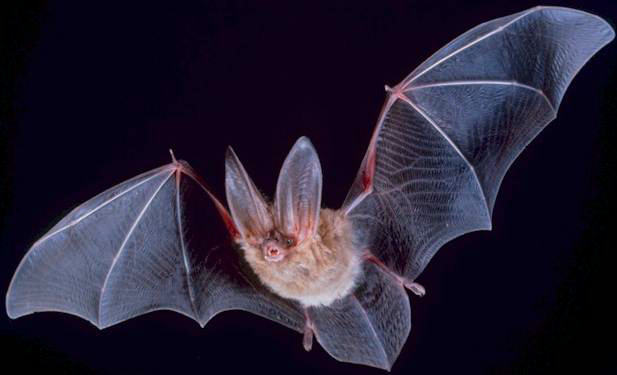
The bat is a flying mammal found on every continent except Antarctica. It is the only mammal that can truly fly. Other animals, like flying squirrels, only glide through the air. Bats have wings made of thin skin stretched between long finger bones, a body, and legs. There are more than 1,400 kinds of bats in the world. That means about one in every five mammal species on Earth is a bat.
Bats come in very different sizes. The smallest is the bumblebee bat of Thailand. It weighs less than a penny and could sit on your thumb. The largest are the flying foxes of Asia and Australia. Their wings can stretch nearly six feet from tip to tip, wider than most kids are tall. Despite the big wings, flying foxes are not scary hunters. They eat fruit.
Most bats are active at night. To find their way in the dark, many bats use echolocation. They make high squeaks that bounce off objects and come back as echoes. The bat's brain uses those echoes like a map. This lets a bat fly between tree branches and catch a moth in pitch blackness. The squeaks are too high for human ears to hear.
Bats eat many different things. Most species eat insects. Others eat fruit, nectar, or pollen, and a few catch fish or frogs. Three kinds of bats, called vampire bats, drink tiny amounts of blood from sleeping cattle or birds. Vampire bats live only in Central and South America. They almost never bother humans.
Bats are surprisingly helpful to people. Insect-eating bats protect farm crops by eating billions of bugs every night. Fruit bats spread seeds through the forest and help new trees grow. Nectar bats pollinate flowers, including the wild plants that bananas, mangoes, and agave come from. Without bats, the world would have fewer fruits and many more pests.
People have feared bats for a long time. Old stories link them to vampires, witches, and haunted places. Most of that fear is unfair. Bats rarely attack humans, and only a tiny number carry diseases like rabies. The real danger runs the other way. A disease called white-nose syndrome has killed millions of bats in North America since 2006. Habitat loss and wind turbines also threaten them. Scientists are working hard to protect bats, because a world without them would be hungrier, buggier, and a lot less interesting.
Last updated 2026-04-22