
Echo
Credit: Wikimedia Commons · Public domain
An echo is a sound that bounces back to you after hitting a surface. You hear an echo when you shout in a canyon, a cave, or a big empty room. The sound leaves your mouth, travels through the air, hits something solid like a rock wall, and bounces back to your ears. Echoes are a normal part of how sound behaves.
Sound moves in waves through the air. These waves travel about 1,125 feet per second, which is faster than a passenger jet. When a sound wave hits a hard, flat surface, most of it bounces off. That bounced-back wave is the echo. Soft surfaces, like thick curtains or piles of snow, soak up sound instead of bouncing it. That is why a snowy field feels so quiet.
For you to hear an echo, the surface has to be far enough away. Your brain needs about one-tenth of a second to tell the original sound apart from the bounced sound. That means the surface needs to be at least 56 feet away, or about the length of a basketball court. Closer than that, the echo blends into the first sound and you cannot tell them apart.
Some animals use echoes to "see" the world. Bats fly through dark caves by making high squeaks and listening for the echoes. From the time it takes a squeak to return, a bat can tell how far away a moth is, how big it is, and which way it is moving. Dolphins do the same thing underwater with clicks. This trick is called echolocation, and it works so well that a bat can catch a tiny insect in total darkness.
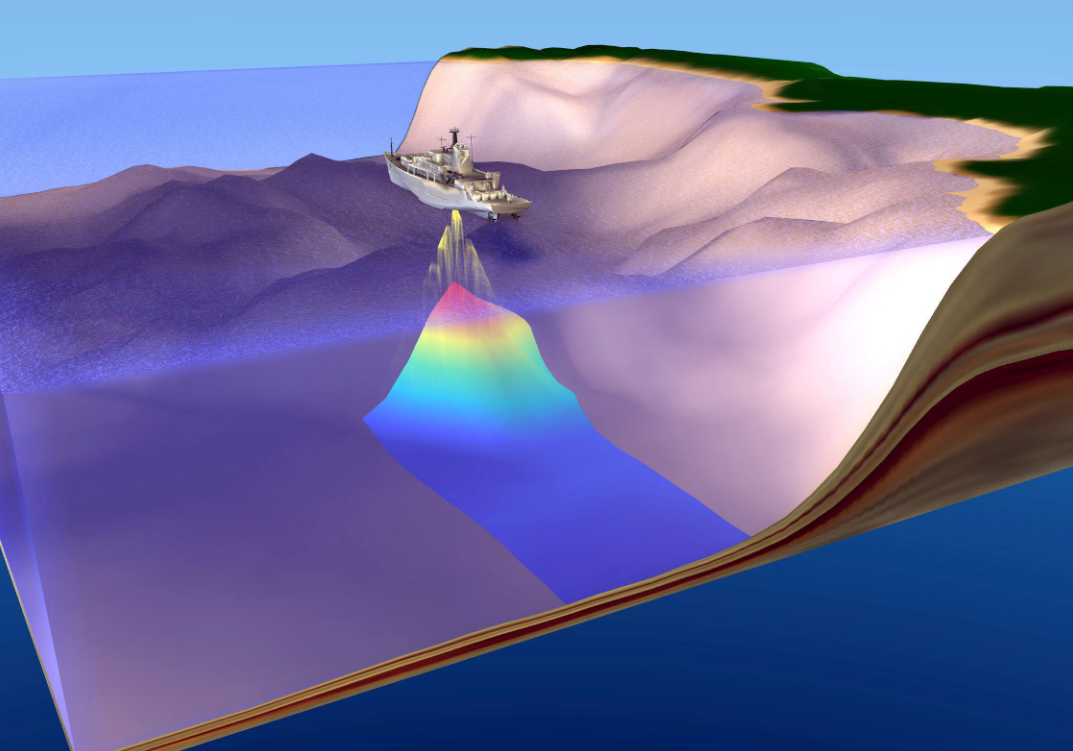
People use echoes too. Ships send out sound pulses and time the echoes to map the ocean floor and find schools of fish. This tool is called sonar, and submarines rely on it to navigate deep underwater where sunlight cannot reach. Doctors use a related tool called ultrasound. It bounces sound waves off the inside of the body to make pictures of a baby before it is born.
The next time you are near a tall cliff or an empty gym, try shouting a single word. Wait a moment. The voice that answers is your own, slightly late, delivered by physics. Every echo is a message sent by you, bounced back by the world.
Last updated 2026-04-23