
Cat
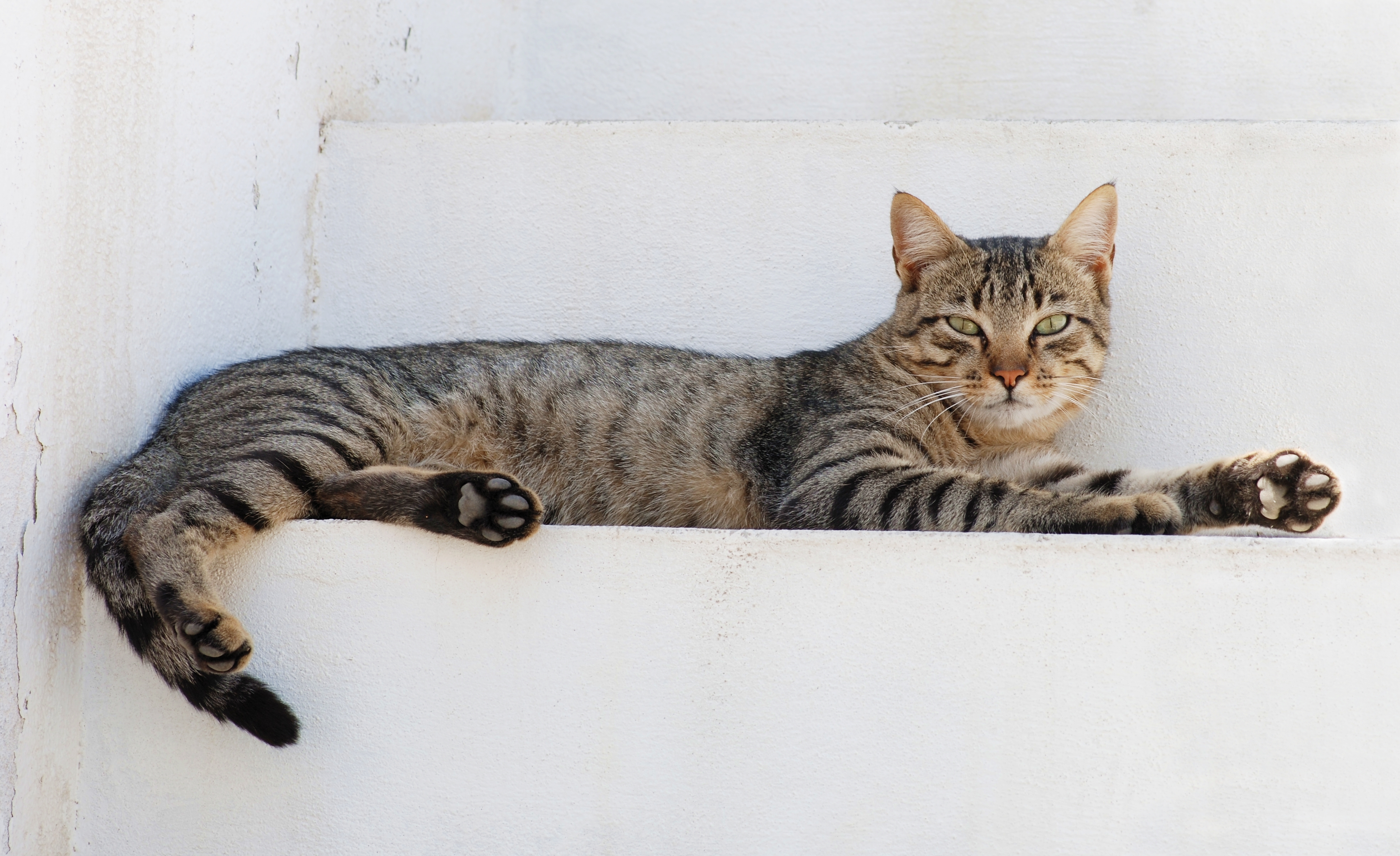
Credit: Alvesgaspar · CC BY-SA 3.0
The cat is a small, furry mammal that people keep as a pet all over the world. The house cat belongs to the same family as lions, tigers, and leopards. Scientists call it Felis catus. There are about 600 million cats living as pets around the world today, plus millions more that live on their own in cities, farms, and forests.
Cats come in many colors and patterns. Most weigh between 8 and 10 pounds. They have soft fur, sharp teeth, and claws that pull back into their paws. Those claws stay sharp because they are hidden when the cat walks. A cat can also turn its ears in different directions to catch tiny sounds. Its eyes work well in very low light, about six times better than human eyes.
Cats are built to hunt. Even a sleepy house cat will chase a string, a bug, or a toy mouse. In the wild, cats eat small animals like mice, birds, and lizards. Their bodies can only get the nutrients they need from meat, so cats are what scientists call obligate carnivores. A pet cat still has the body of a hunter, even when dinner comes from a can.
People first tamed cats about 10,000 years ago in the Middle East. Farmers had started storing grain, and wild cats came to catch the mice that ate the grain. Over time, the cats that were calmer around humans stayed close. Ancient Egyptians loved cats so much that they made them part of their religion. A goddess named Bastet was often shown with the head of a cat. Killing a cat in ancient Egypt could be punished by death.
Cats sleep a lot. An adult cat sleeps between 12 and 16 hours a day. When awake, a cat spends a big part of its time cleaning itself. Its tongue is covered in tiny hooks made of the same material as fingernails. The hooks act like a comb. Cats also have an amazing sense of balance. If a cat falls, it can often twist its body in the air to land on its feet. This trick is called the righting reflex.
One of the strangest things about cats is the purr. Cats purr when they are happy, but they also purr when they are hurt or scared. Scientists are not sure exactly why. Some think the low vibrations help the cat heal faster. Others think purring started as a way for kittens to tell their mother they were okay. After thousands of years of living with humans, the cat still keeps some of its secrets.
Last updated 2026-04-22