
Lion
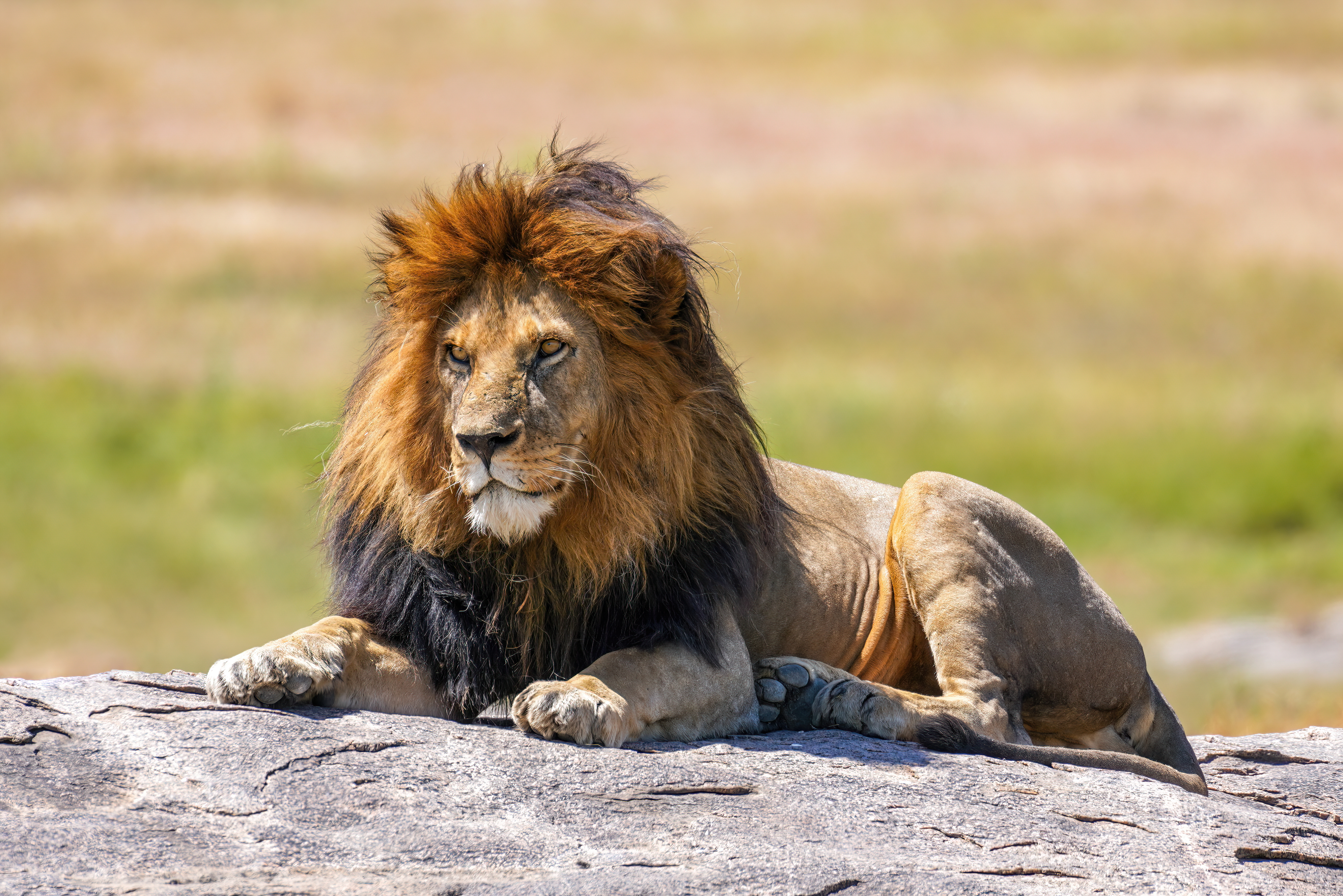
Credit: Giles Laurent · CC BY-SA 4.0
The lion is a large wild cat that lives mostly in Africa. It is the second-biggest cat in the world, after the tiger. A male lion weighs between 330 and 550 pounds, about as much as two grown men. Males are famous for the thick mane of hair around their head and neck. Females, called lionesses, are smaller and do not grow manes.
Most lions live on the grasslands and open woodlands of sub-Saharan Africa. A small group of about 600 lions also lives in the Gir Forest in India. These Asiatic lions are the last survivors of a population that once stretched from Europe to the Middle East.
Lions are the only cats that live in family groups. A group is called a pride. A pride usually has five to fifteen lions, including related females, their cubs, and one to four adult males. Most lionesses in a pride are sisters, cousins, or mothers and daughters. They stay together for life. Young males leave the pride around age two or three and must find their own group later.
The lionesses do most of the hunting. They work as a team, often at dawn or dusk. Some spread out to chase prey toward others waiting in the grass. Lions hunt zebras, wildebeests, antelopes, and sometimes young elephants or giraffes. Males usually eat first when the food is ready, even though they did not catch it. Scientists still debate why the males get this privilege, but protecting the pride from rival males and hyenas is part of a male's job.
Lions sleep a lot. An adult lion rests up to 20 hours a day. Staying still in the heat saves energy for the short bursts of running needed to catch prey. When they do run, lions can reach 50 miles per hour for a few seconds.
A lion's roar is one of the loudest sounds made by any land animal. It can carry five miles across the savanna. Lions roar to warn other prides to stay away and to find members of their own group.
Lions have been powerful symbols in human stories for thousands of years. Ancient Egyptians carved lion-headed gods. The Greeks, Romans, and Persians used lions on flags, shields, and thrones. In many countries today, the lion still stands for courage and royal power.
Wild lions are in trouble. Around 1950, about 450,000 lions lived in Africa. Today fewer than 25,000 are left. Hunting, loss of habitat, and conflict with farmers have caused the drop. National parks like the Serengeti and Kruger are now among the safest places left for lions.
Last updated 2026-04-22