
Goose
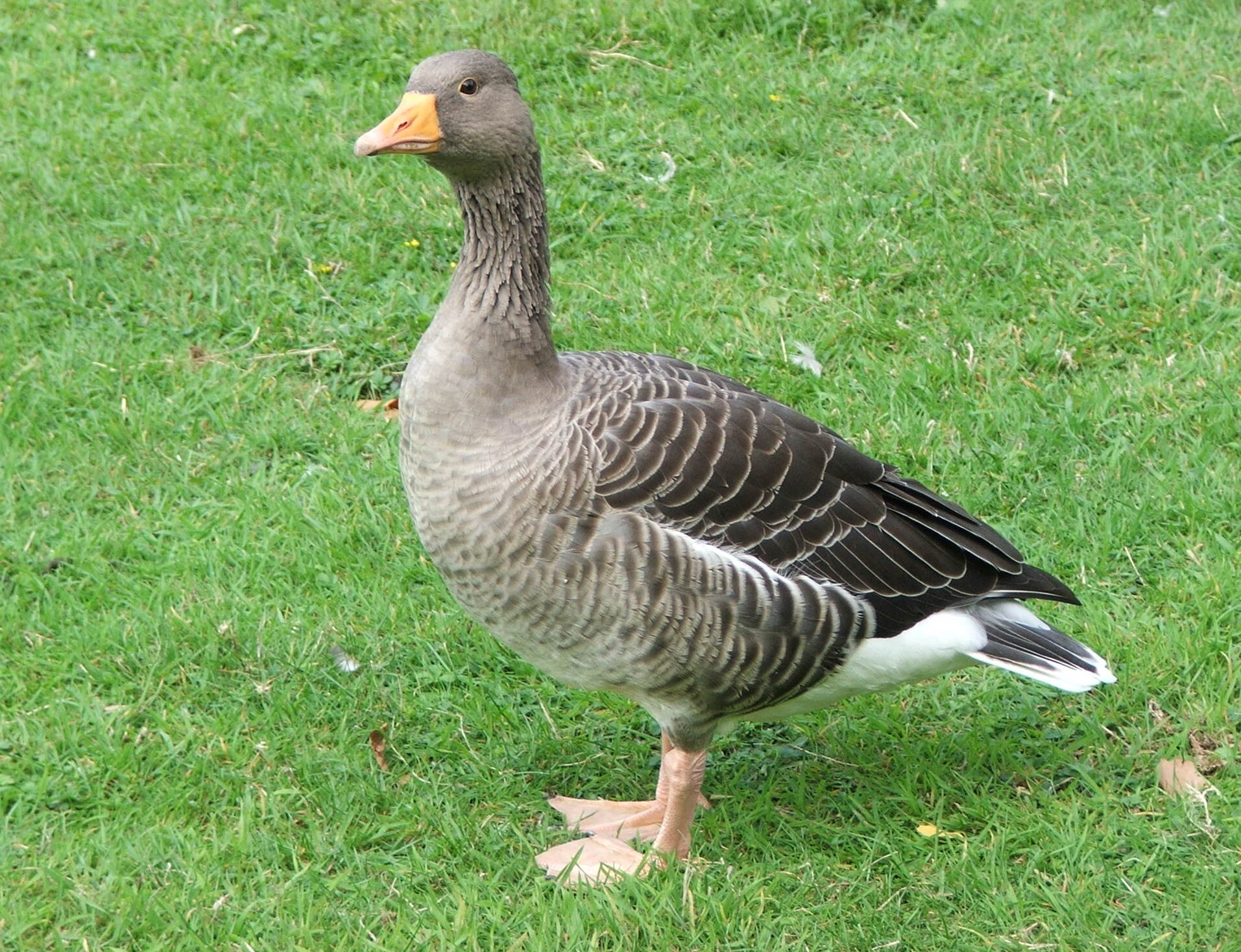
Credit: Piotr Kuczynski · CC BY-SA 3.0
A goose is a large water bird that belongs to the same family as ducks and swans. Geese live on every continent except Antarctica. They are found near lakes, rivers, ponds, and fields. The most common kind in North America is the Canada goose, with its black head, white cheek patch, and brown body. A male goose is called a gander. A female is simply a goose, and a baby is a gosling.
Geese are bigger than ducks but smaller than swans. An adult Canada goose weighs between 6 and 14 pounds. Its wings stretch up to 6 feet across, about as wide as an adult is tall. Geese have webbed feet for swimming and strong wings for long flights. Their beaks have rough edges that help them tear grass and pull up plants.
Most geese eat plants. They graze on grass, grain, roots, and water plants. A flock can munch through a field the way sheep do. Geese swallow small stones too. The stones sit in a part of the stomach called the gizzard and help grind up tough food.
Many geese travel long distances each year. This is called migration. In fall, huge flocks fly south to warmer places. In spring, they return north to nest. They often fly in a V-shape, taking turns at the front where the wind pushes hardest. A flock can cover more than 1,500 miles, about the distance from New York to Texas, in a single migration.
Geese are famous for being bold. They hiss, spread their wings, and charge at anything that comes near their nest or goslings. Farmers have used geese as guard animals for thousands of years. Ancient Romans kept geese at temples because the birds would honk loudly at strangers. According to legend, honking geese once warned the city of Rome about an enemy attack at night.
Geese mate for life. A pair returns to the same nesting area year after year. The mother lays 2 to 8 eggs and sits on them for about a month. Goslings can walk, swim, and feed themselves within a day of hatching. They stay with their parents for almost a full year, learning the migration route by following along.
People have raised geese for food and feathers for more than 4,000 years. Today, wild geese are so common in parks and on golf courses that some cities consider them pests. The same boldness that made them good guards now helps them thrive alongside humans.
Last updated 2026-04-22