
Duck
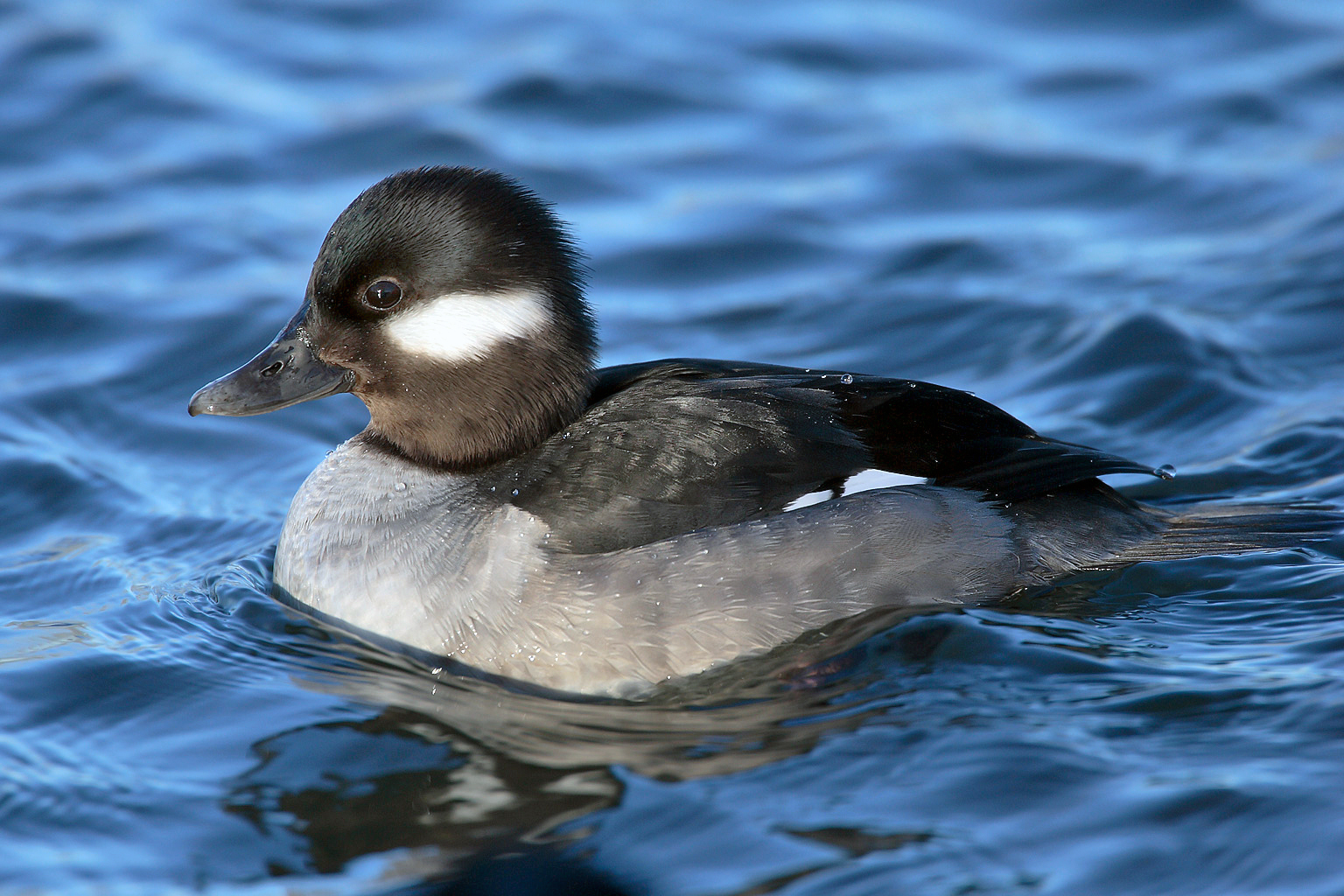
Credit: Mdf · CC BY-SA 3.0
A duck is a water bird with a flat bill, short legs, and webbed feet. Ducks live on ponds, lakes, rivers, marshes, and coasts all over the world. The only continent without wild ducks is Antarctica. There are about 120 different species, from the tiny green-winged teal to the big eider.
Ducks are built for life in the water. Their webbed feet work like paddles. Their feathers are coated with a special oil from a gland near the tail. This oil keeps water from soaking through, which is why water rolls right off a duck's back. Under the waterproof top layer is a layer of soft, fluffy feathers called down. Down traps warm air close to the body, so ducks can swim in cold water without freezing.
Male ducks are called drakes. Females are called hens. Baby ducks are ducklings. In most species, drakes have bright, patterned feathers, and hens are plain brown. The dull color helps hens hide on the nest while they sit on their eggs.
Ducks split into two main groups by how they eat. Dabbling ducks, like mallards, tip their bodies forward and stick their tails in the air to reach plants and bugs just under the surface. Diving ducks swim all the way down, sometimes 20 feet below, to grab food from the bottom. A few ducks, like mergansers, have bills with tiny tooth-like edges for catching fish.
Many ducks migrate long distances. Some travel thousands of miles every year between their summer nesting grounds in the north and their winter homes in the south. They often fly in a V-shape. Flying in a V helps each bird ride the small wind wave made by the one in front, which saves energy.
Ducklings do something amazing in their first hours of life. They learn to follow the first large moving thing they see, which is almost always their mother. This is called imprinting. Once a duckling imprints on its mother, it will waddle after her in a neat little line. Scientists showed that ducklings can even imprint on humans or boots if that is what they see first.
People have kept ducks as farm animals for at least 4,000 years, mostly for eggs, meat, and feathers. The rubber duck in the bathtub, the cartoon Donald, and the wooden decoys hunters float on ponds all come from the same real bird paddling across a pond near you.
Related
Last updated 2026-04-22