
Octopus
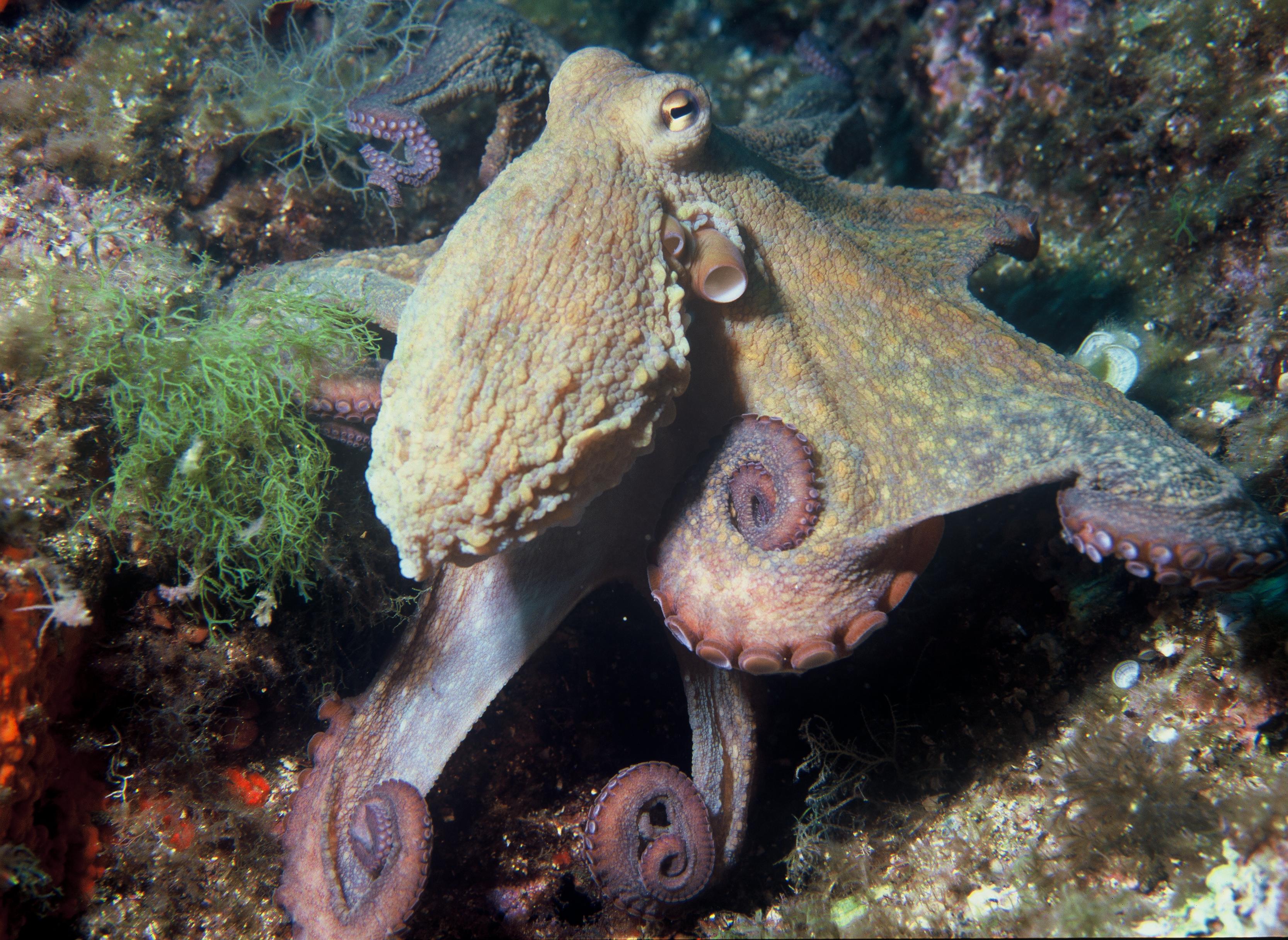
Credit: Albert Kok at Dutch Wikipedia (Original text: Albert Kok) · Public domain
The octopus is a soft-bodied sea animal with eight arms. It belongs to a group of animals called cephalopods, which also includes squid and cuttlefish. Octopuses live in every ocean on Earth, from shallow tide pools to the deep sea. There are about 300 known species. The smallest is the size of a peanut. The biggest, the giant Pacific octopus, can stretch more than 14 feet from arm tip to arm tip and weigh over 100 pounds.
An octopus has no bones at all. That means it can squeeze through any hole big enough for its beak, which is the only hard part of its body. A 50-pound octopus can fit through an opening the size of a quarter. Aquarium workers have to seal their tanks tightly, because octopuses are famous escape artists.
Each of the eight arms is lined with suckers. A giant Pacific octopus has about 2,000 suckers in total. The suckers grip like strong suction cups, and they can also taste and smell whatever they touch. In a way, an octopus tastes the world with its arms.
Octopuses are some of the best hiders in the ocean. Special cells in their skin, called chromatophores, let them change color in less than a second. They can also change the texture of their skin to match rocks, sand, or coral. Some species can even copy the shape and movement of other animals. The mimic octopus can pretend to be a flatfish, a sea snake, or a lionfish, depending on what threat is nearby.
When a hiding trick fails, an octopus has backup plans. It can squirt a cloud of black ink to confuse a predator. It can also shoot water through a tube called a siphon to blast itself away at high speed.
Scientists think octopuses are the most intelligent invertebrates on Earth. They solve puzzles, open jars, use coconut shells as portable shelters, and remember people who have been kind or mean to them. Their intelligence is a real mystery. Most smart animals, like dolphins and crows, are our distant relatives. Octopuses are not. Our last common ancestor with them lived more than 500 million years ago and probably looked like a small worm. That means octopus intelligence evolved on a completely separate path from ours. Scientists are still trying to understand how it works.
Octopuses do not live long. Most species live only one to two years. After a female lays her eggs, she guards them without eating until they hatch, and then she dies.
Last updated 2026-04-22