
Great Barrier Reef
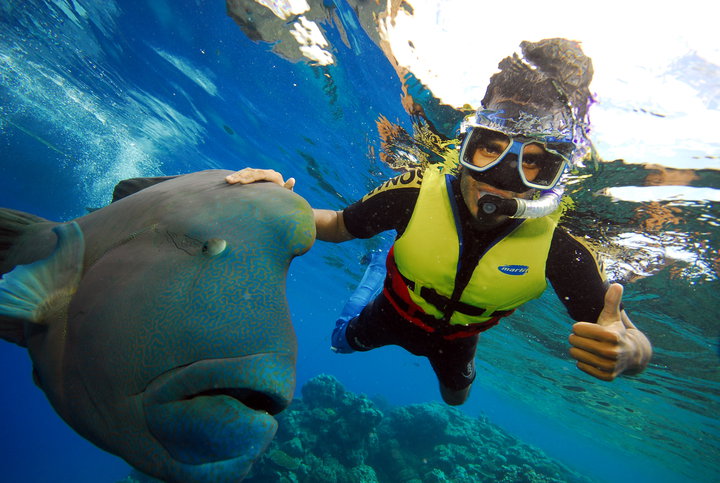
Credit: I.DeSouza · CC BY 3.0
The Great Barrier Reef is a huge coral reef system off the northeast coast of Australia. It stretches for about 1,400 miles along the coast of the state of Queensland. That is longer than the distance from New York City to Miami. The reef covers an area of about 133,000 square miles, which is larger than the whole country of Italy. It is the biggest structure on Earth made by living things.
The reef is not one single reef. It is made up of about 2,900 smaller reefs and 900 islands. All of these parts were built by tiny animals called coral polyps. Each polyp is only a few millimeters wide. A polyp has a soft body and a hard skeleton made of limestone. When a polyp dies, its skeleton stays behind. New polyps grow on top of the old ones. Over thousands of years, these skeletons pile up and form the reef. The coral we see today started growing about 500,000 years ago.
Coral reefs are sometimes called the rainforests of the sea. This is because so many different kinds of animals live in them. The Great Barrier Reef is home to more than 1,500 kinds of fish, 400 kinds of coral, 30 kinds of whales and dolphins, and six of the world's seven kinds of sea turtles. It also has sharks, rays, giant clams, and the friendly-looking dugong, a relative of the manatee.
Coral polyps are animals, but they get most of their food from tiny plant-like creatures that live inside them. These creatures use sunlight to make food, like plants do. They also give coral its bright colors.
When the ocean gets too warm, the coral forces out these tiny helpers. Without them, the coral turns bone white and starts to starve. This is called coral bleaching. The Great Barrier Reef has suffered several major bleaching events since 2016. Warmer oceans from climate change are the main cause. Scientists are worried. Some parts of the reef have recovered, but others have not. Researchers are testing new ideas, including growing heat-tough coral in labs and replanting it on damaged reefs.
The reef has been a UNESCO World Heritage Site since 1981. The Aboriginal and Torres Strait Islander peoples have lived along this coast and fished these waters for more than 60,000 years. About two million tourists visit the reef each year. Many come to snorkel or scuba dive. Swimming above it feels like floating over an underwater city.
Related
Last updated 2026-04-23