
Pelican
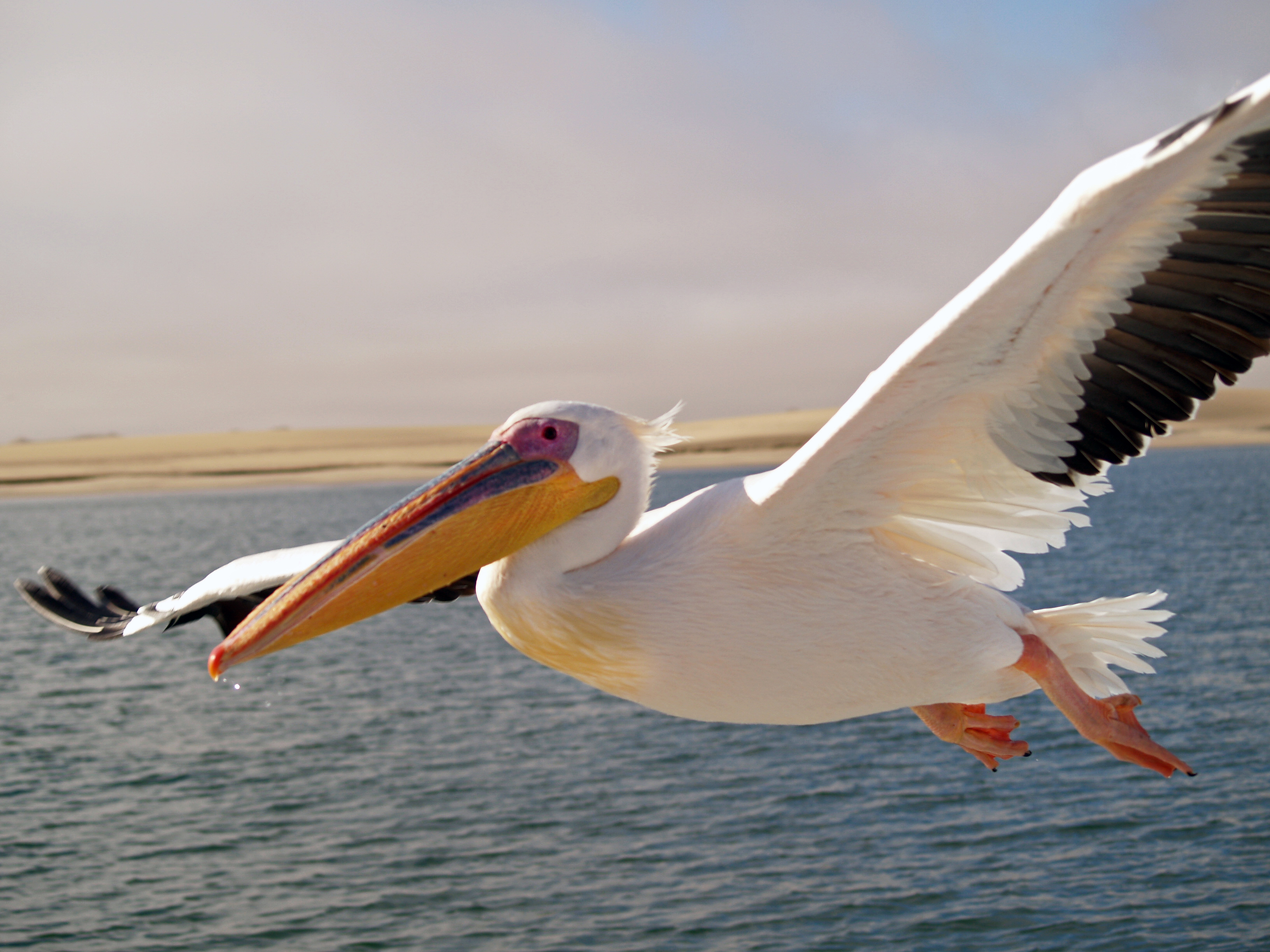
Credit: Rui Ornelas from Lisboa, Portugal · CC BY 2.0
The pelican is a large water bird known for the giant stretchy pouch under its beak. Pelicans live on coasts, lakes, and rivers on every continent except Antarctica. There are eight species in the world. The biggest is the Dalmatian pelican, which can weigh 30 pounds and have a wingspan of nearly 11 feet. That is wider than a small car is long.
The pouch is the pelican's most famous feature. It is a flap of stretchy skin that hangs from the lower beak. Pelicans use the pouch like a net, not a bucket. When a pelican spots a fish, it dives or scoops its beak through the water. The pouch stretches open and fills with water and fish together. Then the pelican tips its head forward to drain the water out the sides before swallowing the fish whole.
Different pelicans hunt in different ways. Brown pelicans, which live along American coasts, are the only species that dives from the air. They fly up to 60 feet above the ocean, spot a fish, then fold their wings and plunge into the water headfirst. The impact stuns the fish. To protect itself, a brown pelican has air sacs under its skin that cushion the blow, a bit like built-in bubble wrap.
White pelicans hunt as a team. A group swims in a line or a half-circle and slaps the water with their wings. This herds fish into shallow water, where the pelicans scoop them up together. Scientists find this teamwork surprising, because many birds hunt alone.
Pelicans are very old as a group of animals. Fossils show that pelicans with pouches much like today's were flying around 30 million years ago, long before the first humans appeared. The basic design has barely changed.
Pelicans nest in big noisy colonies, sometimes with thousands of pairs together. Parents take turns keeping eggs warm and feeding the chicks. A hungry chick sticks its whole head inside the parent's pouch to grab partly digested fish.
In the 1960s and 1970s, brown pelicans almost disappeared from the United States. A pesticide called DDT made their eggshells too thin to hatch. After DDT was banned in 1972, the birds slowly came back. Today brown pelicans are off the endangered species list, and flocks glide over American beaches again.
Last updated 2026-04-22