
Seagull
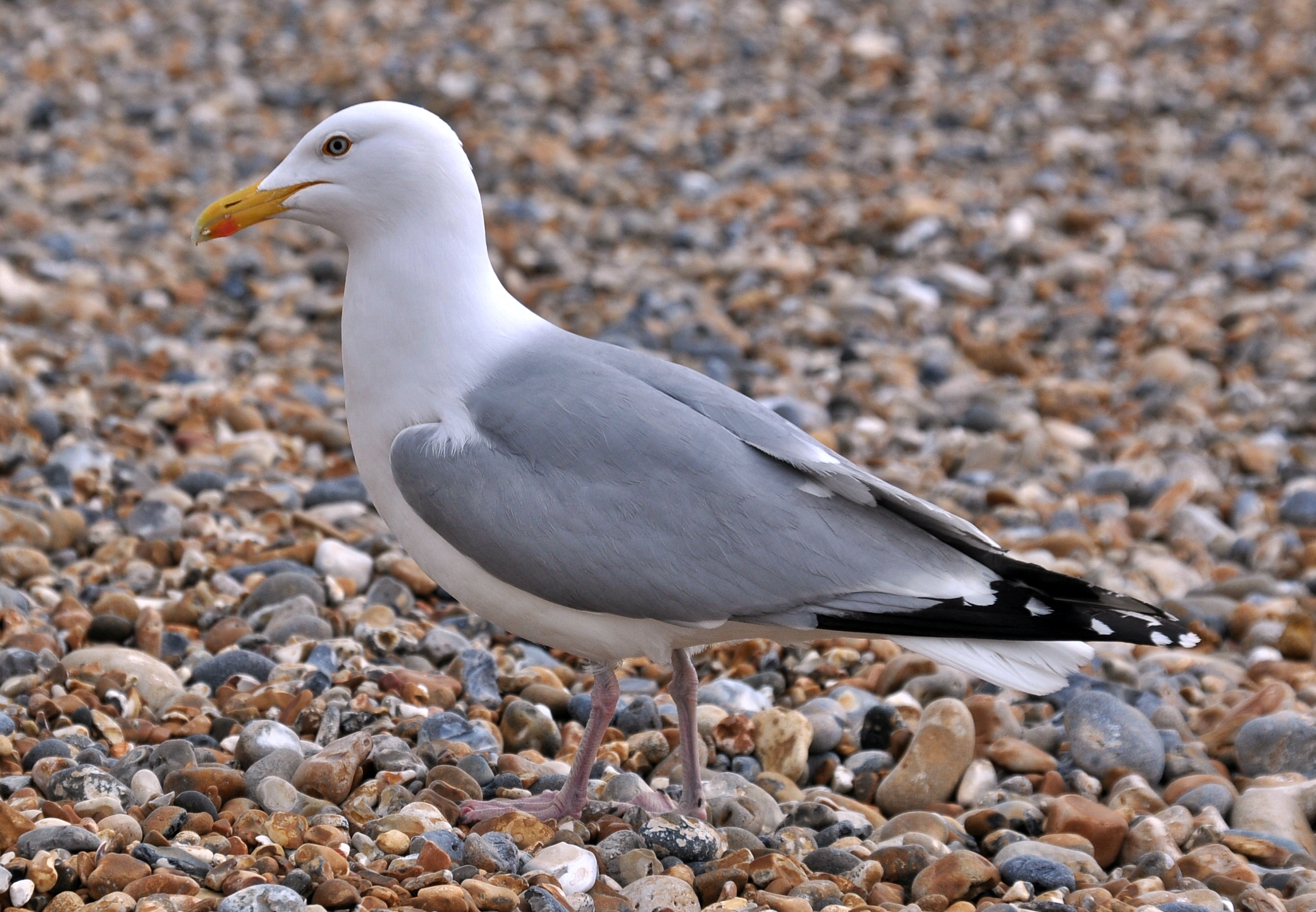
Credit: Beata May · CC BY-SA 3.0
A seagull is a type of seabird that lives near oceans, lakes, and rivers around the world. Scientists just call them "gulls," because many species live far from the sea. There are about 50 different kinds of gulls. The most common ones, like the herring gull and the ring-billed gull, have white bodies, gray wings, webbed feet, and strong yellow beaks.
Gulls are found on every continent, even Antarctica. Most species have gray or black wing tips and white bodies, but young gulls are usually brown and speckled. A young gull can take up to four years to grow its adult feathers. Gulls range in size from the little gull, about the size of a robin, to the great black-backed gull, which has a wingspan of more than five feet. That is wider than most kids are tall.
Gulls will eat almost anything. They hunt fish, crabs, clams, and worms. They steal food from other birds. They dig through trash cans and follow fishing boats for scraps. Some gulls have learned clever tricks. They drop clams and mussels from the air onto rocks or roads to crack the shells open. Others stomp their feet on wet sand to trick worms into coming to the surface, thinking it is rain.
Gulls are very smart birds. Scientists have watched them use bread as bait to catch fish, which is one of the few known examples of a wild bird using a tool. Gulls can also recognize individual human faces and remember which people have fed them or chased them away.
Most gulls live in big noisy groups called colonies. A colony can have thousands of nests packed close together on a cliff, island, or rooftop. Parents take turns sitting on the eggs and bringing food back to the chicks. Both the mother and father feed the young. A chick pecks at a red spot on its parent's beak, and the parent coughs up food in response.
Seagulls have a mixed reputation with people. They steal french fries at the beach and scream early in the morning. But they also clean up dead fish and scraps that would otherwise rot. Some gull species are in trouble. Pollution, plastic in the ocean, and loss of nesting spots have caused populations to drop. The next time a gull stares you down at the beach, remember that you are looking at one of the smartest birds in the sky.
Last updated 2026-04-22