
Pigeon
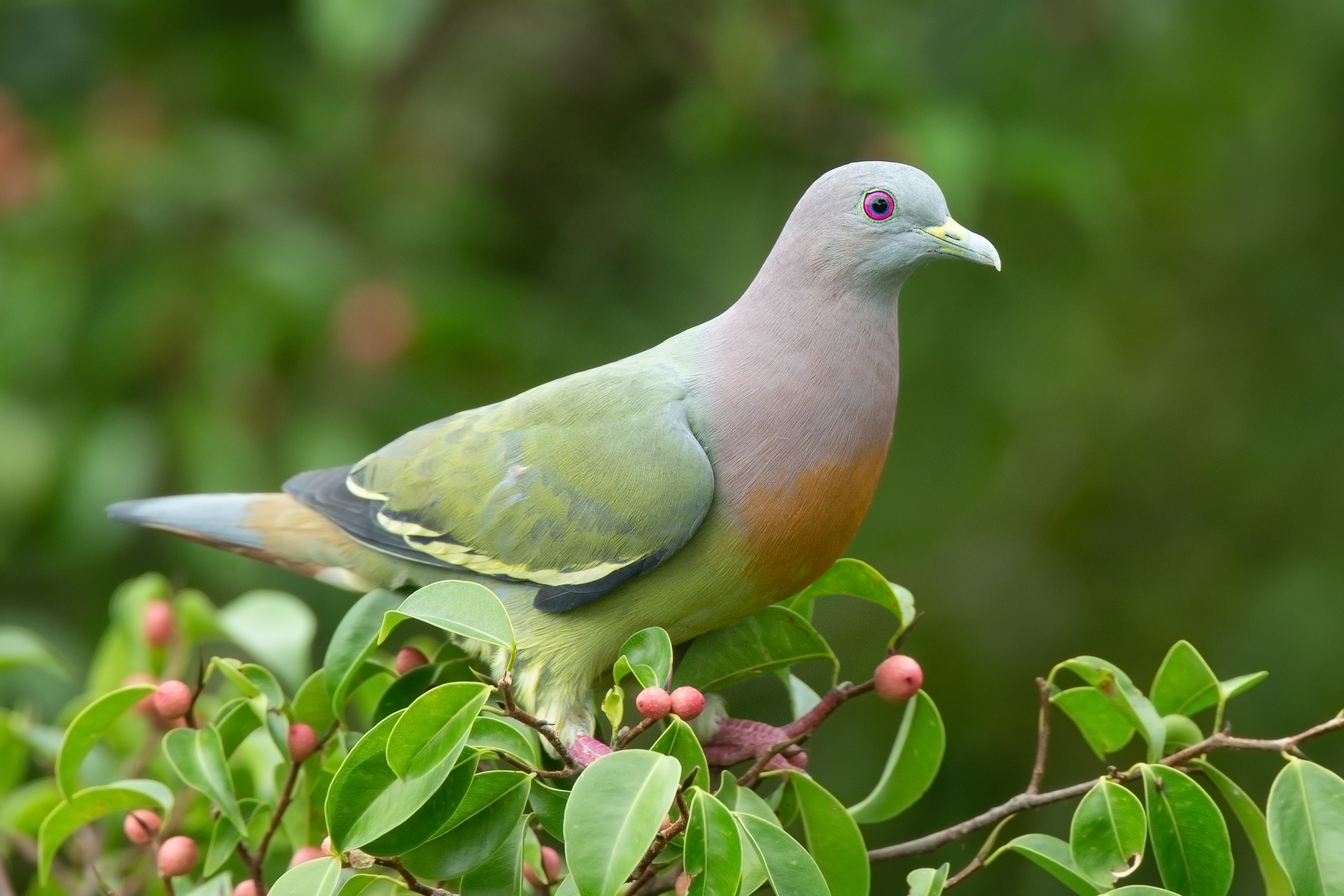
Credit: JJ Harrison (https://tiny.jjharrison.com.au/t/3rUZckpXLJTJuAko) · CC BY-SA 4.0
The pigeon is a medium-sized bird found in cities and towns across almost every part of the world. The kind most people see is called the rock pigeon. It has a gray body, a shiny green and purple neck, and red feet. An adult pigeon weighs about 12 ounces, a little less than a can of soda. Pigeons and doves belong to the same bird family. In fact, "pigeon" and "dove" are often two words for the same kind of bird.
Wild rock pigeons first lived on cliffs in Europe, North Africa, and parts of Asia. City buildings turned out to be a lot like cliffs. Ledges, windowsills, and bridges make good places to nest. That is why pigeons have spread to almost every city on Earth.
Pigeons eat seeds, grains, fruit, and in cities, whatever food scraps people drop. Parent pigeons feed their babies a special liquid called crop milk. It is not real milk. It is a rich food made inside the parent's throat. Both mothers and fathers make it. Only a few kinds of birds can do this.
Humans have lived with pigeons for a long time. People first tamed them more than 5,000 years ago, before the pyramids of Egypt were built. Charles Darwin kept pigeons at his home and studied them. Their many shapes and colors helped him think about how animals change over time.
For thousands of years, pigeons also carried messages. A pigeon taken far from home will fly straight back, even from hundreds of miles away. Armies used homing pigeons in both World Wars. One pigeon named Cher Ami carried a message in 1918 that saved the lives of almost 200 American soldiers trapped behind enemy lines.
How pigeons find their way home is still a puzzle. Scientists think pigeons use the sun, smells, landmarks, and maybe even Earth's magnetic field. The exact mix is still being studied.
Pigeons are also surprisingly smart. In tests, they can tell the difference between paintings by different artists. They can recognize their own reflection in a mirror, something very few animals can do. They can even be trained to spot sick cells in medical images almost as well as doctors can.
Not every pigeon story has a happy ending. The passenger pigeon, a wild American cousin, once had flocks so huge they darkened the sky for hours as they passed. Hunters wiped them out. The last one died in a zoo in 1914.
Last updated 2026-04-22