
Dodo
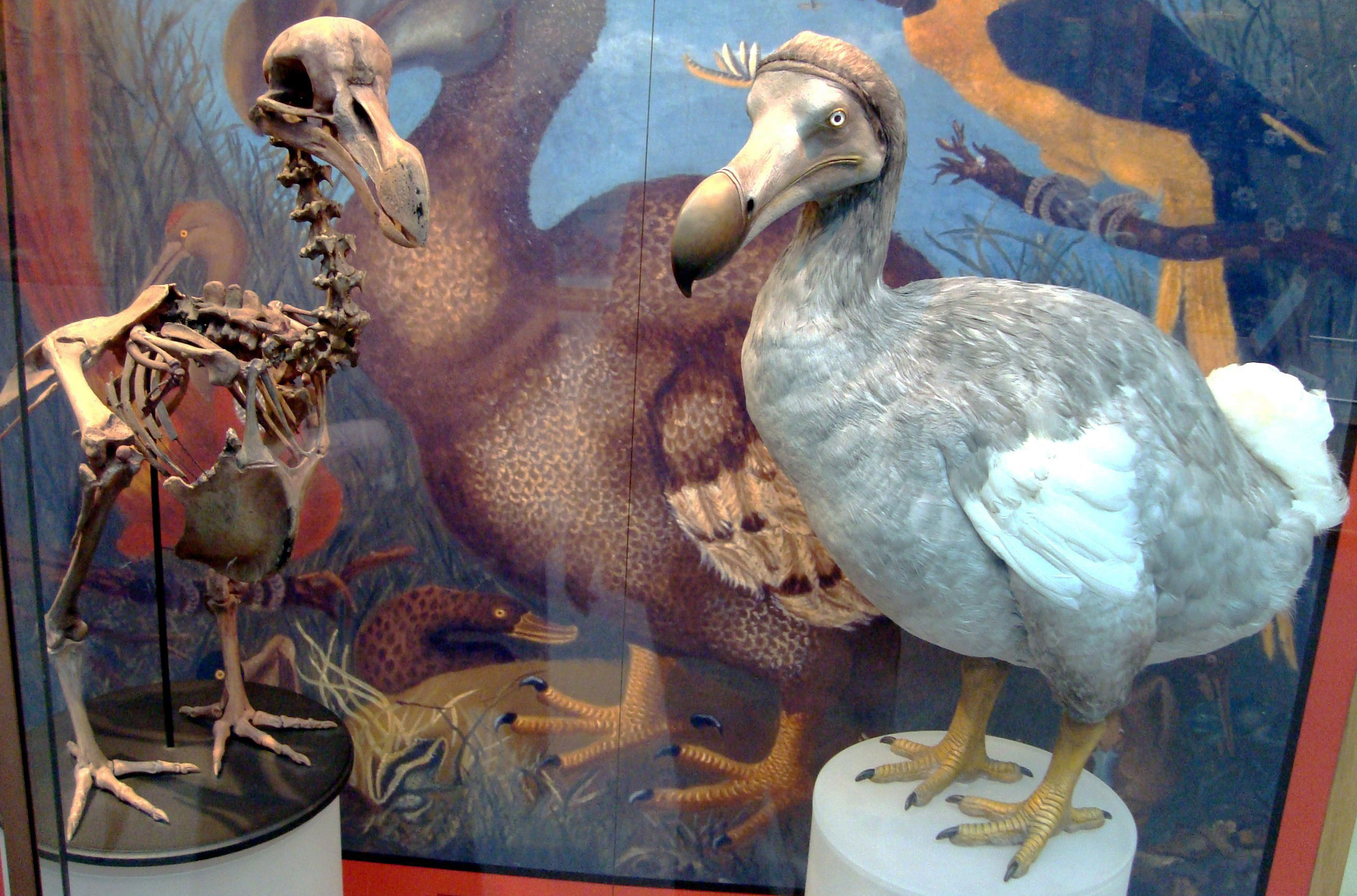
Credit: BazzaDaRambler · CC BY 2.0
The dodo was a large, flightless bird that once lived on the island of Mauritius, in the Indian Ocean east of Africa. It stood about three feet tall and weighed between 20 and 40 pounds, about as much as a medium-sized dog. It had a round body, small wings, strong yellow legs, and a big hooked beak. The dodo went extinct in the late 1600s, less than 100 years after humans first saw it.
Dodos were actually a kind of pigeon. Their ancestors flew to Mauritius millions of years ago. On the island, they found plenty of food and no predators hunting them. Over many generations, they grew larger and lost the ability to fly. They did not need to fly away from danger, because there was no danger. This is a common pattern on islands. Birds that do not need to fly often lose flight over time.
The dodo ate fruit, seeds, nuts, and roots that it found on the forest floor. It nested on the ground and laid a single egg at a time. Because Mauritius had no big predators, dodos had no reason to fear anything. They were calm around people when sailors first arrived.
That calm nature became a problem. Dutch sailors reached Mauritius in 1598. They hunted dodos for food, though old reports say the meat was tough and not very tasty. The bigger trouble came from the animals the sailors brought with them. Pigs, rats, monkeys, and dogs escaped onto the island. These animals ate dodo eggs and chicks. The forests where dodos lived were also cut down. The last confirmed sighting of a living dodo was in 1662. Within a few decades, the bird was gone forever.
The dodo became one of the most famous symbols of extinction. The phrase "dead as a dodo" means something gone and never coming back. For a long time, people even used the dodo as a joke, picturing it as fat and silly. Modern scientists think this picture is wrong. Studies of dodo bones suggest the bird was leaner and faster than old paintings showed.
Very few dodo remains exist today. No complete dodo has ever been preserved. Scientists have studied dodo DNA from old bones to learn more about how the bird lived. Some researchers have even talked about using that DNA to someday bring the dodo back. Whether that is a good idea, or even possible, is still debated. For now, the dodo remains a reminder of how quickly humans can change a world.
Related
Last updated 2026-04-22