
Platypus
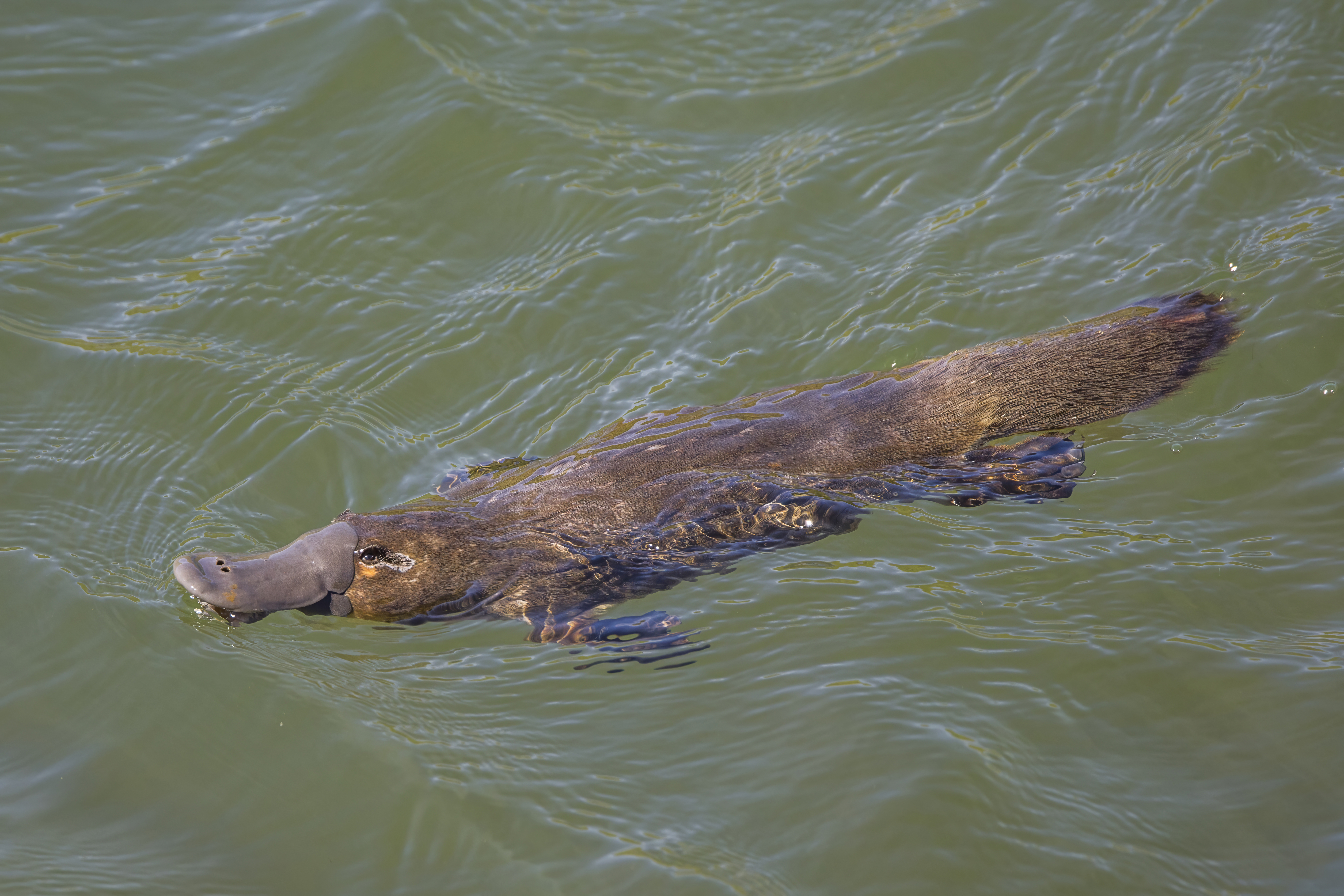
Credit: Charles J. Sharp · CC BY-SA 4.0
The platypus is a small, furry mammal that lives in the rivers and streams of eastern Australia. It has a flat bill like a duck, a tail like a beaver, and webbed feet like an otter. Adults are about 15 inches long and weigh two to five pounds. When British scientists first saw a dried platypus skin in 1799, they thought someone had sewn parts of different animals together as a joke.
The platypus is one of the strangest mammals on Earth. Like other mammals, it has fur and makes milk for its babies. But unlike almost any other mammal, it lays eggs. Only five animal species in the world are egg-laying mammals. The platypus is one. The other four are kinds of echidnas, which also live in Australia and New Guinea.
Mother platypuses do not have nipples. Instead, milk leaks out through patches of skin on the mother's belly, and the babies lick it up from her fur. The babies, called puggles, hatch from soft, leathery eggs about the size of grapes.
Platypuses are excellent swimmers. They hunt in the water with their eyes, ears, and nostrils closed. So how do they find food? Their bill is packed with special sensors that pick up tiny electrical signals given off by the muscles of shrimp, insects, and worms. A platypus hunting underwater is basically feeling for the faint electric buzz of its next meal. Very few animals on Earth can sense electricity this way.
Male platypuses have another surprise. On the back of each hind leg is a sharp spur connected to a venom gland. The venom is strong enough to kill a small dog and cause terrible pain in humans. Scientists think males use their spurs to fight other males during mating season.
In 2020, researchers made another discovery. Under ultraviolet light, platypus fur glows a soft blue-green. Nobody knows why. Some scientists think the glow might help platypuses see each other at dawn and dusk, when they are most active. Others think it might be an accident of their fur chemistry with no real purpose.
Platypuses are not endangered, but they are in trouble. Droughts, pollution, and new dams have dried up or damaged many of the streams they need. Australia lists the platypus as a "near threatened" species. For an animal that looks like a joke and hunts with electricity, losing it would mean losing one of the strangest and most wonderful branches of the mammal family tree.
Last updated 2026-04-22