
Salamander
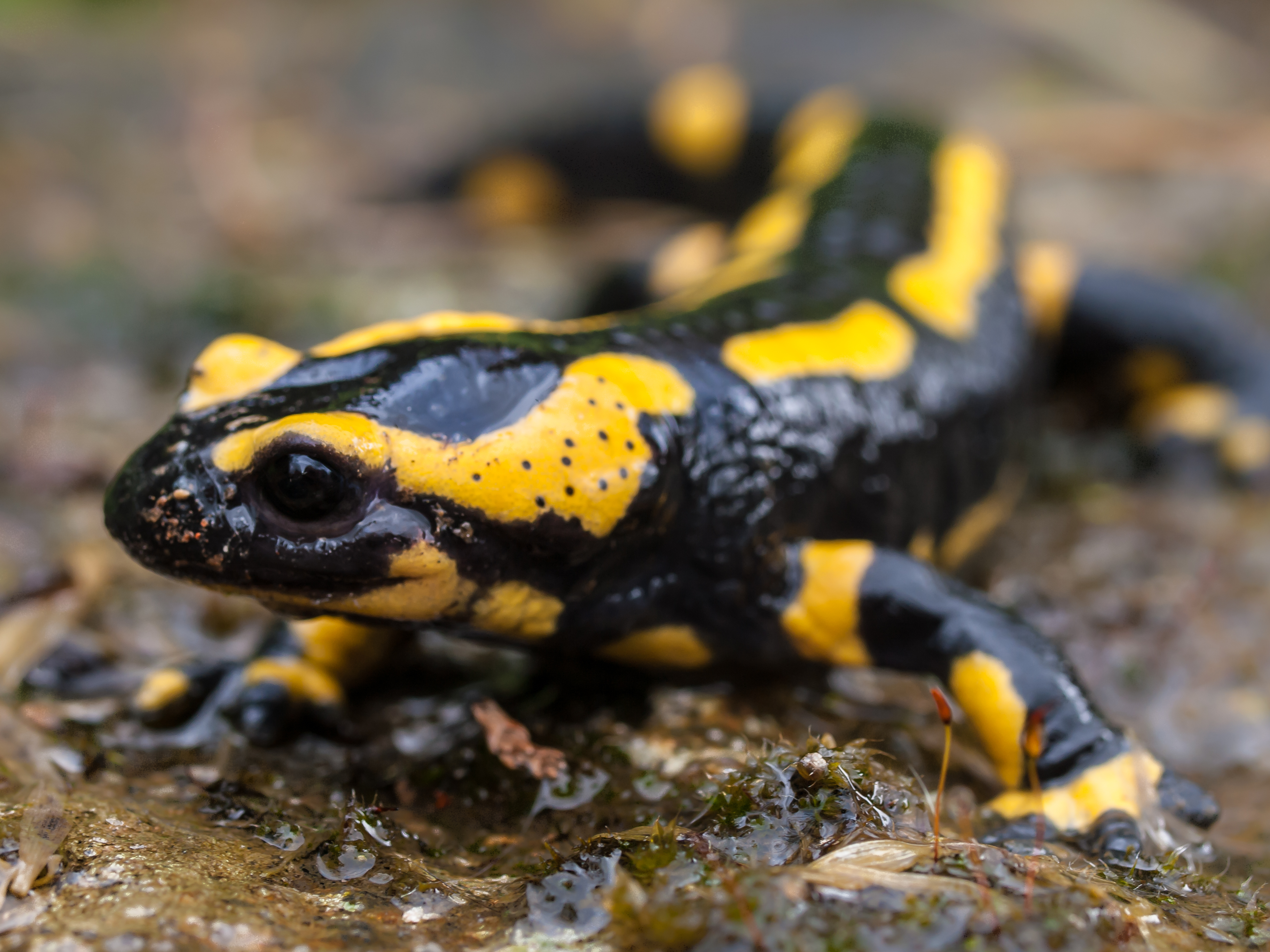
Credit: William Warby · CC BY 2.0
A salamander is a small animal with a long body, four short legs, and a tail. Salamanders are amphibians, which means they live part of their life in water and part on land. They are related to frogs and toads, but they keep their tails their whole lives. Frogs lose their tails when they grow up. Salamanders do not.
There are about 800 kinds of salamanders in the world. Most live in cool, damp places. You might find one under a rotten log, in a pile of wet leaves, or near a slow stream. Salamanders breathe through their skin, so they need to stay moist. If a salamander dries out, it can die. Some kinds live in caves and never see the sun.
Salamanders come in many sizes. The smallest is less than an inch long, about the size of a paper clip. The biggest is the Chinese giant salamander. It can grow nearly six feet long and weigh over 100 pounds, about as heavy as an adult person. It lives in rivers in China and is critically endangered.
Most salamanders start life as eggs laid in water. A baby salamander, called a larva, hatches with feathery gills on the outside of its neck. It swims and breathes underwater like a fish. As it grows, its body changes. It grows legs, loses its gills, and crawls onto land. This change is called metamorphosis. A few kinds of salamanders, like the axolotl of Mexico, never finish the change. They keep their gills and stay in the water their whole lives.
Salamanders have one of the strangest powers in the animal world. They can regrow body parts. If a salamander loses a leg to a hungry bird, a new leg grows back in a few months. They can also regrow tails, parts of their eyes, and even pieces of their heart. Scientists study salamanders closely to learn how this works. They hope to use what they learn to help people heal from serious injuries someday.
Many salamanders are brightly colored. Red, yellow, and orange spots warn other animals to stay away. Some salamanders have poison in their skin. The rough-skinned newt, found in the western United States, carries enough poison to kill a much larger animal.
Salamanders are quiet and easy to miss, but they matter. They eat huge numbers of insects and worms. They are also food for bigger animals. Many kinds are in danger today because of pollution, disease, and lost habitat. A salamander under a log is a sign of a healthy forest.
Related
Last updated 2026-04-22