
Wolf
Credit: User:Mas3cf · CC BY-SA 4.0
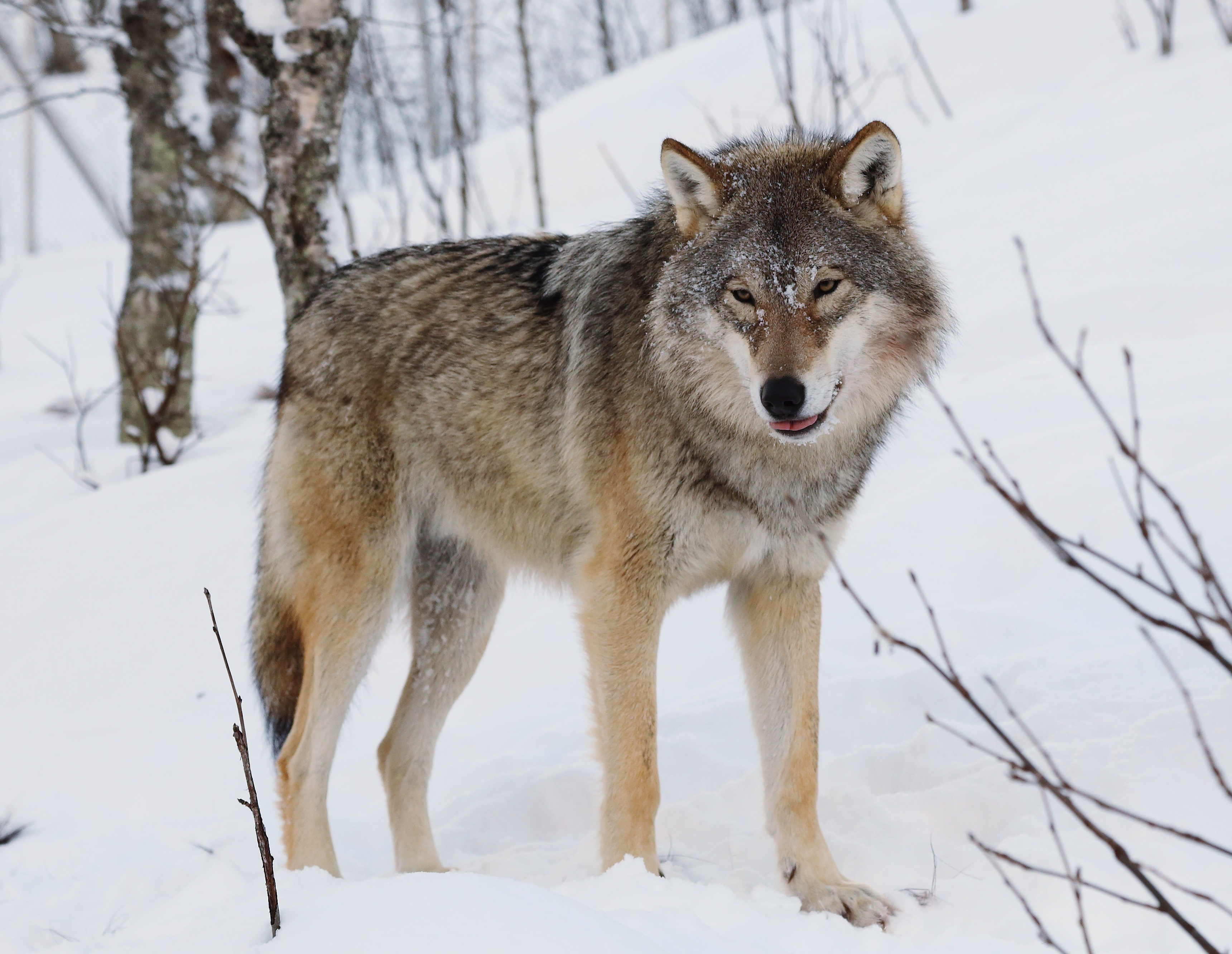
The wolf is the biggest wild member of the dog family. The gray wolf, the most common kind, lives in parts of North America, Europe, and Asia. An adult male gray wolf usually weighs 70 to 100 pounds and stands about three feet tall at the shoulder. Wolves are social animals that live and hunt together in family groups called packs.
A gray wolf's fur can be white, gray, brown, or nearly black. An adult wolf's eyes are usually yellow. Wolves are built for long-distance travel rather than speed. A wolf can trot for hours at about five miles per hour. It can cover 30 miles in a single day while hunting. Wolves "talk" to each other through barks, growls, whines, smells, and the long howl, which can carry six miles across open country.
A pack is usually made up of a mother, a father, and their pups from one or more years. The parents lead the pack. They decide where to hunt and raise the young together. By working as a team, wolves can bring down animals much bigger than they are — elk, moose, even bison. In warmer months, wolves also eat smaller animals like beavers, hares, and rodents.
All domestic dogs — every breed, from chihuahuas to Great Danes — are descended from wolves. Scientists think dogs were first domesticated somewhere between 15,000 and 40,000 years ago. It probably happened when some wolves started living close to human camps for food. The friendliest and least scared wolves were allowed to stay, and slowly became dogs. Dogs are even classified today as a kind of gray wolf.
Wolves once lived across most of the Northern Hemisphere. Then humans hunted them for centuries, until they were almost gone from the lower 48 states of the United States by the 1960s. In 1995, biologists brought gray wolves back to Yellowstone National Park. The park changed quickly. With wolves hunting them again, elk populations came back into balance. Plants that had been overgrazed grew back. Rivers ran clearer. Many other animals — from beavers to songbirds — came back too. The Yellowstone reintroduction is one of the most famous conservation success stories in history.
Humans have always had mixed feelings about wolves. In many old European stories, wolves are the bad guys — the Big Bad Wolf who threatens Little Red Riding Hood and the Three Little Pigs, and the werewolf of legend. But Roman mythology says the city of Rome was founded by twin brothers who were raised by a she-wolf. In Norse mythology, the god Odin has two loyal wolves, but another wolf, named Fenrir, is supposed to destroy the world someday. Many Native American traditions honor the wolf as a teacher, hunter, and symbol of loyalty and family. The same animal shows up across these stories as guardian, monster, and hero — sometimes all in the same culture.
Related
Last updated 2026-04-20