
Comics
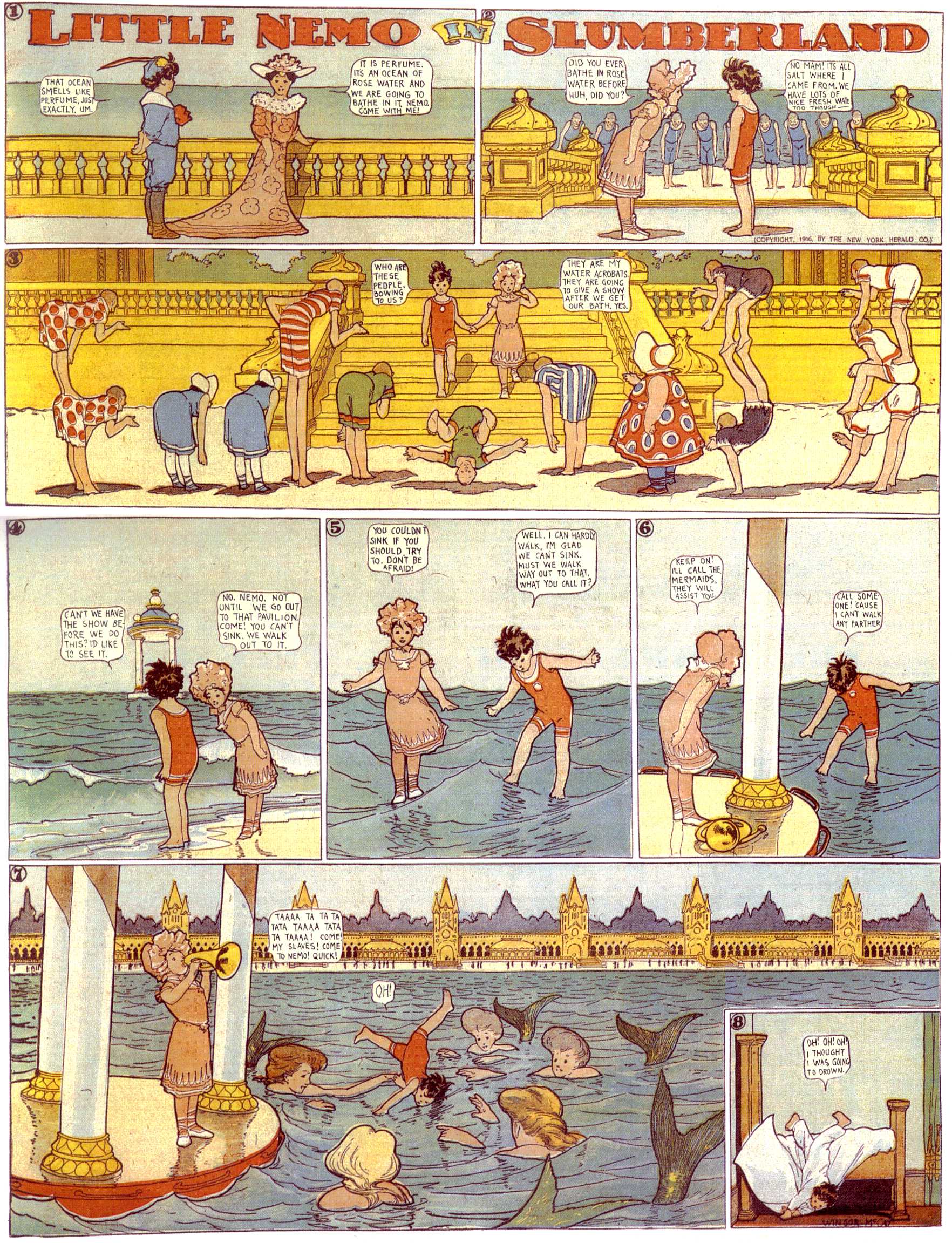
Credit: Winsor McCay · Public domain
Comics are stories told with pictures and words together. The pictures are usually drawn in a row of boxes called panels. The words appear in speech bubbles, thought bubbles, or small caption boxes. Reading a comic, your eye jumps from one panel to the next, and your brain fills in what happened in between. Comics show up as newspaper strips, comic books, graphic novels, and webcomics online.
People have been telling stories with pictures for a very long time. Ancient Egyptian tomb walls and medieval European tapestries used rows of images to show events. But modern comics began in the 1800s. A Swiss artist named Rodolphe Töpffer drew some of the first short books that mixed pictures and words on every page. By the late 1890s, American newspapers were printing color comic strips. One of the earliest stars was a barefoot boy in a yellow nightshirt called the Yellow Kid.
Comic books, the kind you can hold like a small magazine, took off in the 1930s. In 1938, two teenagers from Cleveland, Jerry Siegel and Joe Shuster, sold a story about a strong man from another planet. His name was Superman. He was a huge hit. Soon after came Batman, Wonder Woman, Captain America, and dozens more. This time is now called the Golden Age of comics.
Comics are not all about superheroes. Japan has its own huge comics tradition called manga. Manga is read from right to left, opposite of English books. Some manga series, like One Piece, have run for more than 25 years and sold over 500 million copies worldwide, more than most novels ever printed. In Belgium and France, comics are called bande dessinée, which means "drawn strip." Tintin and Asterix are loved across Europe.
Longer comics that tell one big story in a single book are called graphic novels. Maus, by Art Spiegelman, tells the true story of his father surviving the Holocaust, with mice as the Jewish characters and cats as the Nazis. In 1992 it became the first graphic novel to win a Pulitzer Prize, a major American award for writing.
For a long time, many adults thought comics were silly or just for kids. That has changed. Today, comics are studied in colleges, sold in libraries, and turned into some of the biggest movies in the world. The blend of art and words can do something neither one can do alone, and readers of every age have found their way to it.
Last updated 2026-04-26