
Library
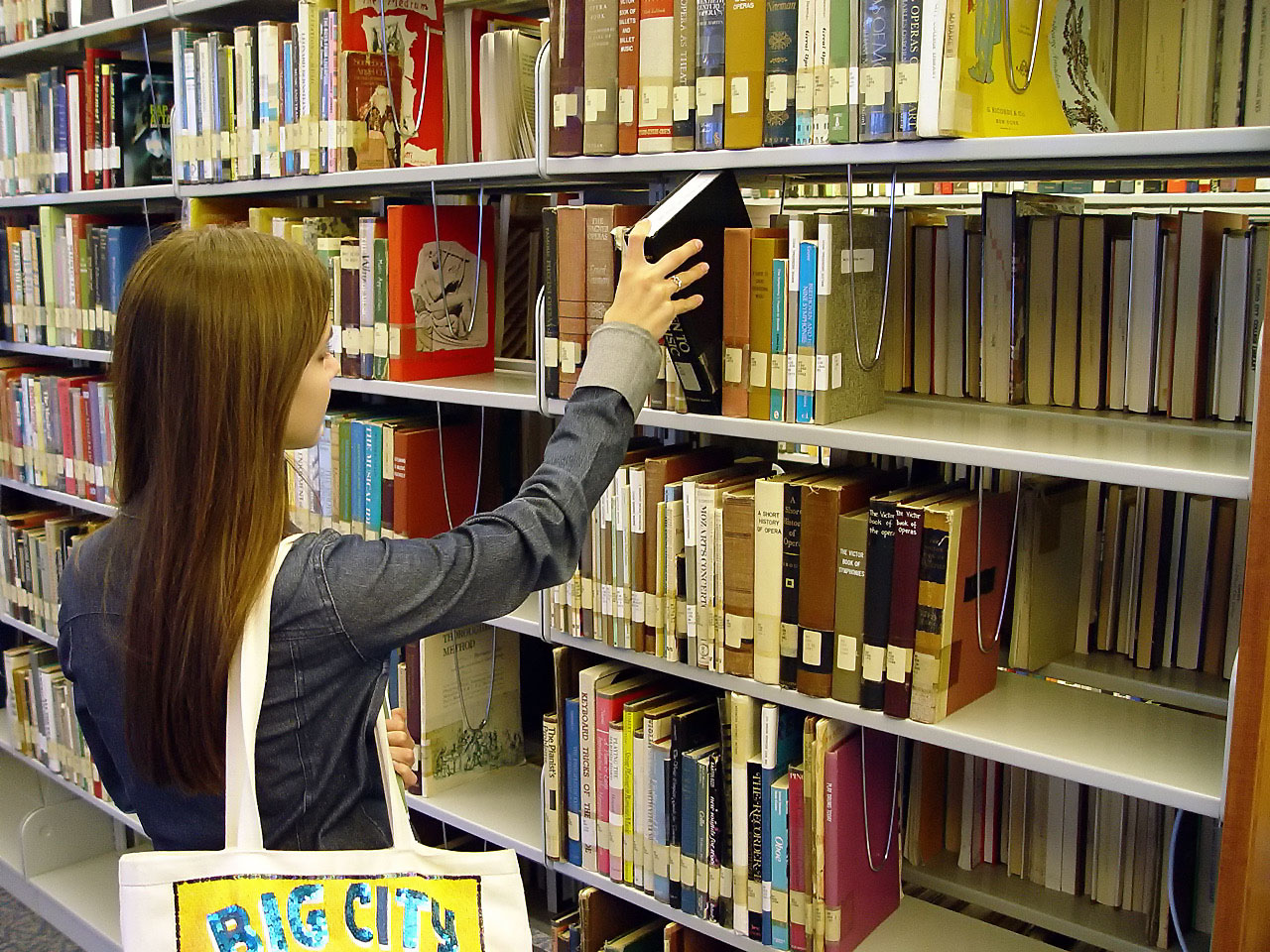
Credit: Joe Crawford from Moorpark, California, USA · CC BY 2.0
A library is a place that collects books and other materials and lends them out to people. Most libraries also hold magazines, newspapers, movies, music, maps, and computers. Some libraries are small rooms in a school. Others are huge buildings that hold millions of books. Almost every town in the world has at least one.
Libraries are very old. One of the first known libraries was built in the city of Nineveh, in what is now Iraq, around 2,700 years ago. Its books were not paper. They were clay tablets covered in tiny wedge-shaped marks called cuneiform. King Ashurbanipal collected more than 30,000 of these tablets. Many still survive today, baked hard by a fire that destroyed the rest of the city.
The most famous library of the ancient world was in Alexandria, Egypt. It was built around 2,300 years ago. Its scholars tried to collect a copy of every book in the world. Ships docking in the harbor had to hand over any book on board so it could be copied. The Library of Alexandria was lost in fires and wars over many centuries. Historians still argue about exactly how and when it disappeared.
For most of history, books were rare and expensive. Each one had to be copied by hand. A single book could take a monk a whole year to make. Only kings, churches, and rich people owned them. That changed in the 1400s, when Johannes Gutenberg built the printing press in Germany. Suddenly books could be made by the thousands. Libraries grew, and more people learned to read.
Public libraries, free for anyone to use, are a newer idea. In the United States, a man named Andrew Carnegie helped pay for more than 1,600 of them between 1883 and 1929. He had grown up poor and had loved a free library as a boy. He wanted other kids to have the same chance.
Today libraries do much more than lend books. They offer story times for little kids, help people apply for jobs, give free internet access, and lend tools, telescopes, and even musical instruments. Librarians help readers find what they need and protect old or rare books. The biggest library in the world, the Library of Congress in Washington, D.C., adds about 10,000 new items every working day. That is faster than any single person could ever read them.
Related
Last updated 2026-04-26