
Realism
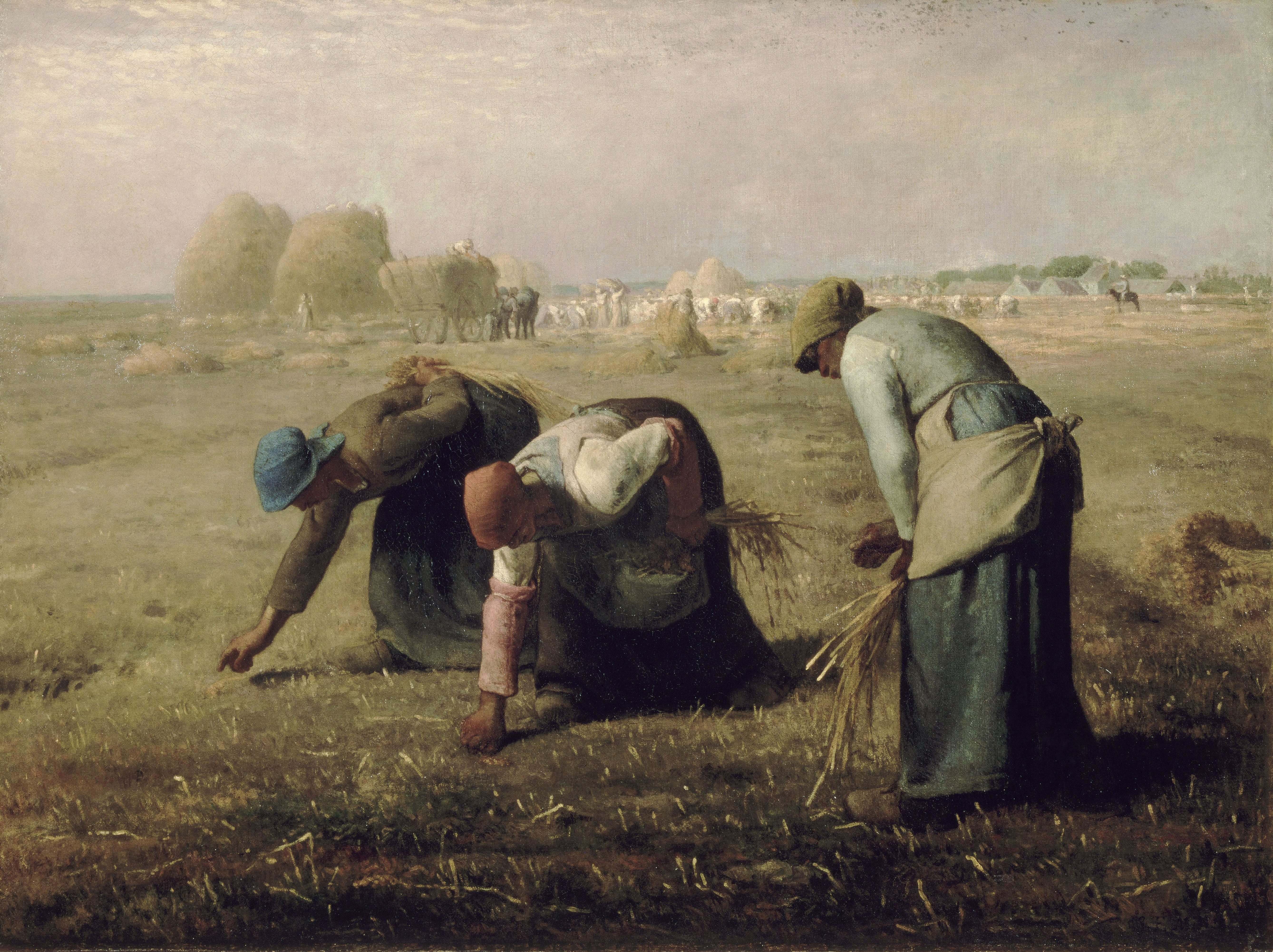
Credit: Jean-François Millet · Public domain
Realism is an art movement that started in France in the 1840s. Realist artists wanted to show the world the way it actually looked. They painted ordinary people doing ordinary things. Farmers, factory workers, washerwomen, and stone breakers became the subjects of serious paintings. Before realism, most "important" art showed kings, gods, saints, or scenes from ancient stories.
The leader of the movement was a French painter named Gustave Courbet. In 1849, he painted a huge canvas called The Stone Breakers. It showed two workers smashing rocks beside a road. The painting was nearly ten feet wide, which was a size usually saved for paintings of royalty or battles. Many critics were shocked. They thought poor laborers did not deserve such a grand picture. Courbet thought that was exactly the point.
Realism grew out of big changes in Europe. Factories were spreading, cities were growing, and millions of people worked long hours for low pay. Photography had also just been invented in 1839. Cameras could capture exact details of real life, and painters started asking new questions about what art was for. If a camera could copy a face perfectly, what should a painter do? Realists answered by painting the truth of everyday life, including the parts that were hard or ugly.
Other realist painters followed Courbet. Jean-François Millet painted peasant farmers in the fields. His painting The Gleaners shows three women bending over to pick up leftover grain after the harvest. Honoré Daumier drew crowded train cars and tired workers. In the United States, Winslow Homer painted sailors, soldiers, and country children. Thomas Eakins painted doctors performing surgery and rowers on a river.
Realism was not only a movement in painting. Writers used the same ideas in books. Charles Dickens wrote about poor children in London. Mark Twain wrote about life along the Mississippi River. Russian writers like Leo Tolstoy filled long novels with the small details of everyday people's lives.
Some critics still argue about how "real" realism actually was. Every artist chooses what to include and what to leave out, so even a painting of a farmer is a kind of choice. But realism changed art forever. It said that a tired worker was just as worth painting as a queen. Later movements, including impressionism and modern art, grew out of that idea. The next time you see a painting of someone doing a regular job, you are looking at the long shadow of realism.
Last updated 2026-04-26