
Clothing
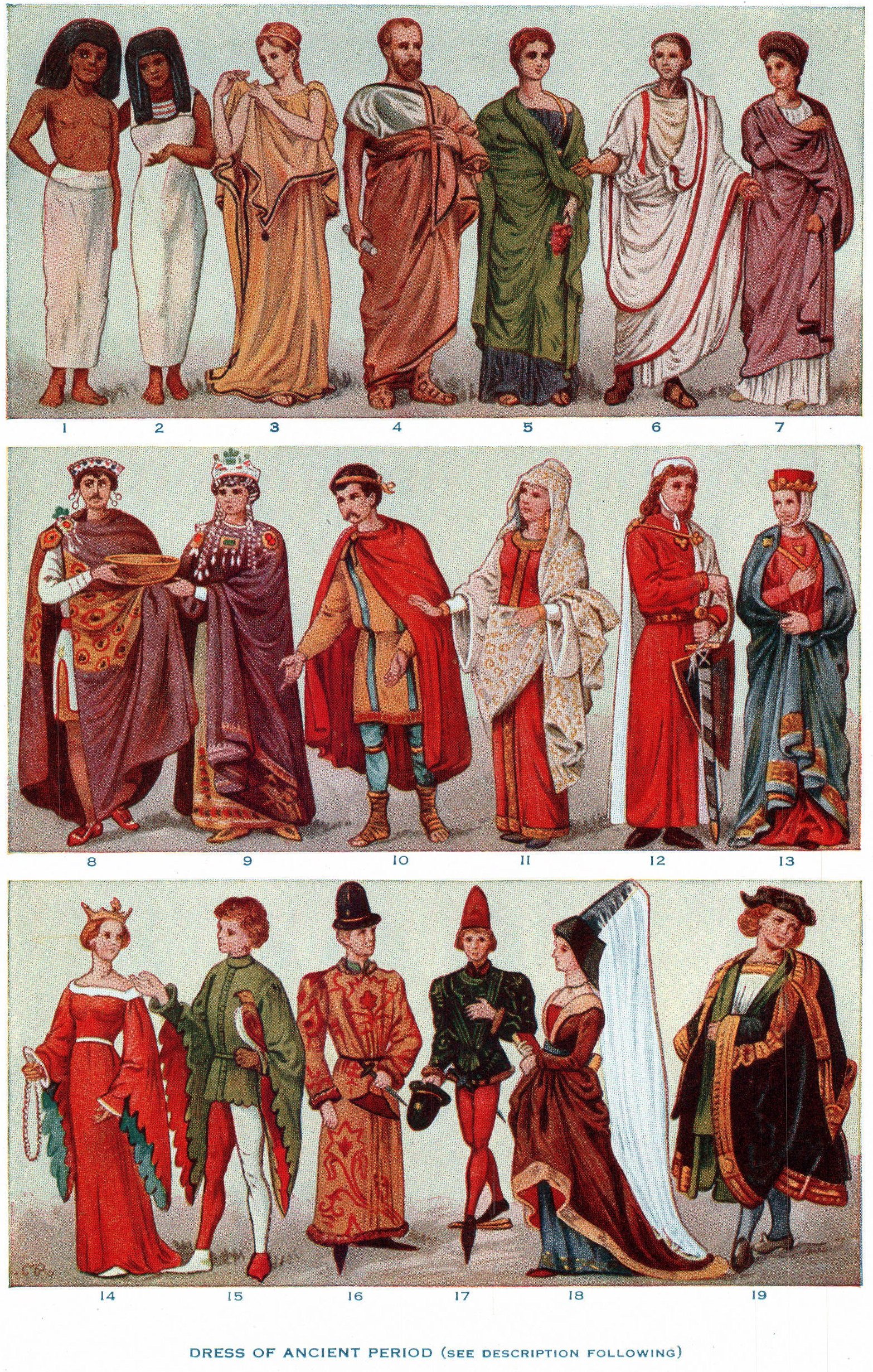
Credit: Unknown author · Public domain
Clothing is what people wear on their bodies. People wear clothes to stay warm, to stay cool, to stay safe, and to show who they are. Almost every group of people on Earth wears some kind of clothing, and humans have been making clothes for a very long time.
Scientists are not sure exactly when humans started wearing clothes. One clue comes from body lice, which only live in clothing. By studying lice DNA, scientists guess that humans began wearing clothes at least 100,000 years ago. That is much older than farming or written language.
Early clothes were made from animal skins, fur, and plant fibers. Over time, people learned to spin thread and weave cloth. Different parts of the world used different materials. In Egypt, people wove linen from the flax plant. In China, people made smooth, shiny silk from the cocoons of silkworms. In the Andes Mountains, people wove warm wool from llamas and alpacas. In India, people grew cotton and turned it into soft cloth. Trade routes like the Silk Road carried these fabrics across thousands of miles.
Clothing also tells stories. What people wear can show where they come from, what job they do, or what they believe. A judge wears a robe. A doctor wears a white coat. A soldier wears a uniform. In many cultures, special clothes are worn for weddings, funerals, and religious holidays. The Japanese kimono, the Indian sari, the Scottish kilt, and the Mexican huipil are all examples of clothing tied to a specific place and history.
Weather shapes clothing too. People in cold places like the Arctic wear thick layers, often made from animal fur and skin. People in hot deserts wear loose, light cloth that covers the skin to block the sun. The Tuareg people of the Sahara wrap long blue cloths around their heads to keep out sand and heat.
Today, most clothing is made in factories. A single t-shirt may travel through many countries before it reaches a store. The cotton might be grown in India, spun into thread in Vietnam, sewn in Bangladesh, and shipped to the United States. Making so many clothes uses huge amounts of water and energy, and old clothes often pile up in landfills. Some people now buy used clothes, repair what they own, or trade with friends. The clothes you wear today connect you to a story that started tens of thousands of years ago.
Related
Last updated 2026-04-26