
Religion (Concept)
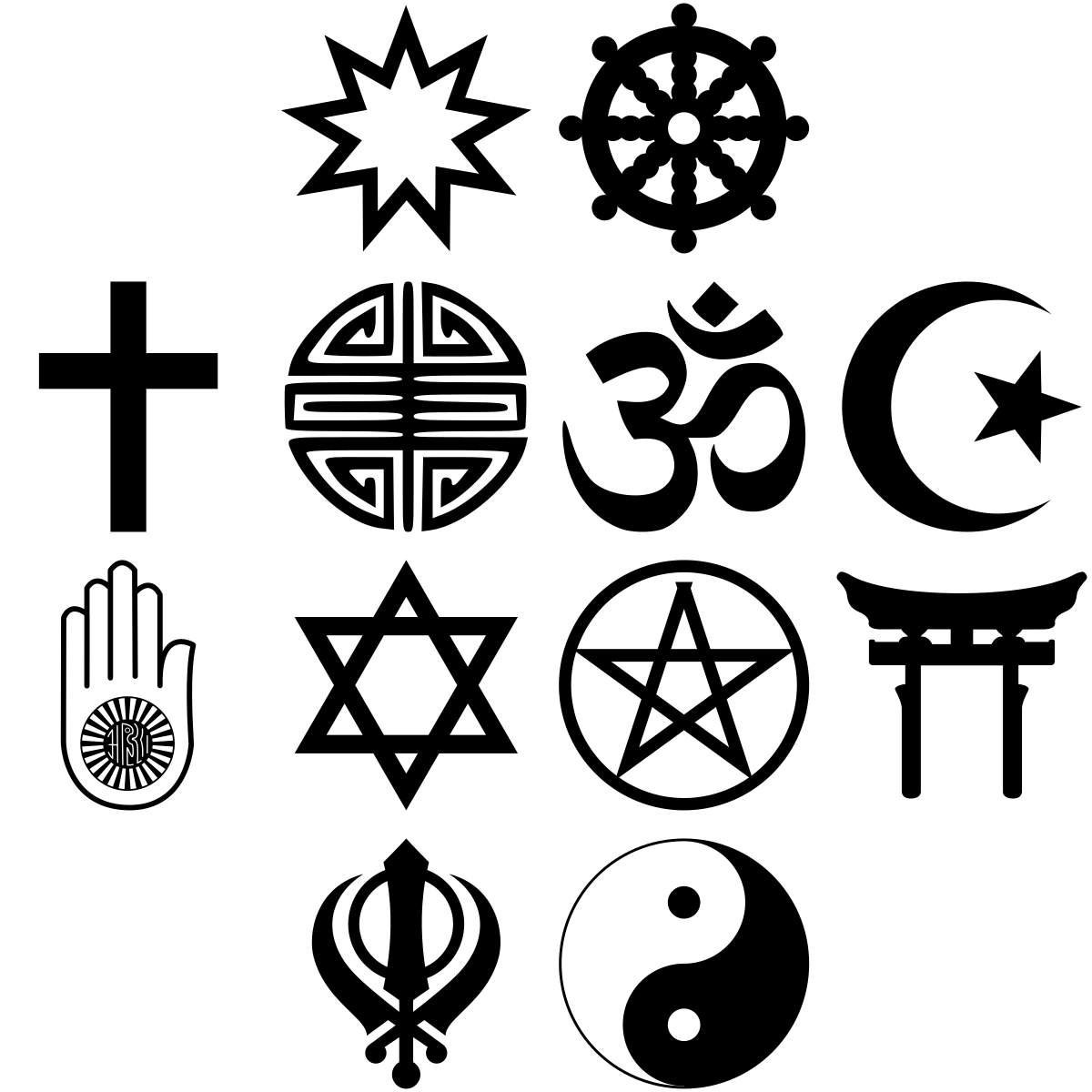
Credit: Sowlos · CC BY-SA 3.0
A religion is a system of beliefs, practices, and stories that helps people answer big questions about life. These questions include where the world came from, what happens after death, and how people should treat one another. Most religions involve a god, many gods, or a sacred force that is bigger than any one person. Religions also include rituals, holidays, sacred books, holy places, and rules for daily life.
Religion has been part of human life for a very long time. The oldest signs of religious behavior, like careful burials and small carved figures, are more than 50,000 years old. That is long before people invented writing or built cities. Almost every group of humans we know about, from ancient hunters to modern city dwellers, has had some form of religion.
Today, billions of people follow a religion. The five largest are Christianity, Islam, Hinduism, Buddhism, and Judaism. Together they have more than five billion followers, which is most of the people on Earth. There are also thousands of smaller religions, including the traditional faiths of Indigenous peoples around the world. Some people follow no religion at all. They may believe in a god privately, or they may not believe in any god.
Religions usually share a few common parts. Most have sacred texts, like the Bible, the Quran, the Torah, or the Vedas. Most have holy buildings, like churches, mosques, synagogues, and temples. Most have leaders, such as priests, imams, rabbis, or monks. And most have holidays that mark important events, like Christmas, Ramadan, Passover, and Diwali.
Religions also disagree, both with each other and within themselves. Christians, for example, are split into many groups, including Catholics, Protestants, and Orthodox Christians. Muslims are mainly divided into Sunni and Shia. These groups often share core beliefs but follow different traditions. Scholars who study religion try to describe these differences fairly, without saying one religion is right and another is wrong.
Religion is not the same as mythology, though they overlap. Myths are sacred stories, and many religions include them. Religion is also not the same as science. Science asks how the natural world works and tests its answers with experiments. Religion asks questions about meaning, purpose, and how to live, which experiments cannot fully answer.
For many people, religion shapes daily choices about food, clothing, family, and kindness. For others, it is mostly about belonging to a community with shared roots.
Related
Last updated 2026-04-26