
Atmosphere
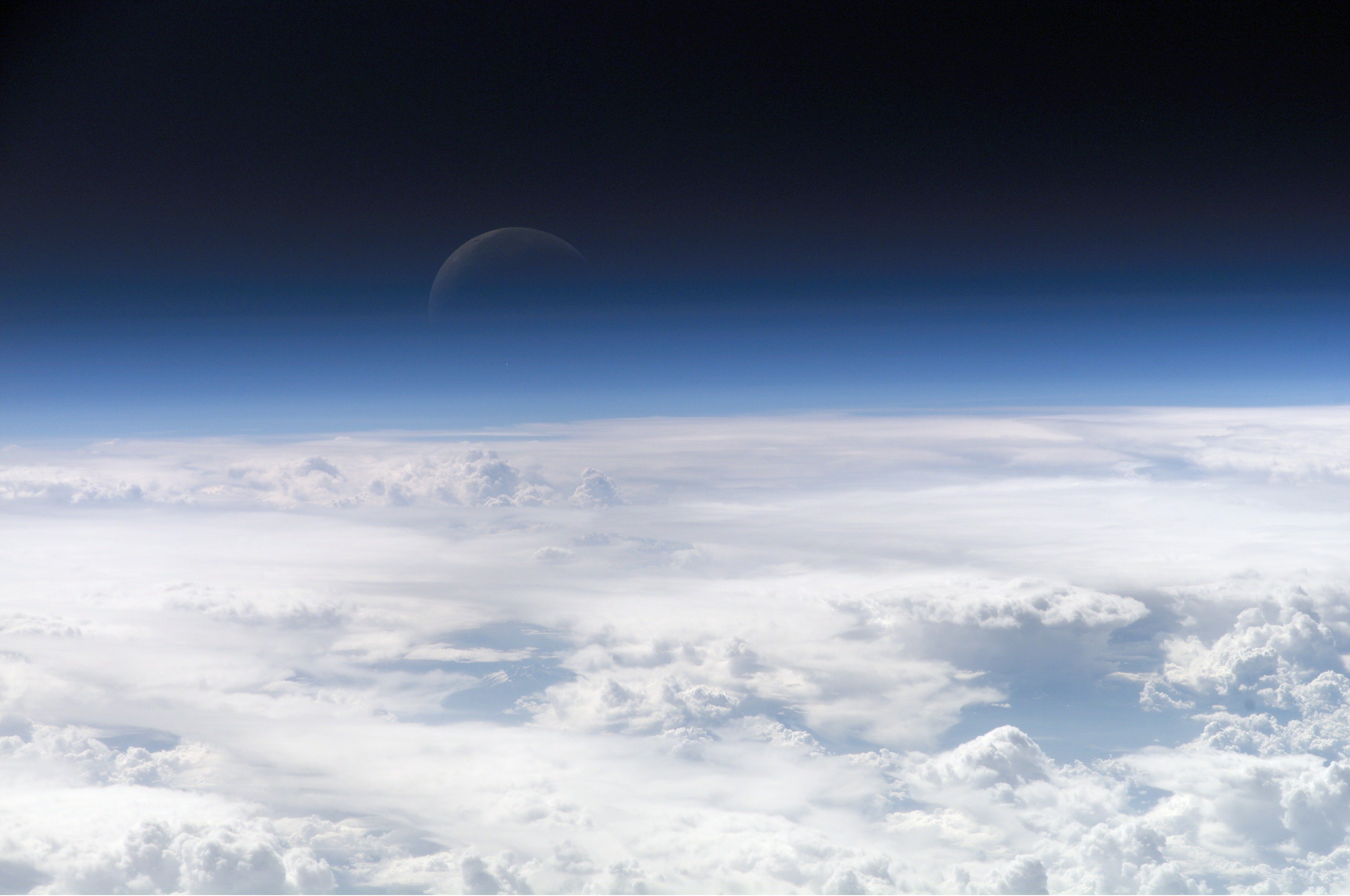
Credit: NASA Earth Observatory · Public domain
The atmosphere is the layer of gases that surrounds the Earth. It is held in place by gravity, which keeps the gases from drifting off into space. The atmosphere reaches about 6,200 miles up before it fades into space, but most of the air sits within ten miles of the ground. Without it, Earth would be a frozen, lifeless rock.
Air is mostly two gases. Nitrogen makes up about 78 percent, and oxygen makes up about 21 percent. The last 1 percent is a mix of argon, carbon dioxide, water vapor, and tiny traces of other gases. Even though carbon dioxide is a small part of the air, it has a big effect on how warm the planet stays.
The atmosphere has five main layers. The bottom layer is the troposphere, where all weather happens. Clouds, rain, snow, and wind all live here. Above that is the stratosphere, where jet planes fly to get a smoother ride. The ozone layer floats inside the stratosphere and blocks harmful rays from the Sun. Higher still come the mesosphere, where most meteors burn up, and the thermosphere, where the northern lights glow. The outermost layer is called the exosphere, and it slowly thins out into open space.
The atmosphere does several jobs at once. It gives every animal the oxygen it needs to breathe. It traps heat from the Sun, like a blanket, keeping Earth's average temperature near 59 degrees Fahrenheit instead of well below freezing. It shields the surface from the Sun's strongest radiation. It also burns up most space rocks before they can reach the ground. About 100 tons of dust and small meteors fall into the atmosphere every day, and almost all of it turns to ash long before it lands.
Air also has weight. A column of air pressing down on a single square inch at sea level weighs about 14.7 pounds. You don't notice this pressure because the air pushes equally on every side of your body. As you climb a tall mountain, the air gets thinner and there is less oxygen in each breath. Mountain climbers on Mount Everest carry oxygen tanks for that reason.
Humans are slowly changing the atmosphere. Burning coal, oil, and gas adds extra carbon dioxide to the air. The extra gas traps more heat, which warms the whole planet. Scientists agree this warming is happening, though they still debate exactly how fast certain regions will change.
Related
Last updated 2026-04-25