
Glacier
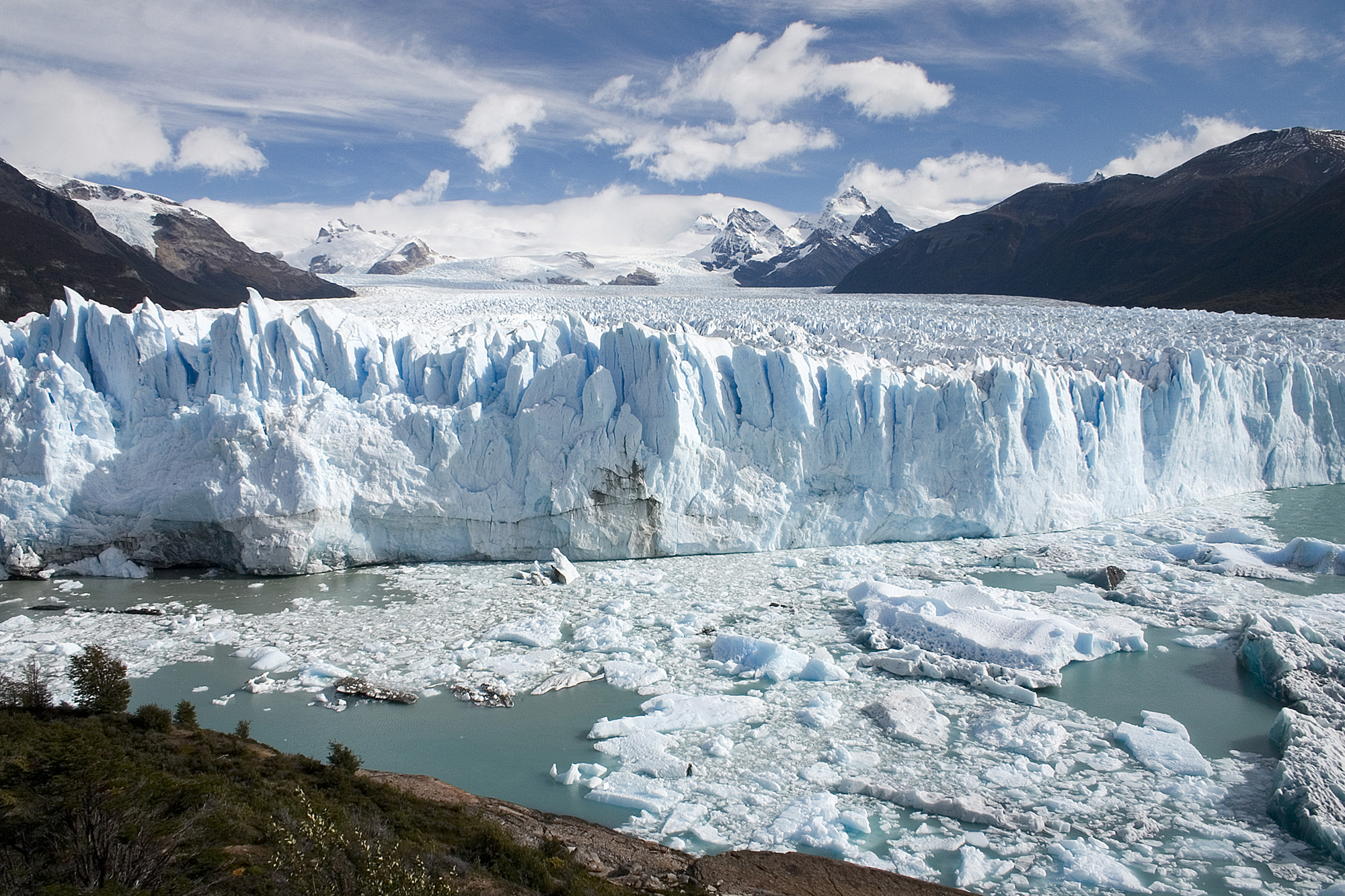
Credit: Luca Galuzzi (Lucag) · CC BY-SA 2.5
A glacier is a huge, slow-moving body of ice on land. Glaciers form in cold places where more snow falls each winter than melts each summer. Over hundreds or thousands of years, the snow piles up and packs down into solid ice. Once the ice gets thick enough, gravity pulls it downhill. That moving river of ice is a glacier.
Glaciers are found on every continent except Australia. Most are in Antarctica, Greenland, Alaska, Canada, and high mountain ranges like the Himalayas, Andes, and Alps. The biggest glaciers are called ice sheets. The Antarctic Ice Sheet covers an area larger than the United States and Mexico combined. In some places it is nearly three miles thick.
How fast does a glacier move? Most creep along at just a few inches per day. A few "surge" glaciers in Alaska can race ahead more than 100 feet in a single day. Either way, the ice is always shifting. The bottom of the glacier scrapes across the rock below, picking up boulders and sand and dragging them along.
This slow grinding shapes the land. Glaciers carve wide U-shaped valleys, sharp mountain peaks, and deep lakes. The Great Lakes were dug out by glaciers during the last ice age. So were the rocky hills of New England and most of the lakes in Canada. When the ice finally melts, it drops piles of rock and dirt called moraines. Some of those piles are miles long.
Glacier ice is not just frozen water. Tiny bubbles of ancient air get trapped inside as snow turns to ice. Scientists drill long ice cores out of glaciers and study those bubbles. The deepest cores hold air from more than 800,000 years ago. By testing this old air, scientists can learn what Earth's climate was like long before any humans were around to write things down.
Today, most of the world's glaciers are shrinking. Warmer temperatures are melting them faster than new snow can replace the ice. Glacier National Park in Montana had about 80 glaciers in 1850. Fewer than 30 remain, and they are much smaller. As glaciers melt, the water flows into the ocean and helps raise sea levels around the world.
Glaciers also feed rivers that millions of people drink from. The Ganges, the Yangtze, and the Colorado all begin with melting ice high in the mountains. When you sip water from a mountain stream, some of it may have been frozen since before your grandparents were born.
Related
Last updated 2026-04-25