
Hurricane
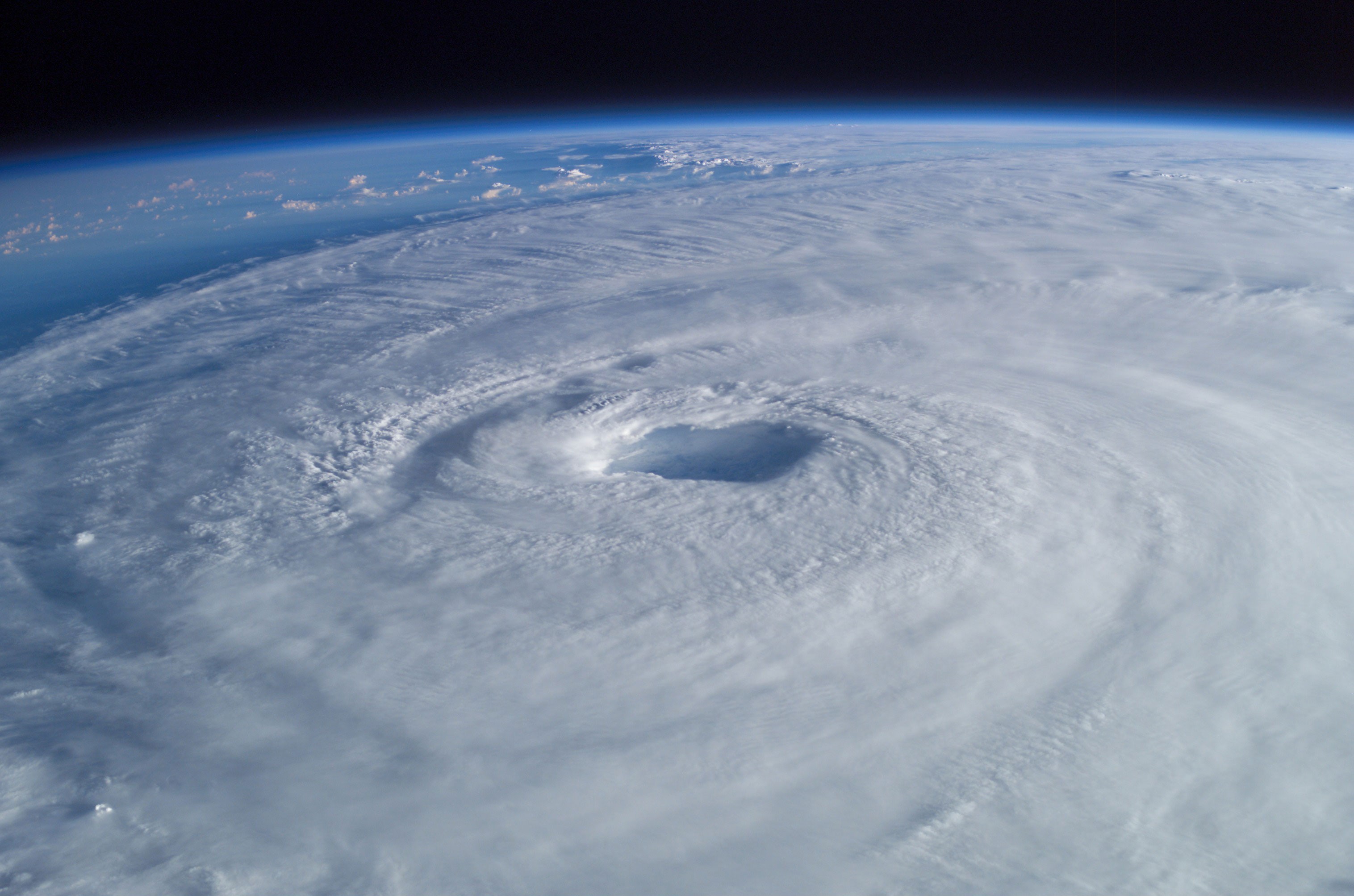
Credit: Image courtesy of Mike Trenchard, Earth Sciences & Image Analysis Laboratory, NASA Johnson Space Center. · Public domain
A hurricane is a huge spinning storm that forms over warm ocean water. Hurricanes have very strong winds, heavy rain, and large waves. To be called a hurricane, a storm's winds must reach at least 74 miles per hour. The same kind of storm has different names in different places. In the western Pacific Ocean, it is called a typhoon. In the Indian Ocean, it is called a cyclone.
Hurricanes need warm water to grow. The ocean must be at least 80 degrees Fahrenheit, and the warm water has to go down at least 150 feet deep. As warm, wet air rises off the ocean, it cools and forms thick clouds. More air rushes in to take its place. The spinning of the Earth makes all this rising air twist into a giant pinwheel shape. From space, a hurricane looks like a swirl of white clouds bigger than some entire countries.
In the middle of every hurricane is a calm spot called the eye. The eye can be 20 to 40 miles across. Inside it, the wind drops and the sky often clears. Around the eye is the eye wall, where the worst winds and rain are found. Outside the eye wall, long bands of thunderstorms spiral outward for hundreds of miles.
Scientists rank hurricanes from Category 1 to Category 5. A Category 1 storm has winds of 74 to 95 miles per hour. A Category 5 storm has winds over 157 miles per hour, strong enough to flatten houses and snap big trees in half. Hurricane Katrina, which hit New Orleans in 2005, was one of the most damaging storms in United States history.
The biggest danger from a hurricane is often not the wind. It is the storm surge. A storm surge is a wall of seawater that the wind pushes onto land. It can rise more than 20 feet, taller than a two-story house. Storm surges can flood whole neighborhoods within minutes.
Hurricanes also bring huge amounts of rain. A single hurricane can drop trillions of gallons of water on land in a few days. That water can cause floods far from the coast.
Scientists are still studying how a warming planet may be changing hurricanes. Most agree that hurricanes are now dropping more rain and that the strongest ones may be getting stronger. Whether the total number of hurricanes is changing is still debated. What is clear is that warmer oceans give these storms more fuel.
Related
Last updated 2026-04-25