
Storms
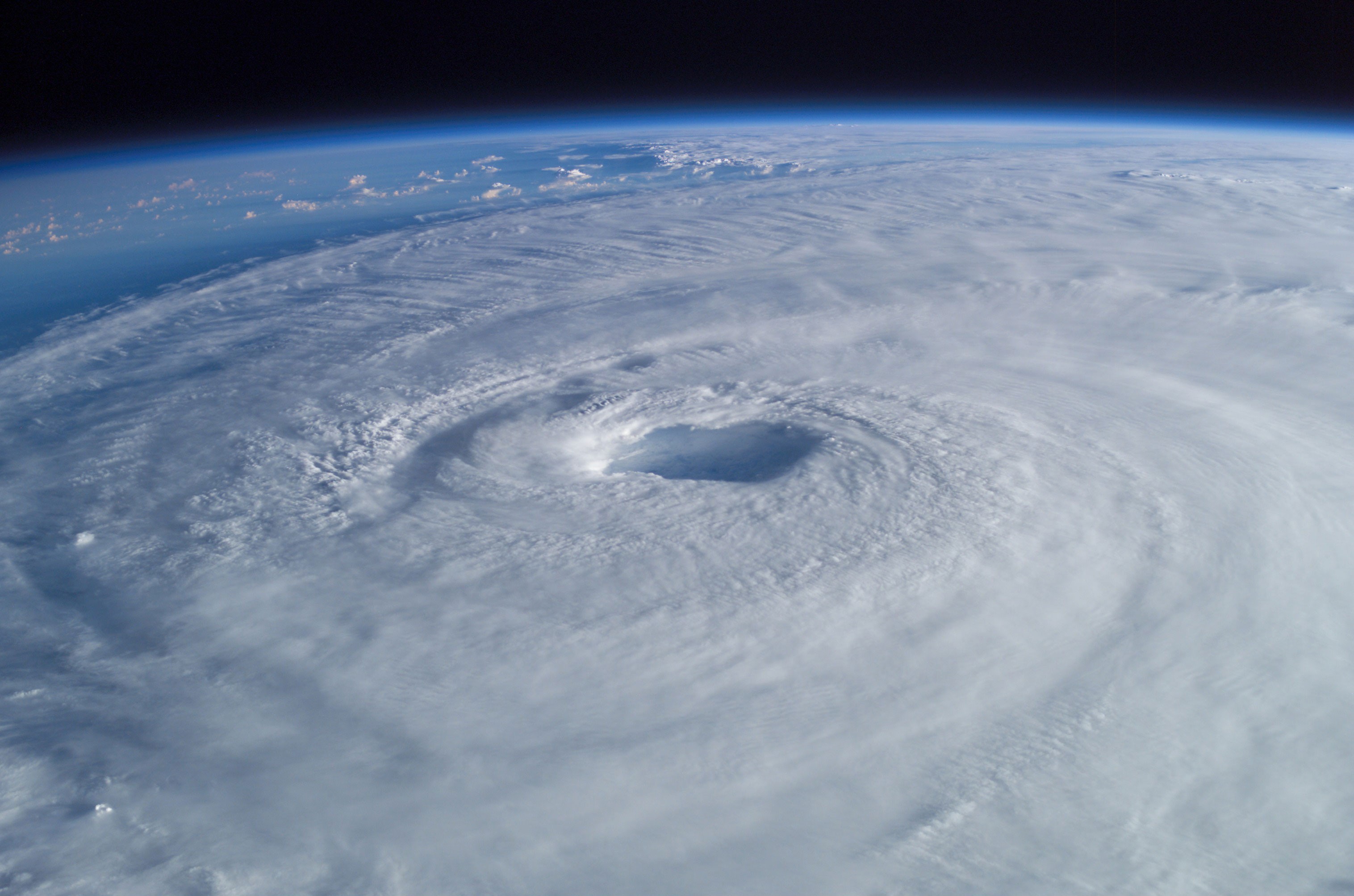
Credit: Image courtesy of Mike Trenchard, Earth Sciences & Image Analysis Laboratory, NASA Johnson Space Center. · Public domain
A storm is a powerful disturbance in the atmosphere. During a storm, the air moves in strong, often violent ways. Storms can bring heavy rain, snow, hail, lightning, thunder, or fast winds. Some last only a few minutes. Others spin across the ocean for weeks.
Most storms start in the same basic way. Warm, wet air rises into the sky. As it climbs, it cools down. The water in the air turns into tiny droplets that make clouds. If a lot of warm air keeps rising, the cloud grows huge and dark. Inside, water droplets bump into ice crystals. This bumping creates the electric charge that becomes lightning.
There are many kinds of storms, each with its own rules.
Thunderstorms are the most common. About 16 million happen on Earth every year. That works out to nearly 2,000 thunderstorms going on at any moment around the planet. They bring rain, lightning, and thunder, and they usually pass within an hour.
Hurricanes are giant spinning storms that form over warm ocean water. They can stretch hundreds of miles across. A strong hurricane releases more energy in one day than all the power plants on Earth make in a year.
Tornadoes are tight, twisting columns of air that drop down from thunderclouds. The United States gets more tornadoes than any other country. Most happen in a stretch of the central states nicknamed Tornado Alley.
Blizzards are heavy snowstorms with strong winds. The wind blows the snow sideways and makes it almost impossible to see. A blizzard can drop several feet of snow in a single day.
Sandstorms happen in deserts when wind whips loose sand into a thick, blowing wall. Some sandstorms in the Sahara are so big that satellites in space can see them carry dust all the way across the Atlantic Ocean to the Amazon rainforest.
Storms are not just an Earth thing. Jupiter has a storm called the Great Red Spot that has been spinning for at least 350 years. It is wider than our whole planet. Mars has dust storms that sometimes cover the entire planet for months.
Scientists called meteorologists track storms using radar, satellites, and weather balloons. Their warnings give people time to get inside, board up windows, or move to safer ground. A storm can be beautiful from a window. From outside, it can be one of the most dangerous things on Earth.
Related
Last updated 2026-04-25