
Plain
Credit: Original uploader was Grutness at en.wikipedia · CC BY-SA 3.0
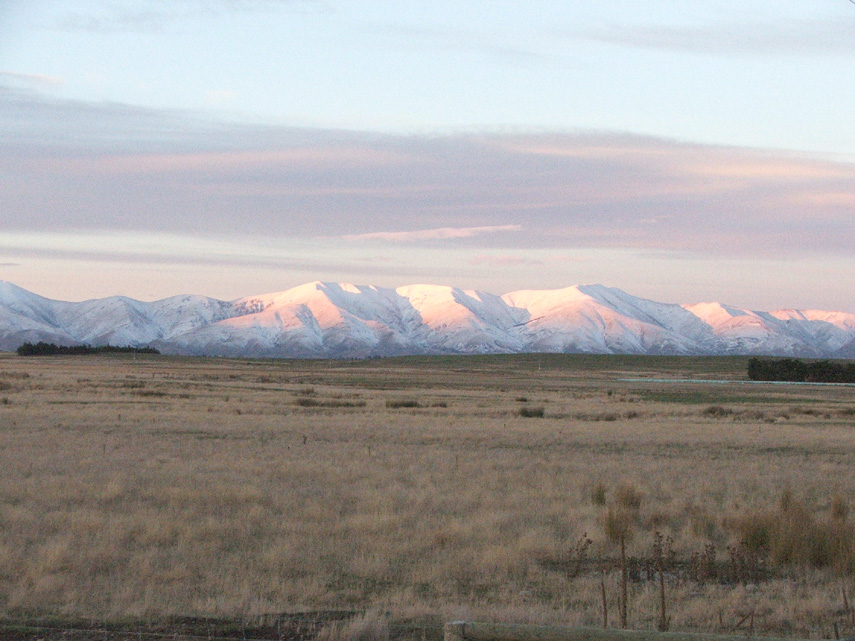
A plain is a wide, flat area of land with few hills or trees. Plains are one of the most common landforms on Earth. They cover about a third of the planet's land surface. You can find them on every continent, including Antarctica. Most of the world's farms and biggest cities sit on plains, because flat land is the easiest land for people to build on, plow, and travel across.
Plains form in several different ways. Some are built up over millions of years by rivers. As a river flows, it picks up bits of soil and rock and carries them downstream. When the river slows down or floods, it drops those bits along its banks. Layer after layer, this builds a flat floodplain. The Mississippi River in the United States and the Ganges River in India both built huge plains this way.
Other plains form when wind or ice flattens the land. During the last Ice Age, giant glaciers slid across northern North America and Europe. They scraped the ground smooth and left behind broad, flat surfaces when they melted. Some plains form on the ocean floor, too. The deepest parts of the sea, called abyssal plains, are the flattest places on the planet.
Not all plains look the same. Grasslands like the Great Plains of North America stretch from Canada down into Texas. The Eurasian Steppe, a giant grassy plain, runs almost 5,000 miles from Hungary to China. That is more than the distance across the United States from coast to coast, twice. Some plains are deserts, like parts of the Sahara. Others are frozen tundra in the far north.
Plains are powerful places for life. Their deep, rich soil grows most of the food people eat: wheat, corn, rice, soybeans, and more. Huge herds of grazing animals once lived on them, and some still do. Bison roamed the Great Plains in herds of millions. Wildebeest still cross the plains of East Africa each year in one of the largest animal migrations on Earth.
Because plains are easy to cross, they have shaped human history. Armies marched across them. Trade routes followed them. Settlers pushed across the American plains in covered wagons in the 1800s. The first cities of ancient Mesopotamia rose on the flat land between two rivers. Look at a map of where most people in the world live today, and you are mostly looking at plains.
Related
Last updated 2026-04-25