
Tide
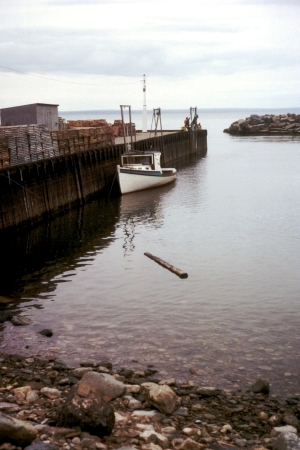
Credit: Samuel Wantman · CC BY-SA 3.0
A tide is the slow rise and fall of the ocean's water level along a coast. Tides happen every day, all over the world. In most places, the water rises for about six hours, then falls for about six hours, then rises again. People who live near the sea plan their day around tides. They walk on the beach at low tide and pull boats up before high tide.
Tides are caused mostly by the Moon. The Moon's gravity pulls on Earth, and the part of Earth's ocean facing the Moon gets pulled toward it. This makes the water bulge outward a little. A second bulge forms on the opposite side of Earth at the same time. As Earth spins, coastlines pass through these bulges. When a coast is in a bulge, it has high tide. When it is between bulges, it has low tide.
The Sun pulls on Earth too. The Sun is much bigger than the Moon, but it is also much farther away, so its pull on the ocean is only about half as strong. When the Sun, Moon, and Earth line up, which happens at full moon and new moon, the Sun's pull adds to the Moon's pull. Tides become extra high and extra low. These are called spring tides, even though they happen all year. When the Sun and Moon pull at right angles to each other, the tides are smaller. These are called neap tides.
The size of a tide also depends on the shape of the coast. In the open ocean, tides only rise about one or two feet. But in narrow bays, the water gets squeezed together as it flows in. This makes the tide much bigger. The Bay of Fundy in eastern Canada has the largest tides on Earth. The water can rise more than 50 feet, about as tall as a five-story building. Boats that float at high tide sit on bare mud six hours later.
Tides matter to ocean life. Animals that live where the water comes and goes, like crabs, mussels, and starfish, must survive being underwater and out in the open air every day. The strip of shore between high tide and low tide is called the intertidal zone, and it is one of the toughest places to live on the planet. The next time you stand at the edge of the sea, the water moving against your feet is being pulled by the Moon.
Last updated 2026-04-25