
Alexander the Great
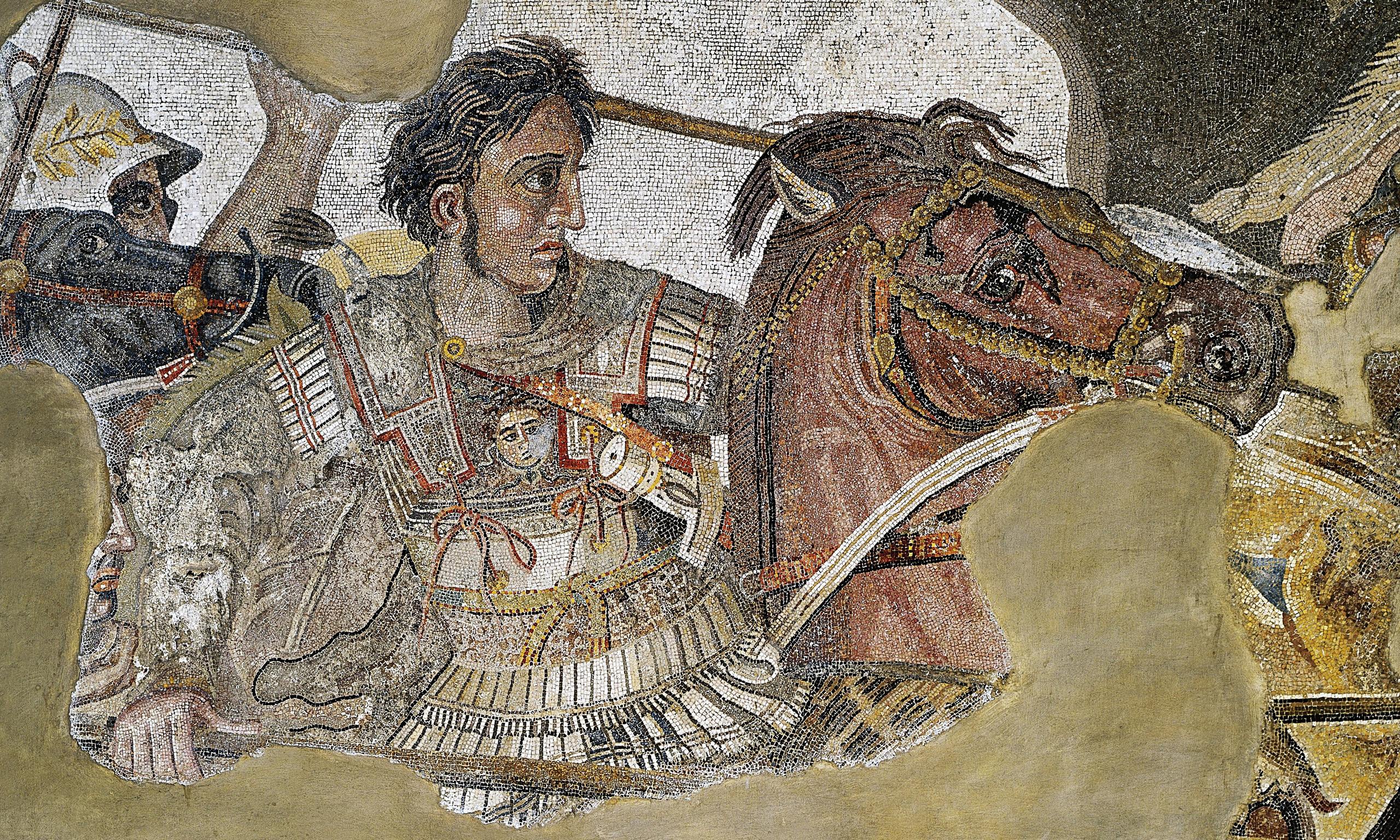
Credit: Unknown author · Public domain
Alexander the Great was a king from ancient Macedonia who built one of the largest empires in history. He lived from 356 BCE to 323 BCE. By the time he died at age 32, his empire stretched across three continents, from Greece to Egypt to the edge of India.
Alexander was born in Pella, the capital of Macedonia, a kingdom just north of Greece. His father was King Philip II, a tough soldier who had built the Macedonian army into a powerful fighting force. His mother, Olympias, was a princess from a nearby kingdom. As a boy, Alexander was taught by the famous Greek philosopher Aristotle. Aristotle filled his head with science, poetry, and the stories of Greek heroes. Alexander especially loved the tale of Achilles in the Iliad and slept with a copy of the book under his pillow.
When Alexander was 20, his father was murdered. Alexander became king and quickly took control of Greece. Then he turned east. He wanted to conquer the Persian Empire, the biggest empire in the world at that time.
Starting in 334 BCE, Alexander led his army across what is now Turkey, Syria, and Egypt. He won battle after battle, often against armies much larger than his own. At the Battle of Gaugamela in 331 BCE, the Persian king Darius III had perhaps 100,000 soldiers. Alexander had fewer than half that number. He won anyway. The Persian Empire fell, and Alexander took its riches.
He kept going. His army marched into what is now Afghanistan, then over the mountains into India. There his soldiers finally refused to go any farther. They had been fighting and marching for eight years. Alexander turned back, angry but unable to force them on.
In 323 BCE, Alexander caught a fever in the city of Babylon and died. Historians still argue about what killed him. Some think it was malaria or typhoid fever. Others suspect poison. Without a clear heir, his generals fought over the empire and split it into pieces.
Alexander's empire did not last. But his journey changed the ancient world. Greek language, art, and ideas spread into Egypt, the Middle East, and Central Asia. Cities he founded became centers of learning. The Library of Alexandria in Egypt later held the largest collection of books in the ancient world.
People still debate what kind of person Alexander really was. To some, he was a brilliant general and a builder of bridges between cultures. To others, he was a destroyer who burned cities and killed thousands. He was probably both.
Related
Last updated 2026-04-26