
Dr. Seuss
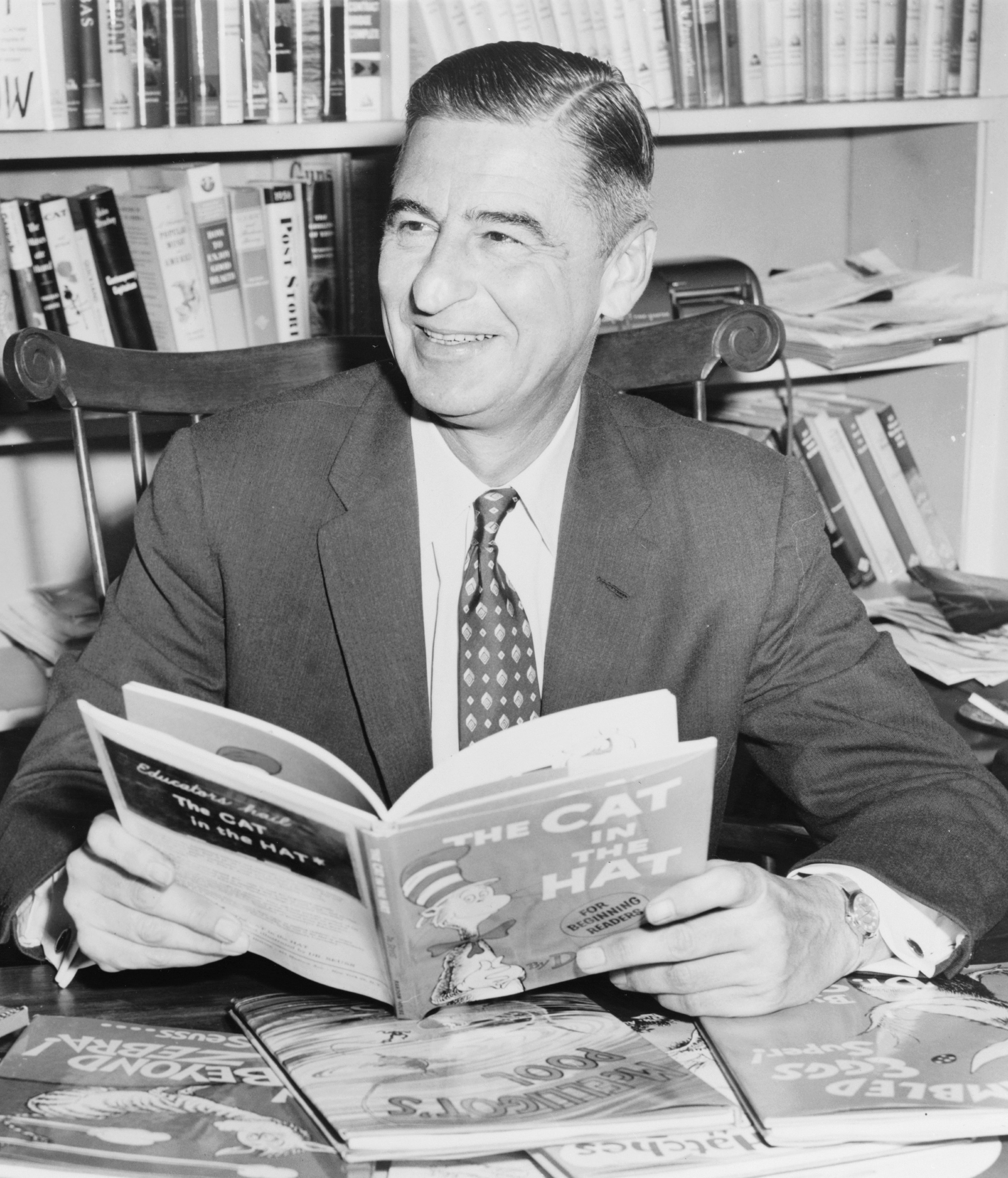
Credit: Al Ravenna, New York World-Telegram and the Sun staff photographer · Public domain
Dr. Seuss was an American author and illustrator who wrote some of the most famous children's books in history. His real name was Theodor Seuss Geisel. He lived from 1904 to 1991. He wrote and drew more than 60 books, including The Cat in the Hat, Green Eggs and Ham, How the Grinch Stole Christmas!, and The Lorax. His books have sold more than 700 million copies around the world.
Geisel was born in Springfield, Massachusetts. His mother used to chant rhymes to help him fall asleep. He later said those rhymes shaped the bouncy rhythm of his writing. He went to Dartmouth College and then to Oxford University in England. He started signing his cartoons "Dr. Seuss" as a joke. Seuss was his middle name and his mother's family name. The "Dr." was added because his father had always wanted him to become a real doctor.
His first children's book came out in 1937. It was called And to Think That I Saw It on Mulberry Street. Twenty-seven publishers rejected it before one finally said yes. Geisel almost burned the manuscript before a friend talked him out of it.
His biggest hit came in 1957. A magazine article had said American kids were bored with their school readers. A publisher gave Geisel a list of 236 simple words and asked him to make a fun book using only those words. The result was The Cat in the Hat. It changed how kids learned to read. Instead of dull sentences like "See Spot run," beginning readers got a wild cat balancing a cake on an umbrella.
Geisel made up his own animals, his own machines, and even his own words. "Nerd" first appeared in his 1950 book If I Ran the Zoo. His drawings used wobbly lines, tall hats, and creatures with too many legs. Nothing in his world looks quite like the real one, but kids recognize it instantly.
Many of his books carry serious messages tucked inside the silliness. The Lorax is about cutting down too many trees. The Sneetches is about treating people unfairly because of how they look. Yertle the Turtle is about bullying rulers. Geisel believed kids could handle big ideas if you made them fun.
Some of his earliest work, including political cartoons and a few early books, contained racist drawings of Asian and Black people. In 2021, the company that runs his estate stopped publishing six of his books because of those images. Readers and scholars still debate how to think about his legacy. His best books, though, are still read aloud in millions of homes every night.
Last updated 2026-04-26