
Andes Mountains
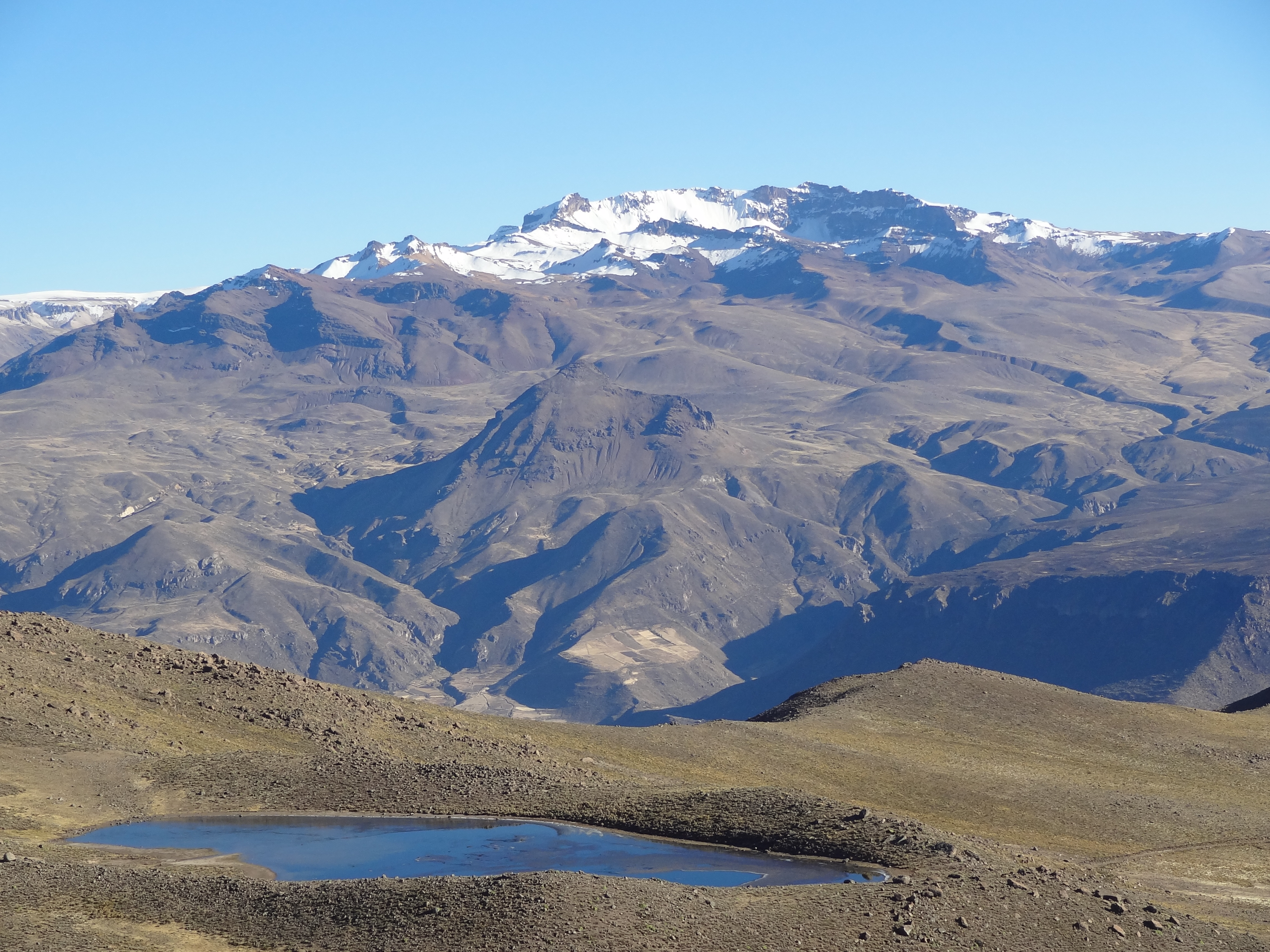
Credit: Daniel Stein · CC BY-SA 3.0
The Andes Mountains are the longest mountain range in the world. They run down the western side of South America for about 4,500 miles. That is almost twice the distance across the United States from coast to coast. The range passes through seven countries: Venezuela, Colombia, Ecuador, Peru, Bolivia, Chile, and Argentina.
The Andes are also very tall. The highest peak, Mount Aconcagua in Argentina, rises 22,837 feet. That makes it the tallest mountain anywhere outside of Asia. Many other Andes peaks climb higher than 20,000 feet. Only the Himalayas in Asia have more mountains that tall.
The Andes were built by two huge pieces of Earth's crust, called tectonic plates, pushing against each other. One plate slides slowly underneath the other. This pushes the land up and creates mountains. The plates are still moving today, so the Andes are still growing. The same movement causes earthquakes and powers many volcanoes. The Andes hold more than 50 active volcanoes.
Because the range is so long, the Andes cross many different climates. In the north, near the equator, the mountains are warm and wet, with cloud forests full of ferns and orchids. In the middle, in Peru and Bolivia, there are high, dry grasslands called the altiplano. In the south, in Chile and Argentina, the mountains are cold and covered in glaciers.
Many animals live only in the Andes. Llamas and alpacas have been raised by people there for thousands of years. Their wild cousins, the vicuña and the guanaco, still roam the high grasslands. The Andean condor, one of the largest flying birds on Earth, glides over the peaks with wings that can stretch over 10 feet across. Spectacled bears, the only bears in South America, live in the forests of the northern Andes.
People have lived in the Andes for more than 10,000 years. The Inca built a huge empire here in the 1400s. Their stone city of Machu Picchu still stands high in the Peruvian mountains. The Inca grew potatoes, corn, and quinoa on steep terraces cut into the slopes. Today, millions of people still live in Andean cities like La Paz, Bolivia, which sits higher than any other capital city in the world.
The Andes also feed the Amazon. Rain and melting snow from the eastern side of the mountains flow down into small streams. Those streams join together to form the Amazon River, the mightiest river on the planet.
Related
Last updated 2026-04-23