
Human Migration
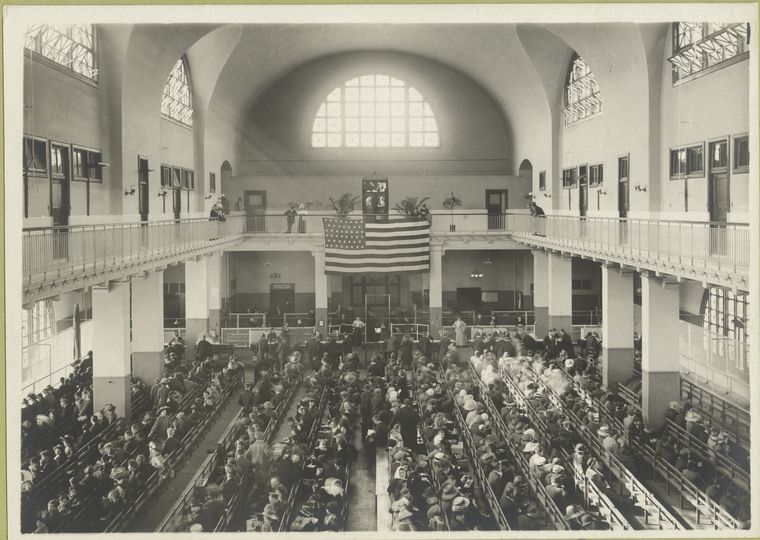
Credit: New York Public Library · No restrictions
Human migration is the movement of people from one place to another to live. A family that moves across town is not migrating. A family that leaves its home region or its country to start a new life is. People who move into a country are called immigrants. People who are forced to flee from danger are called refugees.
Humans have always been on the move. Our species began in Africa. Small groups started to spread out from there more than 60,000 years ago. They walked along coasts and followed herds of animals. They reached Australia about 50,000 years ago. The Americas came last. Scientists still argue about when the first people arrived there. For a long time the answer was about 13,000 years ago. Then footprints found in New Mexico were dated to around 21,000 years ago, and the debate started all over again.
People move for two kinds of reasons. Some things push them out of a place, such as war, hunger, or a lack of jobs. Other things pull them toward a new place, such as safety, farmland, or freedom to practice a religion. Most migrations involve both. In the 1840s, a disease killed the potato crop in Ireland and people began to starve. More than a million Irish people left, and many sailed to the United States.
Not all migration is a choice. For more than 300 years, slave traders forced about 12 million Africans onto ships bound for the Americas. It was the largest forced migration in history.
The United States has been shaped by migration more than most countries. From 1892 to 1954, about 12 million immigrants passed through one small island in New York Harbor called Ellis Island. People have also moved within the country. In the 1900s, about six million Black Americans left the South for cities in the North and West. They were looking for better jobs and trying to escape unfair laws. This is called the Great Migration.
Migration is still going on. About 280 million people now live outside the country where they were born. Countries argue about it a great deal. How many newcomers should a country accept? What rules should they follow? Voters and leaders disagree, often strongly.
One thing is true for almost every family, though. Go back far enough and somebody packed up and moved. Everyone's story has a journey in it.
Related
Last updated 2026-11-25