
Mount Fuji
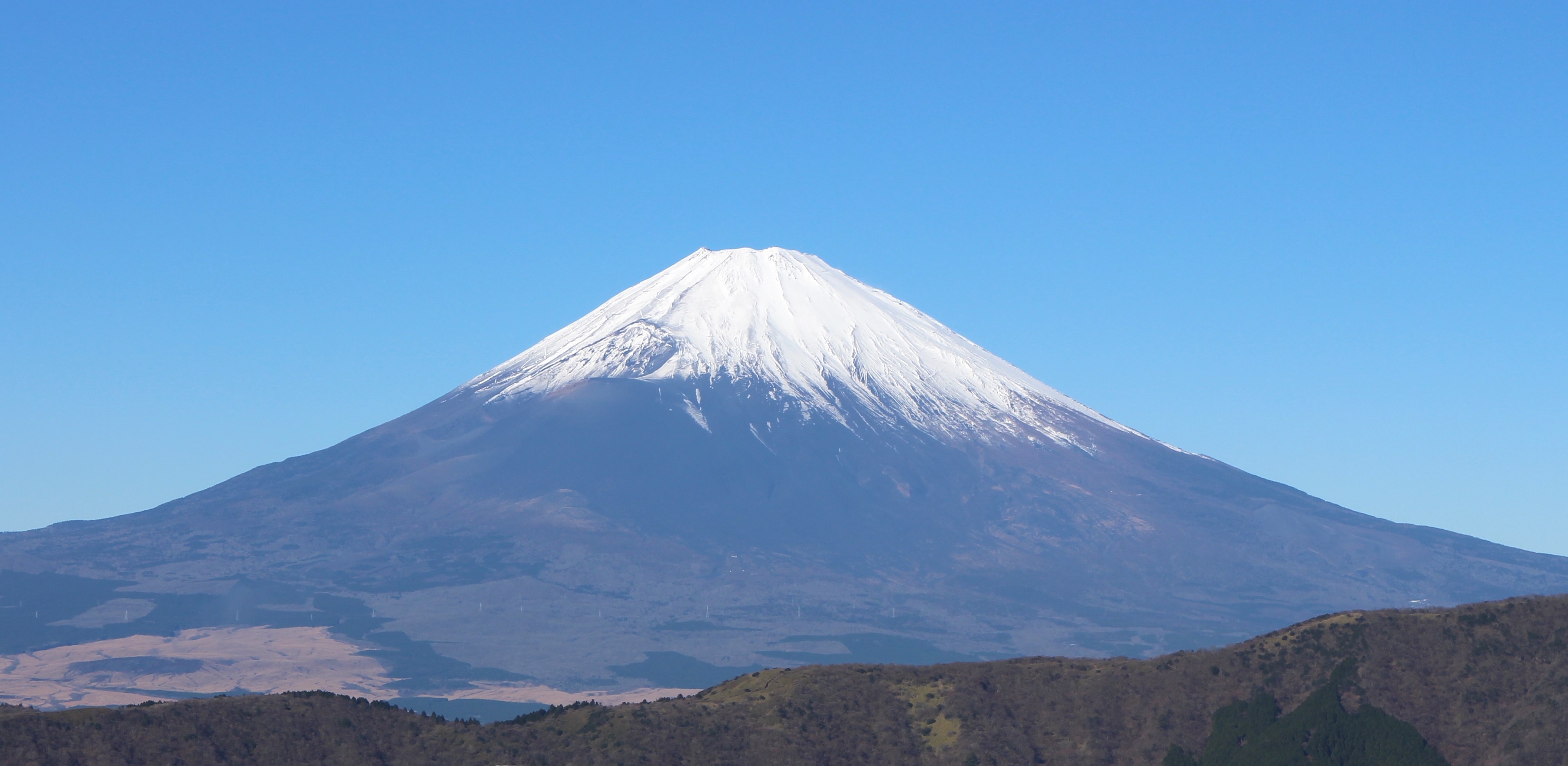
Credit: Suicasmo · CC BY-SA 4.0
Mount Fuji is a tall volcano on the island of Honshu in Japan. It stands 12,388 feet high, making it the tallest mountain in the country. The mountain sits about 60 miles southwest of Tokyo, and on clear days people in the city can see it in the distance. Its nearly perfect cone shape is covered in snow for much of the year. In Japanese, the mountain is called Fujisan.
Mount Fuji is an active volcano, though it has not erupted in a long time. Its last eruption began in December 1707 and lasted about two weeks. That eruption dropped ash on Tokyo (then called Edo) nearly 60 miles away. Scientists watch Fuji closely and say another eruption could happen someday, but no one knows when.
The mountain formed because of plate tectonics. Three huge pieces of Earth's crust meet under this part of Japan. As they push against each other, melted rock rises to the surface. Fuji is young for a volcano. Its current shape has only existed for about 10,000 years, built up from many layers of lava and ash.
Mount Fuji is one of the most important symbols in Japan. For more than a thousand years, people have painted it, written poems about it, and treated it as a sacred place. In the Shinto religion, the mountain is home to a goddess named Konohanasakuya-hime. Buddhist monks have also climbed Fuji for hundreds of years as a way to pray. Women were not allowed to climb to the top until 1868.
Today, about 300,000 people climb Mount Fuji every year. The official climbing season is short, only about two months in July, August, and early September. Outside that window, the upper slopes are covered in ice and deep snow. Most climbers start in the evening, hike through the night, and reach the summit in time to watch the sunrise. The trip takes around six hours. Near the top, the air is so thin that many climbers feel dizzy or short of breath.
The artist Katsushika Hokusai made Fuji famous around the world. In the 1830s, he created a set of woodblock prints called Thirty-Six Views of Mount Fuji. The most well known print shows a giant wave curling over small boats, with tiny Fuji in the background. That image has been copied onto everything from postage stamps to emoji keyboards. UNESCO named Mount Fuji a World Heritage Site in 2013, honoring both the mountain and its place in Japanese art.
Related
Last updated 2026-04-23