
Plate Tectonics
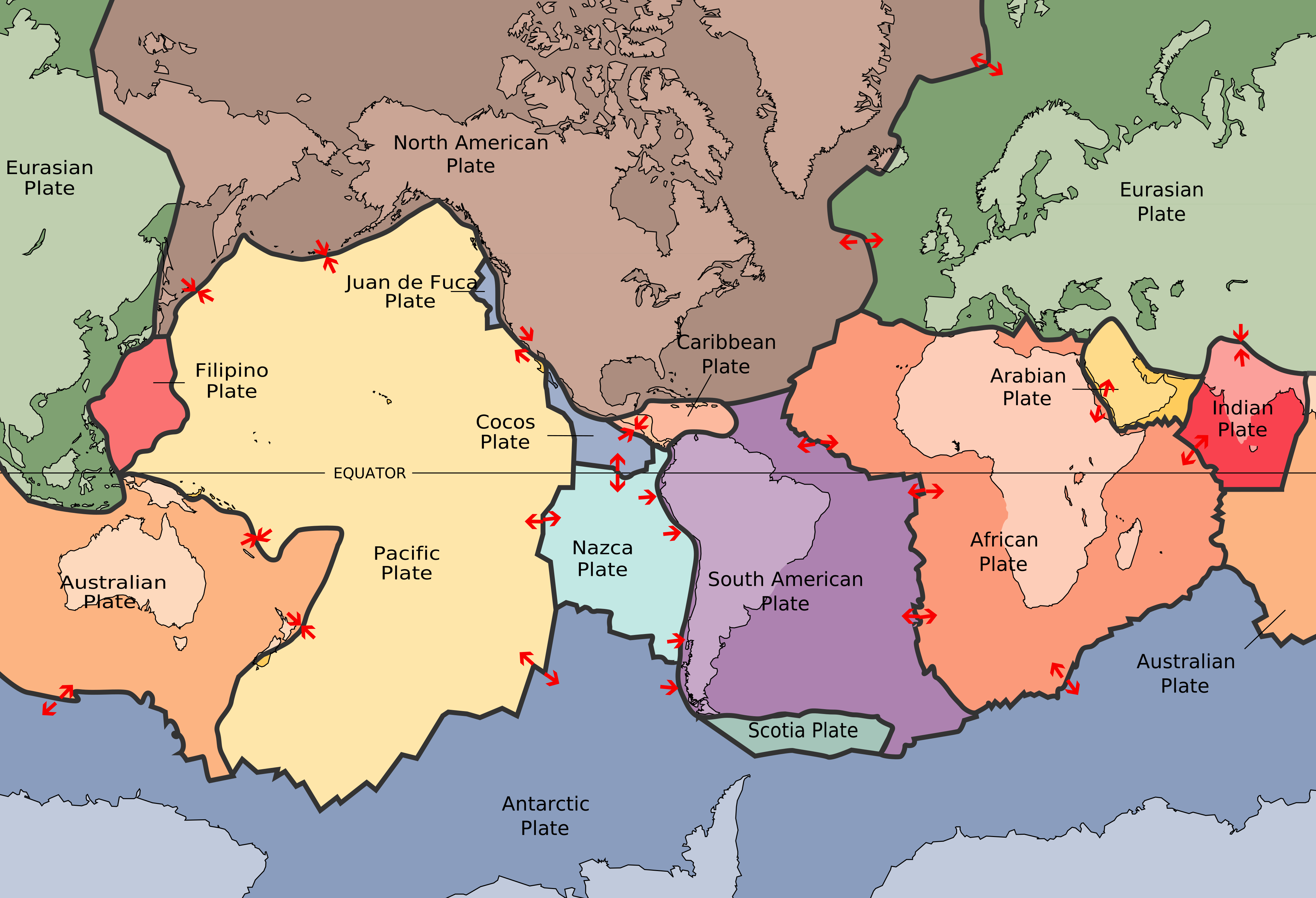
Credit: Map:USGS Description:Scott Nash · Public domain
Plate tectonics is the theory that explains how Earth's outer shell is broken into giant pieces that slowly move. These pieces are called tectonic plates. They float on a layer of hot, soft rock deep inside the planet. Wherever the plates meet, push, or pull apart, big things happen on the surface. Earthquakes shake the ground. Volcanoes erupt. Mountains rise. Whole oceans grow wider or shrink.
Earth has about 15 major plates and many smaller ones. The plates carry both the continents and the ocean floors on their backs. Some plates are huge. The Pacific Plate, for example, covers most of the Pacific Ocean. Plates move only an inch or two each year, about as fast as your fingernails grow. That sounds slow, but over millions of years it adds up to thousands of miles.
The plates move because Earth is hot inside. Heat from the core makes the rock in the mantle slowly churn, like thick soup on a stove. This churning drags the plates along on top.
Plates can meet in three ways. Sometimes two plates push into each other. When that happens, one plate may slide under the other, or both may crumple upward into mountains. The Himalayas grew this way and are still growing today, as India keeps pushing into Asia. Sometimes two plates pull apart, and hot rock rises up to fill the gap. This is how the floor of the Atlantic Ocean is made. And sometimes two plates slide past each other sideways. The San Andreas Fault in California is a place where this happens, which is why California has so many earthquakes.
Plate tectonics also explains a strange clue from world maps. The east coast of South America looks like it could fit into the west coast of Africa, almost like puzzle pieces. That is because they used to be joined. About 250 million years ago, all the continents were stuck together in one giant supercontinent called Pangaea. Slowly, the plates pulled Pangaea apart and carried the continents to where they are now.
The theory is fairly new. It was not widely accepted until the 1960s, after scientists mapped the ocean floor and found long mountain ridges where new rock was being made. Before then, most geologists thought the continents stayed in place forever.
Earth's plates are still moving today. The Atlantic Ocean is still widening. The Pacific is shrinking. In about 250 million years, the continents may crash back together and form a brand-new supercontinent.
Related
Last updated 2026-04-25