
Aging
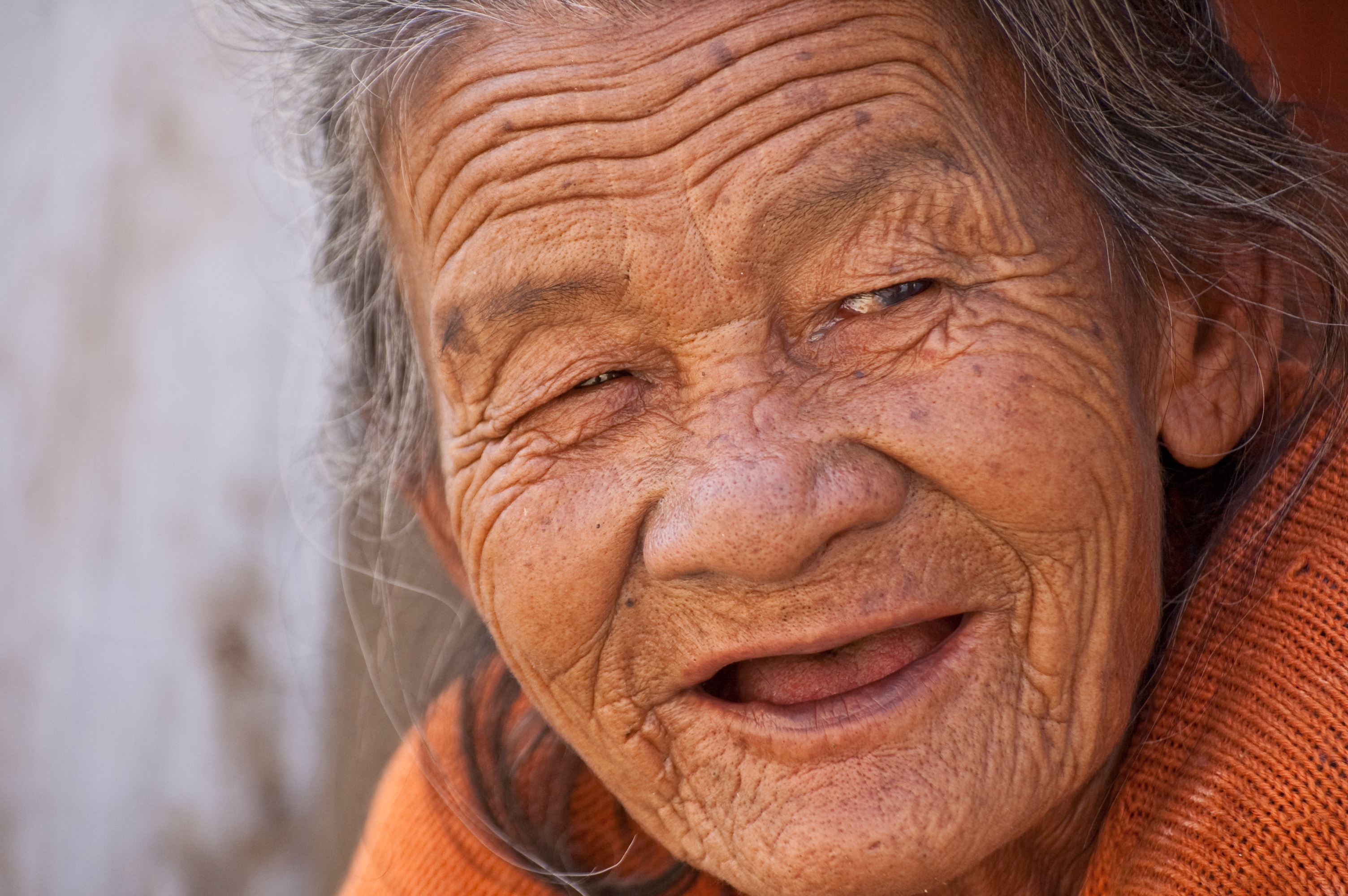
Credit: aunhtet0 · CC0
Aging is the slow set of changes that happen to a living thing as time passes. In humans, aging happens to every person who lives long enough. It changes the body on the outside and the inside. Skin wrinkles, hair turns gray, bones grow weaker, and the body takes longer to heal. These changes happen because the cells in the body slowly stop working as well as they once did.
The human body is made of trillions of cells. Cells divide to make new cells, and that is how the body grows and repairs itself. But cells cannot divide forever. Each time a cell divides, the tips of its DNA, called telomeres, get a tiny bit shorter. After many divisions, the telomeres are too short, and the cell stops dividing. Over many years, this slowdown affects skin, muscles, bones, and organs.
Other things speed aging up. Sunlight damages skin cells over time, which is why people who spend years in strong sun often have more wrinkles. Smoking, poor sleep, and not moving the body also speed aging. Eating well, exercising, sleeping enough, and staying close to family and friends all seem to slow it down.
Different parts of the body age at different speeds. Eyes often start to change in a person's forties, when reading small print gets harder. Hearing usually fades later. Muscle slowly shrinks starting around age 30, but exercise can keep it strong for many more decades. The brain keeps learning new things at every age, even though some kinds of memory get slower.
Not every animal ages the way humans do. A bowhead whale can live more than 200 years. The Greenland shark may live over 400 years, making it the longest-living animal with a backbone. A tiny jellyfish called Turritopsis dohrnii can actually reverse its own life cycle and turn back into a young form. Scientists study these animals closely. They want to know why some creatures resist aging so well.
Why does aging happen at all? Scientists do not fully agree. Some think aging is the slow buildup of damage to cells, like rust on a bike. Others think the body is built with a kind of timer in its DNA. Most researchers now believe both ideas are partly true. Whether aging itself could ever be slowed in humans is one of the biggest open questions in biology.
For now, every person ages, and every life has its seasons. Each one brings its own kind of strength.
Related
Last updated 2026-04-25