
Childhood
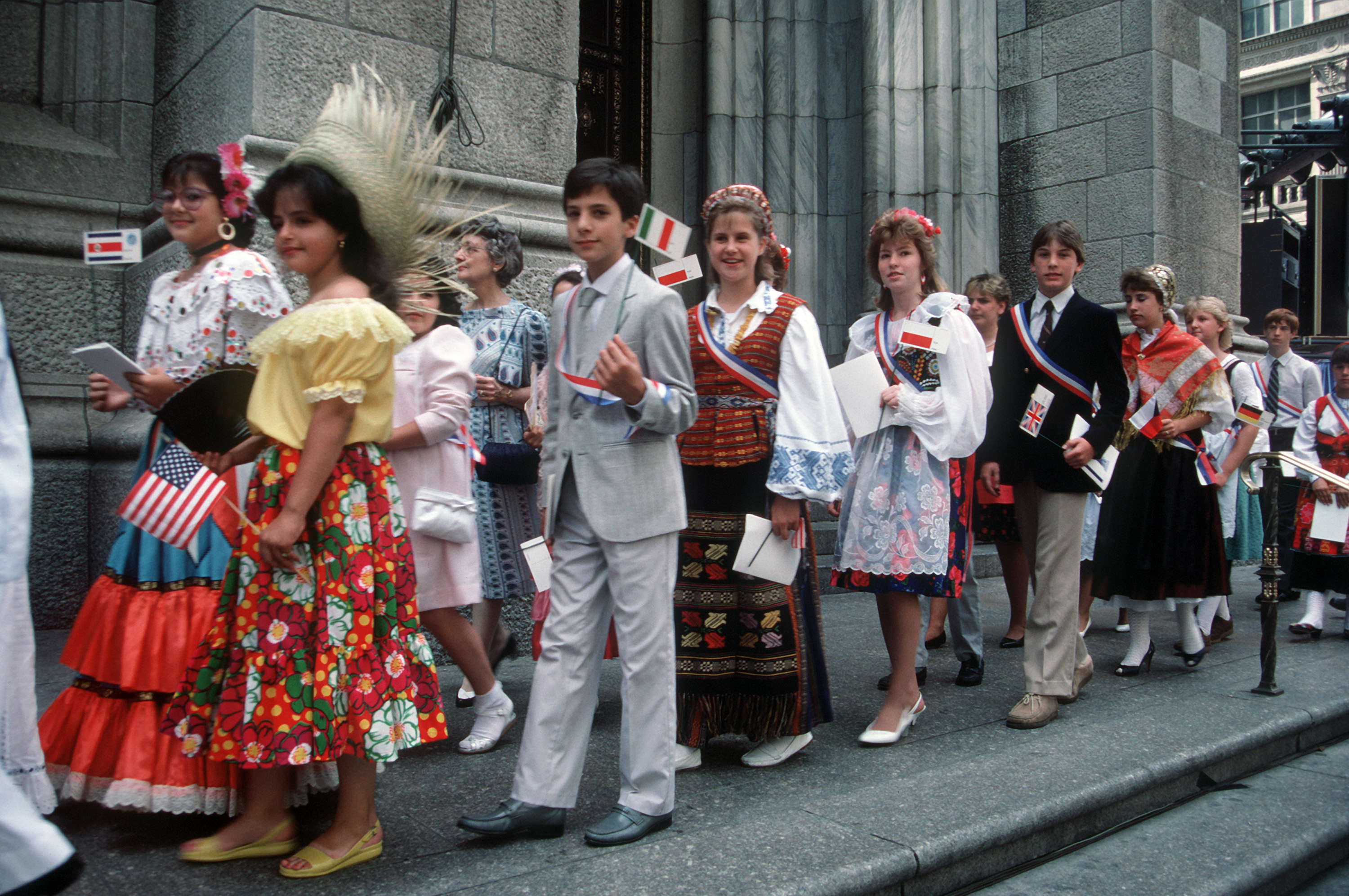
Credit: Department of Defense. American Forces Information Service. Defense Visual Information Center. 1994 · Public domain
Childhood is the part of human life between being a baby and becoming a teenager. It usually covers the years from about age two to about age twelve. During childhood, a person grows quickly, learns language, makes friends, and starts school. Scientists who study how people grow call this stage "middle childhood" once a kid is past the toddler years.
A child's body changes a lot in these years. A typical two-year-old is about 34 inches tall and weighs around 27 pounds. A typical twelve-year-old is closer to 58 inches tall and weighs around 90 pounds. Bones grow longer, muscles get stronger, and baby teeth fall out and are replaced by adult teeth. Most kids lose their first baby tooth around age six. By age twelve, most have nearly all their adult teeth, except for the wisdom teeth, which come in much later.
The brain changes even faster than the body. By age six, a child's brain is already about 90 percent of its adult size. But it keeps rewiring itself for years after that. Brain cells called neurons build new connections every time a kid learns something. Connections that get used a lot grow stronger. Connections that don't get used fade away. This is one reason childhood is such a good time to learn languages, music, and sports.
Children also learn how to be around other people. Babies mostly notice their parents. Young kids learn to play next to other kids. Older kids learn to share, take turns, follow rules, and work in teams. Friendships become very important. Many adults can still name their best friend from third grade.
Childhood does not look the same everywhere. In some places, kids start school at age three. In others, they start at age seven. Some children spend most of the day playing outside. Others spend most of the day in classrooms or helping their families work. Around the world, more than 160 million children still do paid labor instead of going to school, often in dangerous jobs. The United Nations passed a treaty in 1989 called the Convention on the Rights of the Child. It says every child has the right to safety, health care, education, and play.
Scientists once thought the brain stopped changing after childhood. They now know it keeps changing through the teenage years and into adulthood. But the foundation built during childhood, in language, learning, and friendship, shapes the rest of a person's life.
Related
Last updated 2026-04-25