
Human Genetics
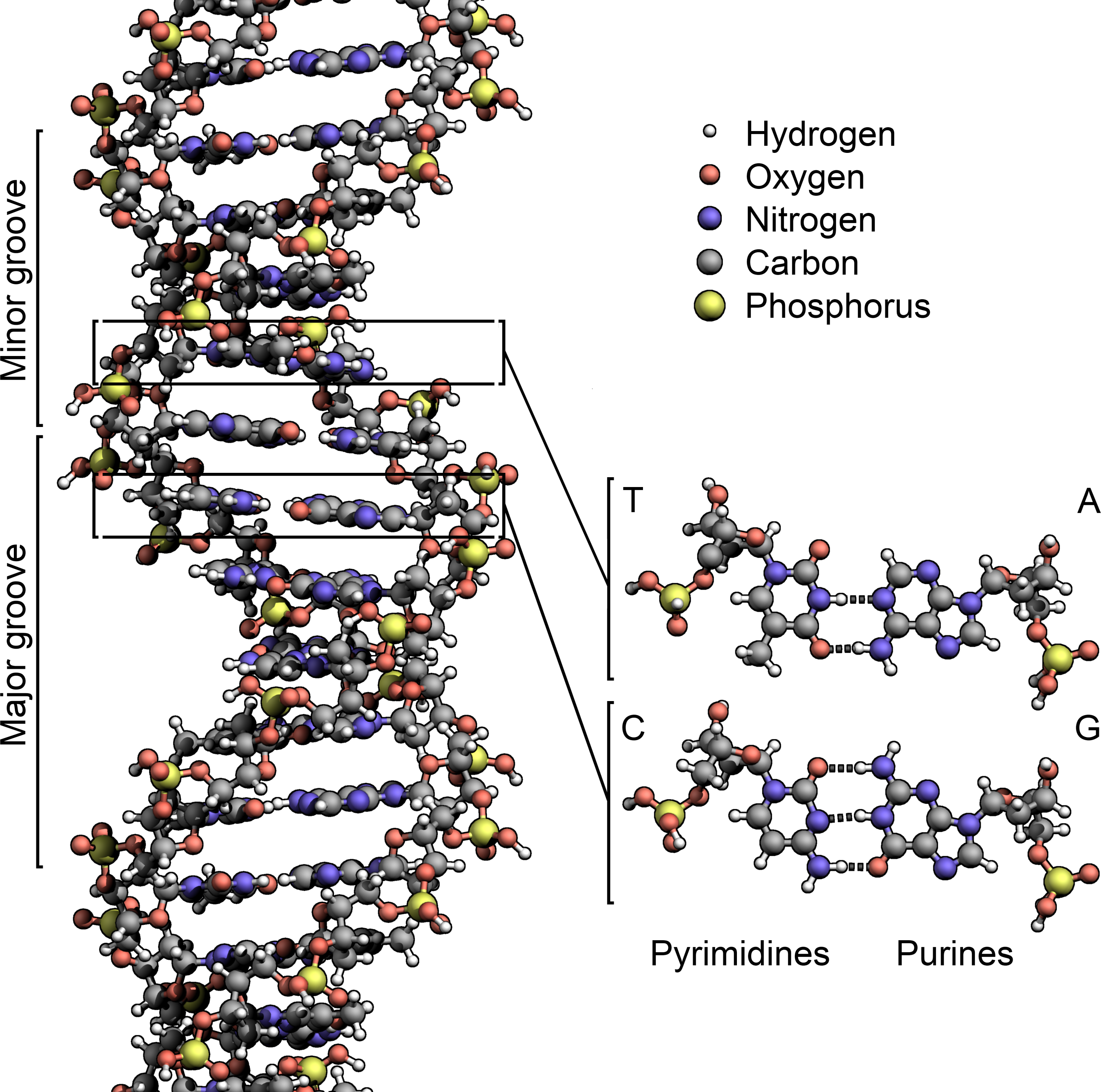
Credit: Zephyris · CC BY-SA 3.0
Human genetics is the study of how traits are passed from parents to children. The word "genetics" comes from "gene," and a gene is a small section of instructions inside your cells. Those instructions tell your body how to grow, what color your eyes will be, how tall you might get, and thousands of other things. Every human has the same basic set of genes, but small differences are what make each person one of a kind.
Your genes are written in a long molecule called DNA. DNA is shaped like a twisted ladder. The "rungs" of the ladder are made of four chemicals, and scientists use the letters A, T, C, and G to stand for them. The order of those letters is the code your body reads. If you stretched out the DNA from a single human cell, it would be about six feet long. Yet it folds up small enough to fit inside a cell you cannot see without a microscope.
DNA is packed into 46 bundles called chromosomes. You got 23 chromosomes from your mother and 23 from your father. That is why you might have your dad's smile and your mom's hair color. The mix is different for every child, which is why brothers and sisters do not look exactly alike (unless they are identical twins, who share the same DNA).
Some traits are easy to see, like dimples or curly hair. Others are hidden inside, like blood type or whether you can roll your tongue. A few traits are controlled by just one gene. Most, including height and skin color, are shaped by many genes working together, plus things like food, sleep, and exercise.
Genes can also pass along certain illnesses. Sickle cell disease, cystic fibrosis, and color blindness all run in families because of changes in specific genes. Doctors can now read a person's DNA to look for these changes. This field is called genetic testing, and it has grown quickly since scientists first finished mapping all human genes in 2003.
Some big questions are still open. Scientists do not fully understand how genes shape behavior, intelligence, or personality. Most experts agree these come from a mix of genes and life experience, but figuring out exactly how much each one matters is hard. Studies of identical twins raised apart help, but the puzzle is far from solved. Genetics is one of the fastest-changing parts of science today.
Related
Last updated 2026-04-25