
Muscles
Credit: Mdunning13 · CC BY-SA 3.0
Muscles are body parts made of soft tissue that can pull and squeeze to create movement. Every animal with a body has them, and humans have more than 600. Muscles let you walk, blink, smile, lift a backpack, and breathe. They also keep your heart beating and push food through your stomach.
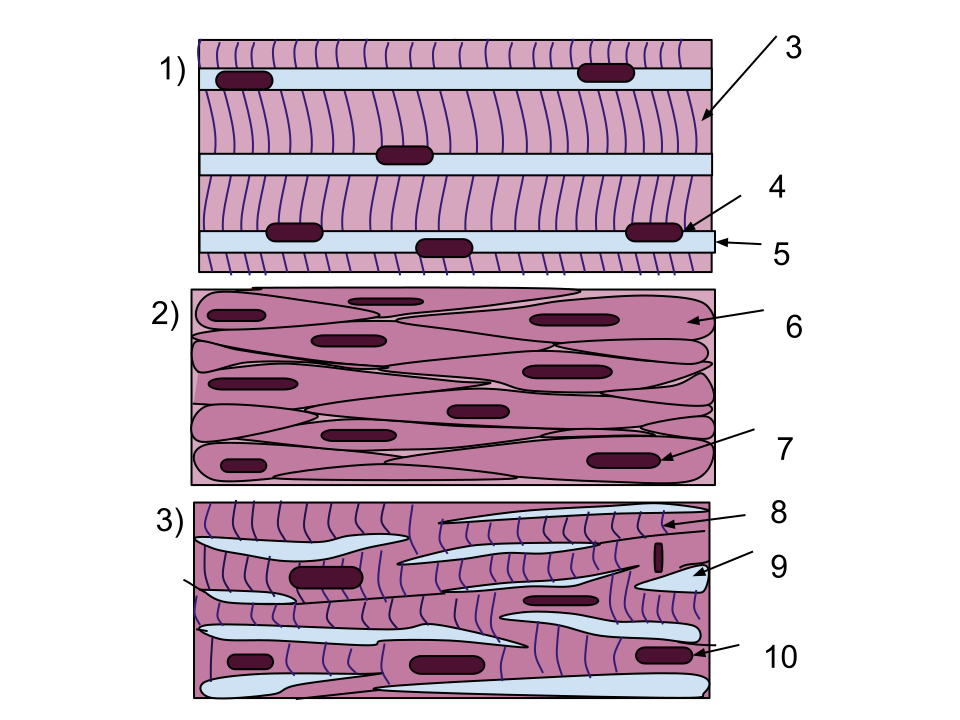
There are three main kinds of muscle in the human body. Each kind has a different job.
Skeletal muscles are the ones you can control. They attach to your bones with tough cords called tendons. When a skeletal muscle gets a signal from your brain, it pulls on the bone and makes it move. These are the muscles you use to run, throw a ball, or wave hello.
Smooth muscles work without you thinking about them. They line the inside of your stomach, your blood vessels, and many other organs. Smooth muscles squeeze slowly and steadily. They push food through your gut and help your body digest a meal.
Cardiac muscle is found in only one place: your heart. It also works on its own, beating about 100,000 times a day. Cardiac muscle never gets tired the way other muscles do. It has to keep going for your whole life.
Muscles work by pulling, never by pushing. To bend your arm, the bicep muscle on the front shortens and pulls the bone up. To straighten your arm, the tricep on the back has to pull the other way. Most muscles come in pairs like this. One pulls one way, and the other pulls back.
The signal to move starts in your brain. It travels down your spinal cord and through your nerves to the muscle in less than a tenth of a second. That is faster than you can blink.
When you exercise, tiny tears form inside your muscle fibers. Your body fixes the tears and builds the fibers back a little stronger. That is why people who lift weights or do sports get stronger over time. Resting and eating protein help the muscles repair.
Some muscles are surprisingly powerful. The biggest muscle in your body is the gluteus maximus, the one you sit on. The smallest is the stapedius, deep in your ear. It is only about a fifth of an inch long, and it protects you from very loud sounds.
Related
Last updated 2026-04-25