
Skull
Credit: LadyofHats Mariana Ruiz Villarreal · Public domain
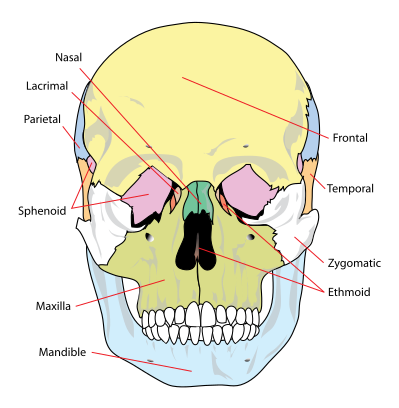
The skull is the bony case that protects the brain and gives the head its shape. It sits at the top of the spine and forms the framework of the face. In an adult human, the skull is made of 22 separate bones. Most of these bones are locked together at jagged seams called sutures. Only one bone in the skull can move on its own. That bone is the lower jaw, or mandible.
The skull has two main parts. The upper part is the cranium. It surrounds the brain like a hard helmet. The lower part is the face, which holds the eyes, nose, and mouth. There are also tiny holes in the skull, called foramina, where nerves and blood vessels pass through. The biggest hole is at the bottom. It is where the brain connects to the spinal cord.
Babies are born with skulls that are not yet fully joined. The bones are held together by soft, flexible spots. You can sometimes feel a gentle pulse on the top of a baby's head. These soft spots, called fontanelles, slowly close as the bones grow together. The last one usually closes by age two.
Inside your head are also the three smallest bones in your whole body. They sit deep in each ear. The smallest, called the stirrup bone, is about the size of a grain of rice. These tiny bones pass sound vibrations to the inner ear so you can hear.
Skulls are also strong record keepers. Long after the rest of a body is gone, a skull can stay in the ground for thousands or even millions of years. Scientists called paleoanthropologists study ancient human skulls to learn how our species changed over time. One famous skull, nicknamed "Lucy," belonged to an early human relative who lived in Africa about 3.2 million years ago, long before modern humans existed.
Doctors and dentists pay close attention to the skull too. A hard hit to the head can cause a concussion, which is a brain injury that happens when the brain bumps the inside of the skull. That is why people wear helmets when biking, skating, or playing sports like football. Your skull is strong, but it cannot stop every kind of impact.
Every human skull is a little different. The shape of your skull is part of what gives your face its unique look, the one your friends and family recognize from across a room.
Related
Last updated 2026-04-25