
Stomach
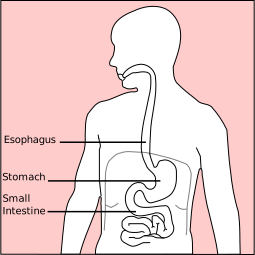
Credit: Indolences at English Wikipedia · Public domain
The stomach is a muscular, J-shaped organ that breaks down the food you eat. It sits in the upper left part of your belly, just under your ribs. The stomach is the second stop on a long journey called digestion. Food enters through your mouth, slides down a tube called the esophagus, and lands in the stomach.
When the stomach is empty, it is about the size of your fist. After a big meal, it can stretch to hold about a quart of food and liquid, roughly the size of a small carton of milk. The walls have three layers of muscle that squeeze in different directions. This squeezing churns the food and mixes it with stomach juices.
Those juices are powerful. Your stomach makes hydrochloric acid, the same kind of acid found in some cleaning products. The acid is strong enough to dissolve metal like iron. It kills most germs in your food and helps break down tough things like meat. The stomach also makes a chemical called pepsin, which chops proteins into smaller pieces.
So why doesn't your stomach digest itself? It is coated with a thick layer of mucus that protects the walls from the acid. Special cells in the lining work hard around the clock. The stomach replaces its lining every few days, faster than almost any other tissue in your body.
Food does not stay in the stomach forever. After two to four hours of churning, the food has turned into a thick soup called chyme. A ring of muscle at the bottom of the stomach opens a little at a time, letting the chyme squirt into the small intestine. That is where most of the nutrients are actually absorbed into your blood.
Your stomach also talks to your brain. When it is empty, it releases a chemical that signals hunger. That is part of why your stomach growls. The growling is the sound of muscles squeezing air and juice through a mostly empty space. When you have eaten enough, your stomach sends a different signal that tells your brain you are full, though that message can take about 20 minutes to arrive.
Some animals have stomachs that work very differently. A cow has four stomach chambers to break down tough grass. A starfish can push its stomach out through its mouth to digest prey outside its body. Your one human stomach is simpler, but it does its quiet work every time you eat.
Related
Last updated 2026-04-25