
Intestines
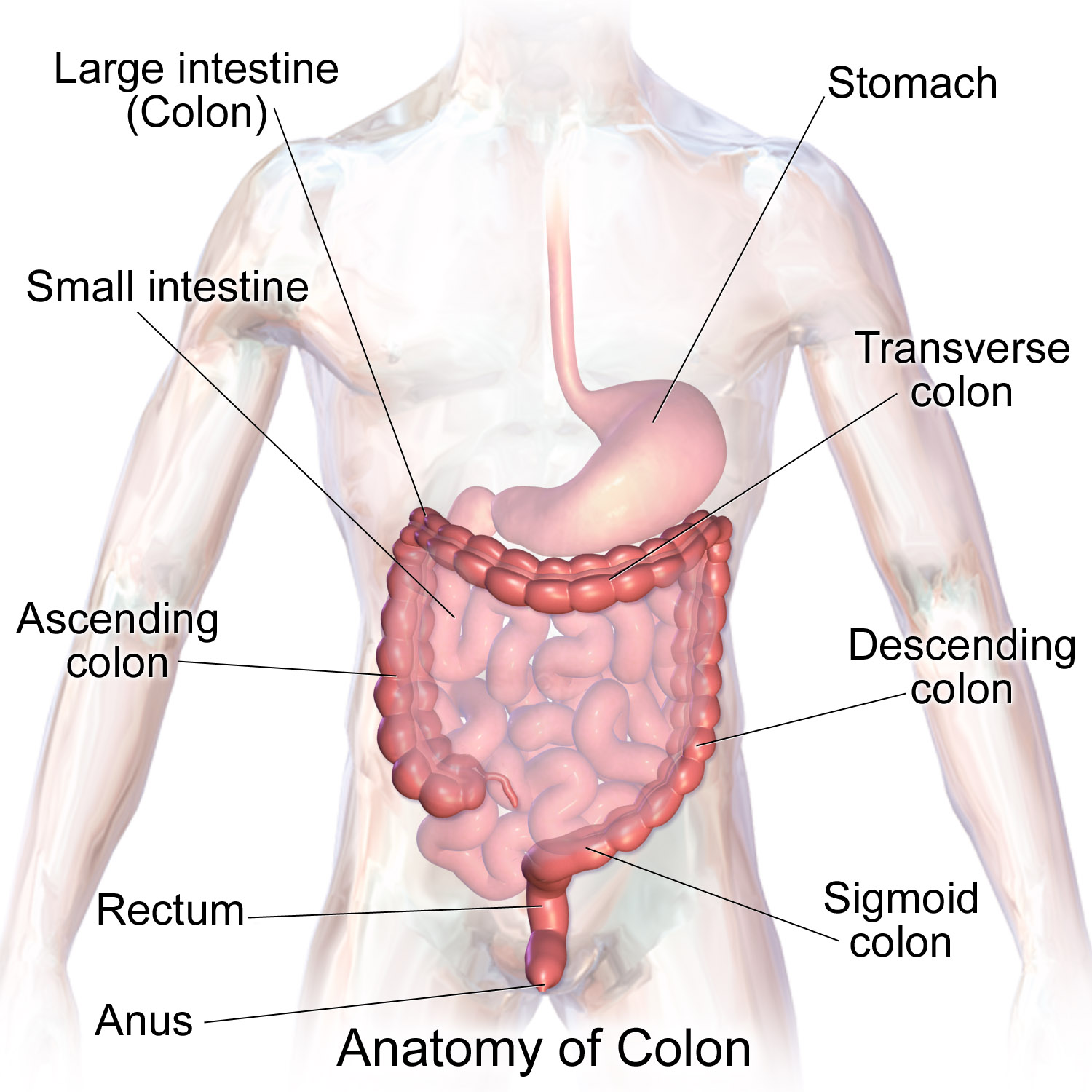
Credit: BruceBlaus. When using this image in external sources it can be cited as: Blausen.com staff (2014). "Medical gallery of Blausen Medical 2014". WikiJournal of Medicine 1 (2). DOI:10.15347/wjm/2014.010. ISSN 2002-4436. · CC BY 3.0
The intestines are long, twisting tubes inside your belly that finish the work of digesting food. They sit just below your stomach, coiled tightly to fit in a small space. There are two parts: the small intestine and the large intestine. Together they pull nutrients out of your food and get rid of what your body cannot use.
The small intestine is not actually small. In an adult, it is about 22 feet long, longer than a school bus. It is called "small" because it is narrow, only about an inch wide. Food enters the small intestine after leaving the stomach. By that point, it has been mashed into a thick liquid. The small intestine breaks this liquid down even more using juices from the pancreas and liver.
This is where most digestion happens. The walls of the small intestine are covered in millions of tiny finger-shaped bumps called villi. Each villus has even smaller bumps on it. All these bumps create a huge surface area to soak up nutrients. Vitamins, sugars, proteins, and fats pass through the villi into your blood. From there, your blood carries them to every cell in your body.
After the small intestine finishes its work, leftovers move into the large intestine. The large intestine is shorter, about 5 feet long, but much wider. Its main job is to soak up water from the leftovers. What remains becomes solid waste, which leaves the body when you go to the bathroom. Food can spend a day or two in the large intestine before it exits.
Your large intestine is also packed with bacteria. Trillions of them live there, and most are helpful. They break down fibers your body cannot digest. They make certain vitamins, like vitamin K, which helps your blood clot. They also crowd out harmful germs that try to move in. Scientists call this community of microbes the gut microbiome. Researchers are still learning what it does, and some studies suggest it may even affect mood and brain health.
The intestines never stop moving. Muscles in their walls squeeze in waves to push food along, a motion called peristalsis. You don't have to think about it. It happens whether you are awake, asleep, or upside down on the monkey bars. Without your intestines doing this quiet, twisting work all day long, the food you eat would be of no use to you at all.
Related
Last updated 2026-04-25