
Time
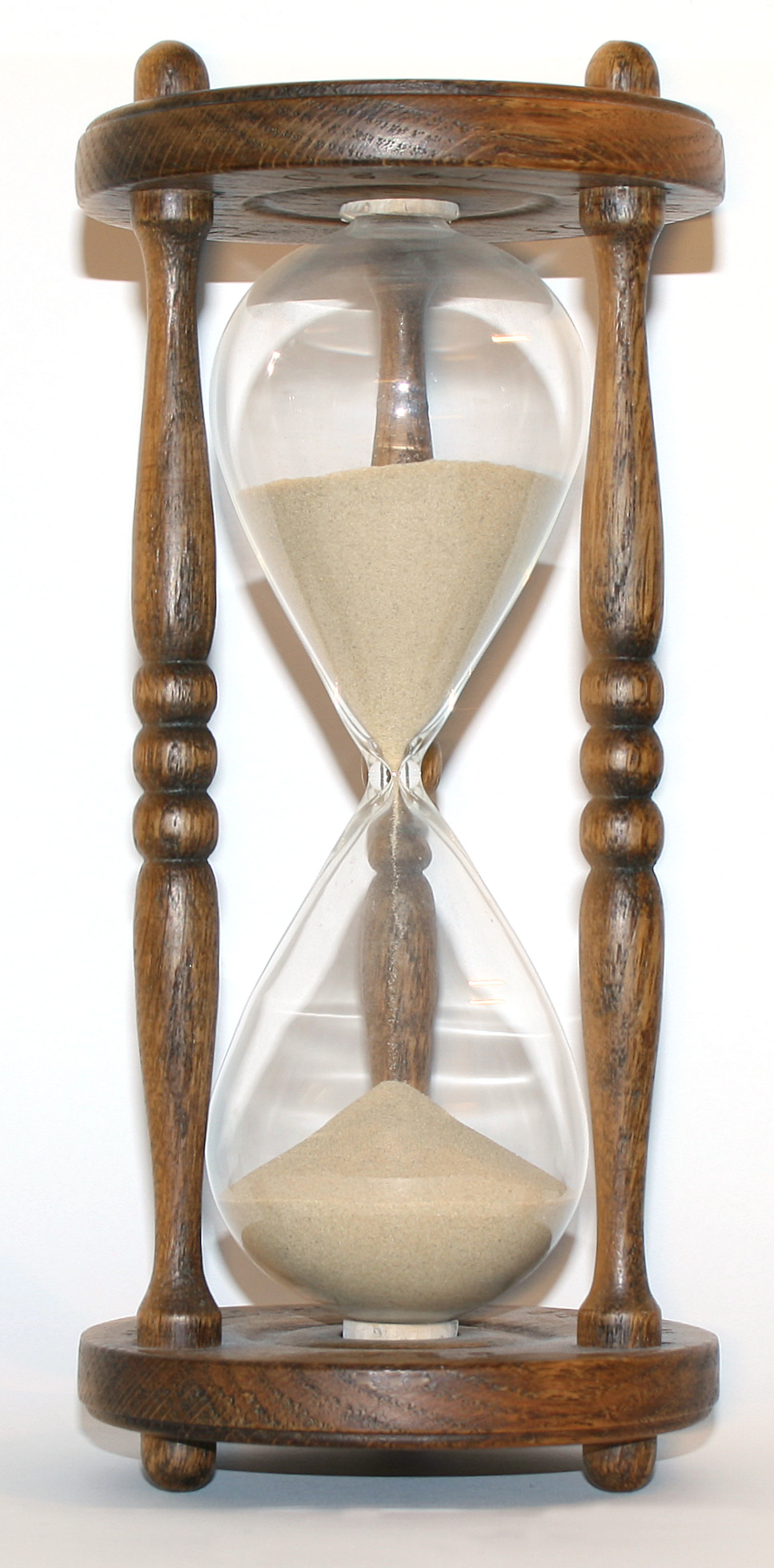
Credit: User:S Sepp · CC BY-SA 3.0
Time is a way of measuring how events happen one after another. People use time to say when something happened, how long it lasted, and what comes next. Along with length and weight, time is one of the most basic things humans measure.
The smallest units of time most people use are seconds. Sixty seconds make a minute. Sixty minutes make an hour. Twenty-four hours make a day. About 365 days make a year. These units come from real things in nature, not from random choices. A day is one full spin of Earth on its axis. A year is one full trip Earth takes around the Sun.
People have been measuring time for thousands of years. Ancient Egyptians used sundials, which tell time by the shadow the Sun casts on a flat dial. They also used water clocks, which measure time by water dripping out of a container. In the 1300s, Europeans built the first mechanical clocks, with gears and weights. In 1656, a Dutch scientist named Christiaan Huygens invented the pendulum clock, which was much more accurate. Today, the most accurate clocks in the world are atomic clocks. They measure time by counting the tiny, fast vibrations of atoms. The best atomic clocks would lose less than one second over the entire age of the universe.
Time is the same for everyone, right? Actually, no. In 1905, Albert Einstein figured out something strange. Time runs a little slower for things that move very fast or sit deep inside strong gravity. This is called time dilation. The effect is tiny in everyday life. But it is real. Astronauts on the International Space Station age a tiny bit slower than people on Earth. GPS satellites have to correct for time dilation, or your phone's map would be off by miles.
Even with all our clocks, scientists still argue about what time really is. Some think time is a basic part of the universe, like space. Others think time only seems real because of how our brains work. Why does time only flow forward, never backward? That question does not have a clear answer yet.
The world uses one main calendar today, called the Gregorian calendar. Pope Gregory XIII created it in 1582 to fix small errors in an older calendar. It tracks the year by Earth's trip around the Sun. Other calendars are still in use too. The Hebrew, Islamic, and Chinese calendars all measure time in their own ways, often following the Moon. Time is universal, but the way humans count it is a story of culture, science, and careful measurement.
Related
Last updated 2026-04-26