
Lichen
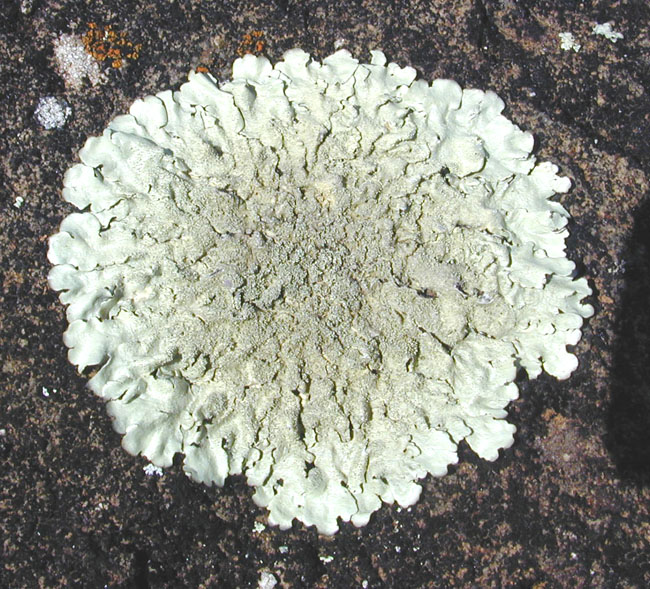
Credit: Wikimedia Commons · CC BY-SA 3.0
A lichen is a living thing made of two different organisms working together as one. Each lichen is part fungus and part algae, or sometimes part fungus and part bacteria. The two partners live so closely that they look and act like a single creature. Lichens grow on rocks, trees, soil, and even old fences and gravestones in nearly every part of the world.
The fungus part of a lichen builds the body. It forms a tough outer layer that holds water and protects the inside. The algae or bacteria part lives tucked safely inside that layer. The algae make food using sunlight, water, and air. This process is called photosynthesis. The fungus cannot make its own food, so it takes some of the sugar the algae produce. In return, the algae get a safe home and a steady supply of water. This kind of teamwork between two different living things is called symbiosis.
Lichens come in many shapes and colors. Some look like flat, dusty patches of gray, green, or orange paint smeared on a rock. Others grow in tiny leafy shapes. A few look like miniature shrubs or hanging beards of stringy hair. Scientists have named more than 20,000 kinds of lichens.
Lichens grow very slowly. Many add less than a millimeter per year, thinner than a fingernail clipping. Because they grow so slowly, lichens can be very, very old. Some patches in the Arctic are believed to be more than 8,000 years old. That is older than the pyramids of Egypt. Scientists even use lichen size to estimate the age of rocks left behind by melting glaciers.
Lichens are tough. They survive in places where almost nothing else can live, including hot deserts, frozen tundra, and bare mountain peaks. In 2005, scientists put lichens on the outside of a spacecraft and exposed them to outer space for 15 days. Most of them lived through it.
But lichens have one weakness. They soak up whatever is in the air around them, including pollution. In dirty city air, many lichens die. Scientists use lichens like air quality detectors. If a forest is full of healthy lichens, the air is probably clean. If lichens are missing from trees that should have them, the air is likely polluted.
Reindeer, caribou, and moose eat lichens through the long winter. Some birds even line their nests with the soft, spongy strands.
Last updated 2026-04-25