
Mold
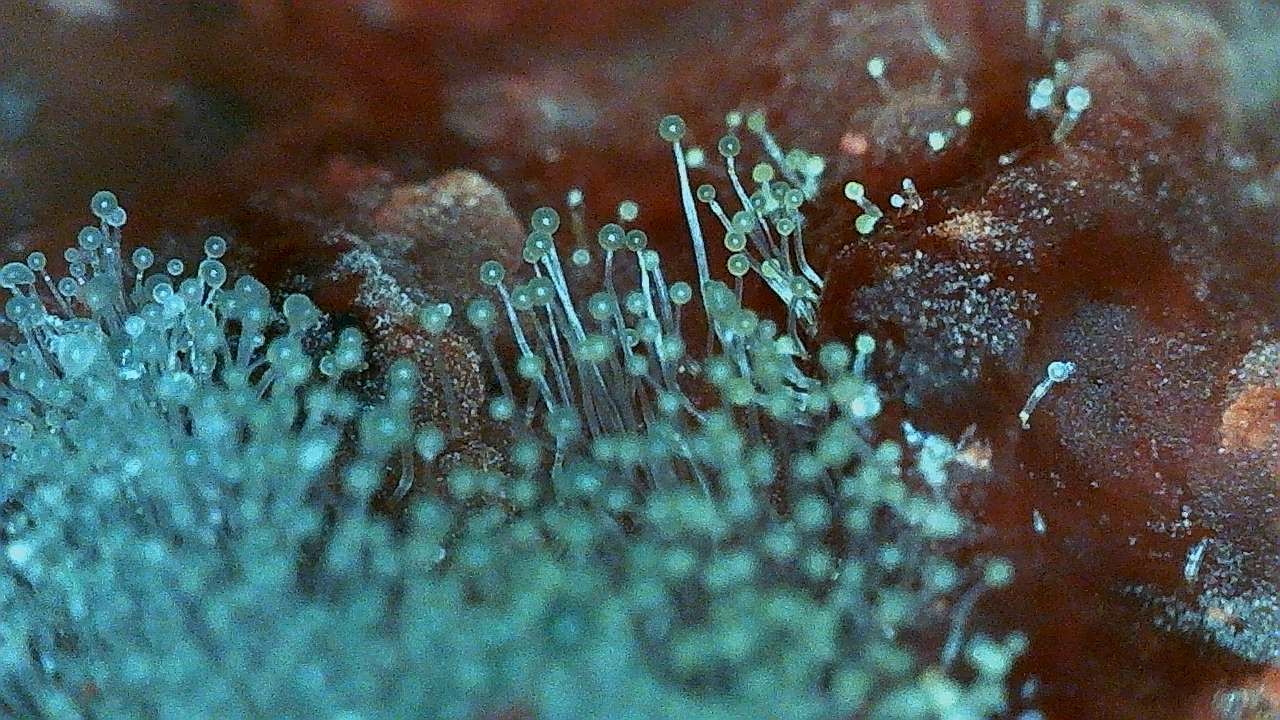
Credit: Давид Андронов · CC BY 4.0
Mold is a kind of fungus that grows in fuzzy patches on food, walls, soil, and other damp places. It is not a plant, even though it sometimes looks like one. Mold belongs to the same family of living things as mushrooms and yeast. There are more than 100,000 known kinds of mold in the world.
Mold is made of tiny threads called hyphae. The threads grow in tangled webs across whatever the mold is feeding on. Together, the webs form a body called a mycelium. The fuzzy stuff you see on old bread is the mycelium plus the spores it makes. Spores are like tiny seeds. They float through the air and land on new surfaces, where they grow into new mold if the conditions are right.
Mold needs three things to grow: moisture, food, and a warm-enough temperature. Almost anything can be food for some kind of mold. Bread, fruit, cheese, leather, paper, wood, and even the glue inside walls can feed it. That is why mold shows up so often in bathrooms, basements, and forgotten lunch bags.
In nature, mold is a recycler. It breaks down dead leaves, fallen trees, and dead animals, and turns them back into soil. Without molds and other fungi, dead matter would pile up everywhere. Forests would be buried in their own leaves.
Some molds are helpful to people. The blue and green streaks in cheeses like blue cheese and Roquefort are mold, on purpose. Soy sauce is made with the help of a mold called Aspergillus oryzae. The most famous helpful mold is Penicillium. In 1928, a Scottish scientist named Alexander Fleming noticed that this mold killed bacteria growing in his lab dish. His discovery led to penicillin, the first antibiotic, which has saved hundreds of millions of lives.
Other molds can make people sick. Breathing in lots of mold spores can cause coughing, sneezing, and trouble for people with asthma or allergies. A few molds make poisons called mycotoxins, which is one reason you should not eat moldy food. Doctors and scientists still argue about exactly how much household mold is dangerous and how much is just gross.
The next time you find a fuzzy green patch on a forgotten orange, you are looking at one of Earth's oldest recyclers, quietly doing the same job it has done for hundreds of millions of years.
Last updated 2026-04-25