
Bacteria
Credit: NIAID · Public domain
Bacteria are tiny living things made of just one cell. They are some of the smallest and oldest forms of life on Earth. Bacteria are so small that you need a microscope to see them. A single drop of pond water can hold millions. They live almost everywhere: in soil, in oceans, in the air, inside plants and animals, and even inside your own body.
Bacteria were the first life on Earth. The oldest bacteria fossils are about 3.5 billion years old. For more than two billion years, bacteria were the only living things on the planet. Every plant and animal that exists today came much later.
A bacterium is just one cell, but it is a complete living thing. It can eat, grow, and make more of itself. Bacteria reproduce by splitting in half. One bacterium becomes two. Two become four. Four become eight. In the right conditions, a single bacterium can have millions of copies in less than a day.
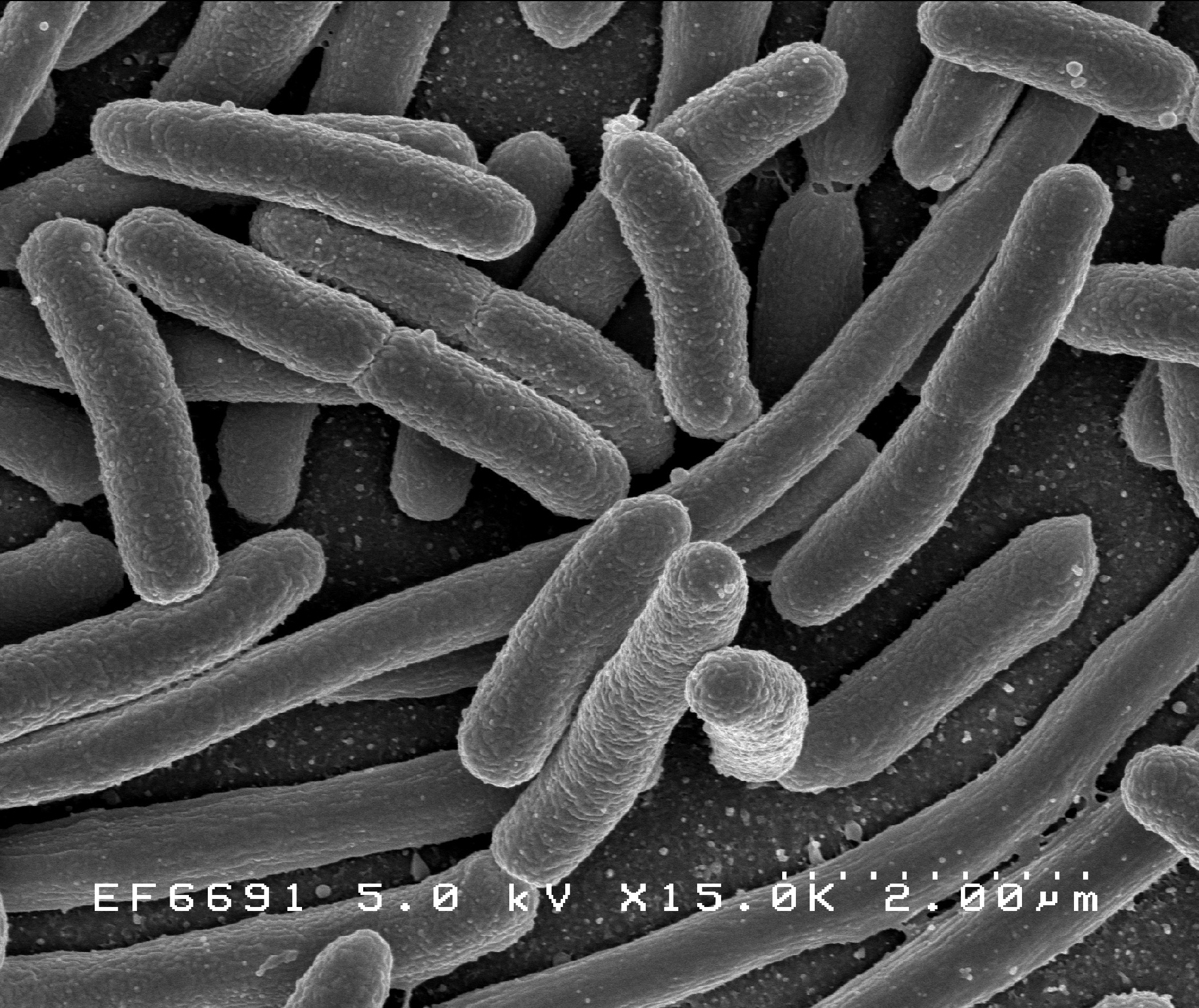
Bacteria come in a few common shapes. Some look like tiny balls. Some look like little rods. Some look like twisted corkscrews. Scientists use these shapes to tell different kinds apart.
Most bacteria are helpful, or at least harmless. Your gut is full of bacteria that help you digest food. Bacteria in the soil break down dead plants and animals and return nutrients to the ground. Without them, forests would pile up with dead leaves forever. Bacteria also help make foods like yogurt, cheese, pickles, and sourdough bread.
Some bacteria do cause disease. Strep throat, food poisoning, and many ear infections are caused by bacteria. Before modern medicine, a small cut could kill a person if the wrong bacteria got inside. That changed in 1928, when a scientist named Alexander Fleming discovered penicillin, the first antibiotic. Antibiotics are medicines that kill bacteria or stop them from growing. They have saved hundreds of millions of lives.
But bacteria can fight back. Some have learned to survive the medicines that once killed them. Doctors call these "antibiotic-resistant" bacteria, and they are a growing problem. Scientists are working to invent new drugs faster than bacteria can adapt.
There are more bacteria in your mouth right now than there are people on Earth. Most are on your side. They crowd out harmful germs and help keep you healthy. The next time you brush your teeth, remember: you are not alone in there, and that is mostly a good thing.
Related
Last updated 2026-04-23